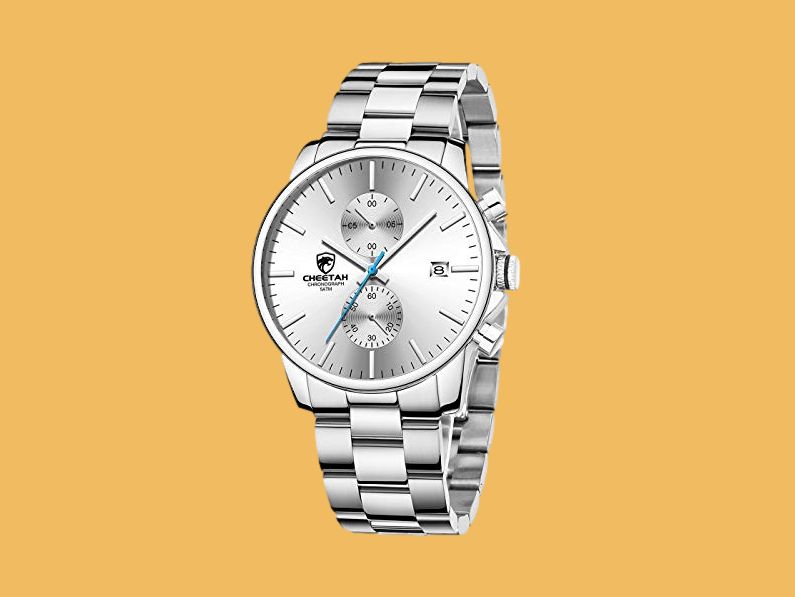
Every June, consumer culture participates in a predictable ritual. Retailers flood the market with highly specific, single-use gadgets marketed exclusively to middle-aged men. There are the tactical BBQ spatulas, the synthetic leather watch rolls that smell faintly of gasoline, and the novelty whiskey stones that chill a drink far less effectively than a standard ice cube. It is a multi-billion-dollar marketing machine designed to exploit the anxiety of adult children who do not know what to buy their fathers. Most of these items share a common destiny. They are unboxed with polite enthusiasm, moved to a closet shelf, and completely forgotten by Labor Day.
The problem lies in a fundamental misunderstanding of utility. High-end marketing campaigns have conditioned us to believe that a good gift must be a novelty—something the recipient would never buy for themselves. For fathers, this logic backfires. Most men over forty have spent decades refining their daily routines and narrowing down their preferences. They do not want an unexpected disruption to their habits. They want their existing habits made smoother, more efficient, or slightly more comfortable. Discover more on a similar topic: this related article.
True utility does not mean a gadget that performs five different niche functions poorly. It means an object built with sufficient quality to survive daily wear and tear while solving a recurring friction point. When you restrict the budget to under a hundred dollars, the challenge shifts. You can no longer rely on the sheer prestige of a luxury brand name. Instead, you have to look for category-level excellence—items where a double-digit price tag actually buys the absolute best version of that specific object.
The Myth of the Multi-Tool and the Reality of Daily Friction
Walk into any department store in the weeks leading up to Father’s Day, and you will see displays dominated by multi-tools. They promise to turn your father into an instant survivalist, equipped to scale a mountain or rewire a house at a moment's notice. This is a fantasy. In reality, a man rarely needs a mediocre pair of pliers, a dull saw blade, and a flimsy can opener all attached to the same heavy handle. More journalism by The Spruce explores related perspectives on this issue.
When you look at how people actually interact with their belongings, the tools that matter are the ones used every single day. Consider the simple act of carrying keys. Most men carry a chaotic metal cluster that jingles loudly in their pockets, scratches their smartphones, and wears holes through their trousers.
An engineered key organizer solves this specific daily irritation. Instead of buying a low-grade pocket knife with twelve attachments, investing in a precision-milled aluminum or top-grain leather key organizer transforms a messy pile into a silent, organized sleeve. It is a mechanical solution to a mechanical problem. It does not promise to save him during a hypothetical wilderness emergency. It simply fixes the annoying rattle in his pocket every time he walks to his car.
The same principle applies to wallets. The traditional "dad wallet" is a swollen leather brick filled with expired receipts, old business cards, and forgotten loyalty cards. It ruins the silhouette of a suit and causes lower back pain when sat on for long periods. The solution is not another thick billfold. The move is a slim, track-card wallet made from aviation-grade aluminum or matte carbon fiber. These wallets force a structural audit of what a man actually carries. They hold the essential six to eight cards securely, offer quick mechanical access via a trigger mechanism, and take up a fraction of the space. It is a practical upgrade that he notices multiple times a day, every time he pays for coffee or pulls out his driver's license.
Reclaiming the Kitchen from Novelty Gadgets
The culinary gifting space is arguably the worst offender when it comes to useless Father’s Day inventory. If a man expresses a passing interest in smoking a brisket or making a cocktail, he is immediately bombarded with monogrammed steak brands, glowing meat thermometers that require a buggy smartphone app to function, and cheap smoking guns that coat the kitchen in a film of artificial wood residue.
The serious home cook does not want gimmicks. He wants commercial-grade reliability.
Take the classic kitchen timer. Most people rely on their stove clocks or voice assistants, which are prone to user error or require wet hands to touch a clean screen. A heavy-duty, magnetic digital timer used in commercial bakeries and restaurant kitchens changes the dynamic. Look for models with a massive, readable display, a physical rotating dial to set the time, and a decibel level that can be heard over a running hood vent. It is a utilitarian masterpiece that does one thing perfectly.
Alternatively, consider the breakfast routine. Millions of fathers start their mornings with a pour-over coffee or a French press, yet they measure their coffee beans using plastic scoops or pure guesswork. This leads to a wildly inconsistent brew. A professional-grade digital coffee scale, accurate to a tenth of a gram, removes the variable of luck from the morning ritual. When a scale includes a built-in timer, it allows for precise control over the extraction process. It is a tool rooted in chemistry and physics, packaged in a sleek, water-resistant housing that sits permanently on the countertop. It elevates a daily chore into a predictable, satisfying science.
For the outdoor cook, stop looking at heavy iron press plates with sports team logos stamped into them. Look instead at high-heat management. A pair of genuine aramid-fiber welding gloves offers infinitely more utility than standard quilted oven mitts or silicone tongs. These gloves allow a person to physically adjust burning logs, move searing cast-iron grates, or handle hot charcoal chimneys without a second thought. They are unpretentious, incredibly durable, and communicate a level of serious intent that no novelty apron ever could.
The Digital Overhaul and the Fight Against Fragility
Technology is a dangerous category for budget gifting. Under a hundred dollars, the tech market is flooded with plastic junk—bluetooth speakers shaped like golf balls, flimsy wireless charging pads that overheat your phone, and cheap earbuds that lose connection if you turn your head too quickly.
To find real value here, you must look for accessories that protect or optimize the expensive hardware he already owns.
Most men treat their tech charging setups as an afterthought. They use the frayed, slow-charging cables that came in the box with their phones five years ago, plugged into weak wall adapters that take three hours to top up a battery. A high-output Gallium Nitride (GaN) wall charger is a genuine quality-of-life upgrade. Because GaN technology conducts electrons more efficiently than traditional silicon, these chargers can pump out 65 to 100 watts of power from a brick the size of a mint container.
[Traditional Silicon Charger: Large, heavy, runs hot, slow power delivery]
                  vs.
[Modern GaN Charger: Ultra-compact, cool operation, rapid multi-device charging]
This means a single plug can rapidly charge a laptop, a tablet, and a phone simultaneously. It clears out the rat’s nest of power strips behind the desk or nightstand and cuts charging times in half. Pair it with a ten-foot, Kevlar-braided charging cable, and you have given him a charging setup that is virtually indestructible and incredibly fast.
Another overlooked area is tech storage during travel. Whether he is commuting to an office or taking a weekend trip, throwing chargers, dongles, external drives, and mice loosely into a backpack is a recipe for damaged ports and tangled cords. A structured, weather-resistant tech pouch with self-organizing internal pockets acts like a toolbox for electronics. The best models use an origami-style internal layout, allowing the pouch to expand when packed but remain slim when empty. It protects expensive assets from spills and impacts, ensuring that when he opens his bag on a plane or in a boardroom, everything is exactly where it belongs.
Shaving and Grooming without the Subscription Trap
The grooming industry has spent the last decade trying to lock men into recurring subscription models for plastic cartridge razors. These systems are expensive over time and fundamentally flawed in design. Multiple blades dragging across the skin frequently cause irritation, razor bumps, and ingrown hairs.
The veteran alternative is a return to mechanical simplicity: the single-blade safety razor.
A heavy, precision-machined chrome safety razor is an object designed to last a century. It relies on the weight of the tool itself, rather than downward hand pressure, to slice through hair cleanly at the skin line. The economic reality is also undeniable. While multi-blade cartridges can cost four dollars a piece, high-quality double-edge safety blades cost about ten to fifteen cents each. For under a hundred dollars, you can buy a premium safety razor handle and a sample pack of one hundred different blades from legendary global manufacturers in Japan, Germany, and Egypt. It transforms a mindless, irritating chore into a tactile, traditional ritual that saves money over the long term.
If he already has a preferred shaving method, shift the focus to aftercare. Skip the drugstore lotions filled with synthetic fragrances and alcohols that dry out the skin. Look for small-batch, botanical-based utility balms or solid colognes. Solid colognes, made from a base of beeswax, jojoba oil, and natural essential oils, are applied with a fingertip to pulse points. They do not evaporate instantly like alcohol-based sprays, they do not shatter if dropped on a bathroom tile floor, and they travel effortlessly through airport security without triggering liquid restrictions.
Desk Upgrades for the Mental Workshop
Whether your father is still working a demanding corporate job, running a business from a home office, or managing the family finances from a corner desk, the environment where he thinks matters. Most desks are cluttered with plastic pen cups, free promotional note pads, and cheap glare-inducing desk lamps.
The anchor of a productive workspace is often overlooked: the desk mat.
A large, heavy felt wool or vegetable-tanned leather desk pad defines the workspace visually and physically. It provides a consistent, comfortable surface for the forearms, dampens the acoustic echo of typing on a mechanical keyboard, and optimizes mouse tracking. It protects the underlying wood from coffee cup rings and ink stains while creating a designated zone of focus. A premium wool felt pad feels substantial under the hands and instantly elevates a generic desk into a serious workspace.
To go with the desk pad, look at writing instruments. The world is full of cheap plastic ballpoints that skip ink and require excessive hand pressure to write. A machined brass or copper pen, engineered to take high-quality pressurized ink refills, is a revelation for anyone who still writes physical notes, logs daily tasks, or signs documents. These pens are heavy. They develop a unique patina over time based on the oils of the user's hand, making the tool deeply personal. It is a weighted, satisfying instrument that turns a simple signature into an act of deliberate intent.
The Strategy of the Under-One-Hunded-Dollar Selection
To successfully navigate this price bracket, you must reject the temptation of the compromise item. Do not buy a ninety-dollar version of a product that is supposed to cost three hundred dollars. A cheap leather briefcase for ninety dollars will have terrible stitching, zinc-alloy zippers that snap, and a plastic lining. It will look shabby within months.
Instead, execute the inverse strategy. Buy the ninety-dollar version of a product that usually costs twenty dollars.
When you spend near the top of a product category's pricing structure, you are buying the absolute pinnacle of material selection, engineering tolerances, and quality control. You are buying a premium kitchen timer, the ultimate key organizer, or the finest safety razor available on the market. These items do not shout for attention with bright colors or flashy gimmicks. They quietly outperform their cheaper competitors day after day, year after year. That is the definition of true utility, and that is what a father actually appreciates.