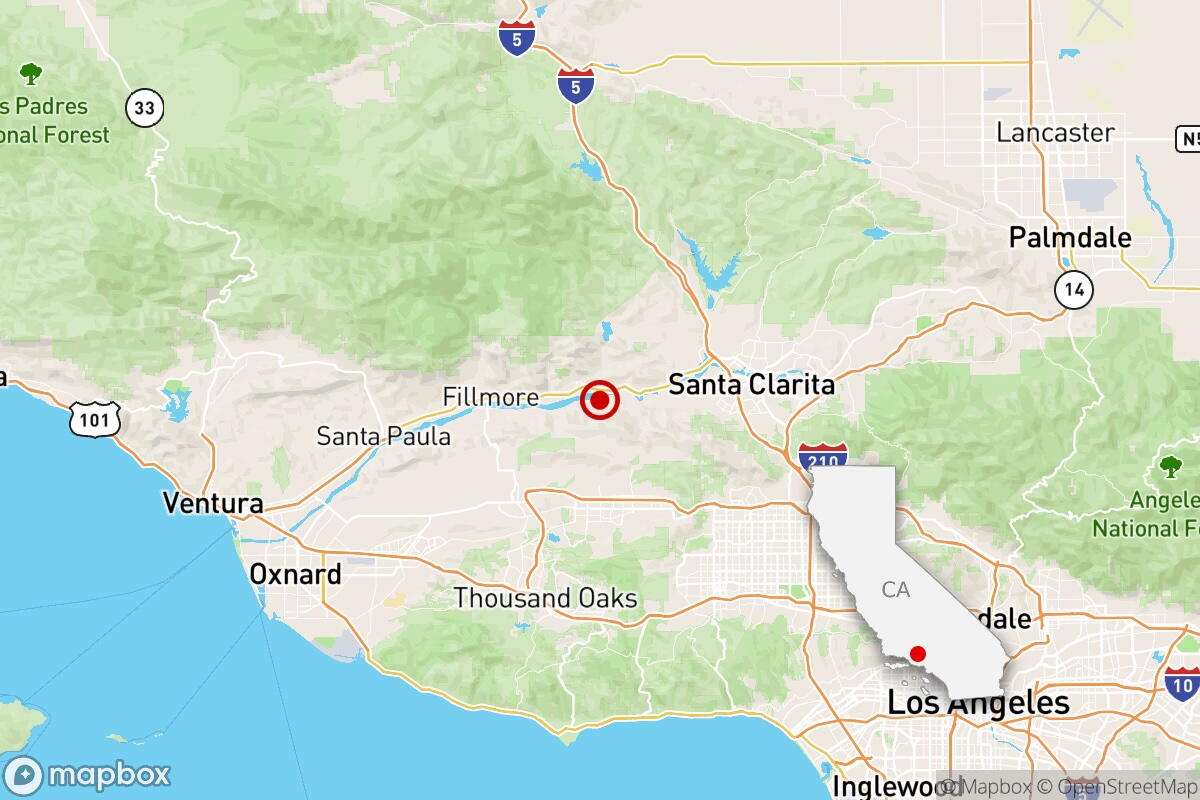
A magnitude 3.8 earthquake rattled parts of Ventura and Los Angeles counties, serving as an abrupt wake-up call for millions living along Southern California's complex web of active faults. The tremor struck without warning, sending sharp jolts through communities from the San Fernando Valley out toward the Ventura coast, reminding residents that the ground beneath their feet is in a constant state of tectonic loading. While a 3.8 magnitude event rarely causes structural damage or severe injuries, it exposes the complacency that routinely settles in between major seismic episodes. Seismologists track these minor shocks with acute interest, knowing that every moderate slip releases localized stress even as massive tectonic plates continue their relentless grind along the Pacific and North American boundaries.
The Mechanics of Minor Shocks in a Major Fault Zone
Earthquakes of this scale originate deep within the earth's crust, where friction locks rock faces together until accumulated stress exceeds their shear strength. When the fault finally slips, seismic waves radiate outward in all directions, rolling through sedimentary basins that can amplify the shaking depending on local soil composition. Southern California features an intricate network of blind thrust faults and strike-slip systems that do not always break the surface, making underground movement difficult to map precisely until an event occurs.
Geophysicists measure these movements using dense networks of GPS stations and borehole seismometers, tracking millimeters of displacement year after year.
- Tectonic convergence continuously squeezes the Transverse Ranges.
- Buried fault segments absorb stress without surface expression.
- Sedimentary layers trap and bounce seismic energy, intensifying local perception.
Understanding these dynamics requires looking past the single event and examining the broader mechanical strain of the region. The Ventura basin, in particular, has a history of rapid crustal shortening, meaning the rocks are folding and breaking under immense regional compression. A 3.8 magnitude jolt is merely the surface echo of deeper mechanical adjustments happening miles beneath urban centers and suburban neighborhoods alike.
Infrastructure Realities and the Cost of Delay
Infrastructure vulnerability remains the persistent variable in any seismic discussion. While modern building codes demand rigorous engineering standards for high-rises and critical facilities, a vast stock of older commercial and residential buildings across Los Angeles and Ventura counties relies on outmoded construction methods. Soft-story apartment buildings, unreinforced masonry structures, and older concrete frames face severe risks when larger magnitude events eventually strike.
Retrofitting requires substantial capital investment, pitting long-term safety against immediate economic pressures. Property owners often defer upgrades until mandated by municipal ordinances, leaving thousands of structures exposed to severe ground acceleration. Public transit systems, water aqueducts crossing major fault traces, and electrical grids also experience vulnerabilities that minor tremors expose on a microscopic scale. Every small earthquake acts as a stress test for these systems, highlighting weak points long before a catastrophic failure can occur.
Preparing for the Inevitable Transition
Emergency preparedness in earthquake country often suffers from fatigue. Citizens hear constant warnings, buy emergency kits, and then let supplies expire as years pass without a major disaster. Government agencies push public awareness campaigns, yet individual readiness varies wildly across neighborhoods. The reality of seismic risk demands continuous adaptation rather than sporadic panic following a moderate tremor. Securing heavy furniture, reinforcing gas shut-off valves, and establishing family communication plans transform abstract survival concepts into actionable precautions.
The 3.8 magnitude earthquake in Ventura and Los Angeles counties is neither a harbinger of immediate doom nor a harmless anomaly. It is a baseline reminder of the geological environment shared by millions of residents. The tectonic clock keeps ticking, and the responsibility for resilience rests entirely on how communities choose to prepare between the shakes.