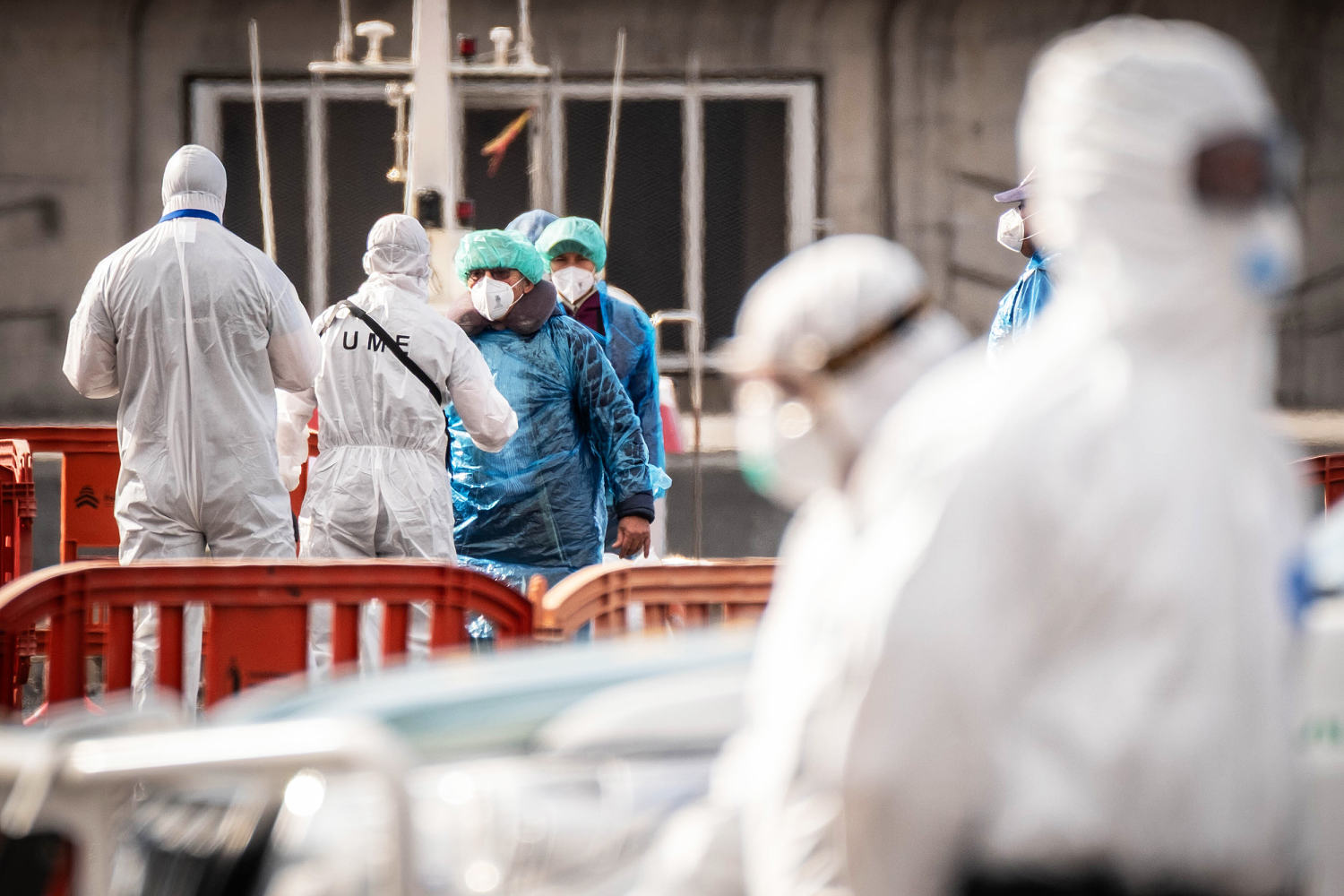
The media is safely wrapped in its favorite security blanket: a classic, predictable bureaucratic turf war.
When the CDC slapped mandatory federal quarantine orders on American passengers returning from the M/V Hondius cruise ship outbreak, headlines instantly defaulted to a lazy script. They framed the standoff between federal health authorities and individual states like Florida as standard political theater—the big, bad regulatory overreach of Washington colliding with state-level defiance over how and where exposed citizens should isolate.
But that mainstream narrative completely misses the actual crisis. This is not a standard battle over public safety boundaries. It is a desperate, legally bankrupt desperate move by a federal agency that caught itself flat-footed without the actual statutory power to do what it just did.
The public health establishment wants you to believe this is a necessary deployment of federal muscle to halt the terrifying, person-to-person Andes strain of hantavirus before it takes root on American soil.
The truth is far uglier: the CDC is rewriting definitions on the fly, stretching decade-old executive orders to cover its own regulatory gaps, and detaining citizens in Nebraska without explicit legal authority. If you value civil liberties or public health transparency, this manufactured jurisdiction battle should terrify you.
The Legal Shell Game: Manufacturing Power Out of Thin Air
Let’s dismantle the foundational myth of federal quarantine absolute power. The general public assumes that if a deadly virus exists, the CDC can legally lock down anyone exposed to it. It cannot.
By law, the CDC’s expansive detention powers are restricted to a highly specific, static list of "quarantinable communicable diseases" explicitly designated by presidential executive orders. This list includes the usual suspects: viral hemorrhagic fevers, cholera, infectious tuberculosis, and pandemic-potential influenza.
Notice what is missing? Hantavirus. Any strain of it.
Because the White House never bothered to update the official roster to include the Andes virus, the CDC had a massive statutory black hole when the M/V Hondius docked. Rather than admitting they lacked the legal authority to enforce a mandatory federal hold on passengers who tested negative and simply wanted to finish their isolation at home, the agency pulled a dangerous semantic trick.
They reached back to a 2014 executive order meant for MERS and SARS, and unilaterally declared that the Andes strain of hantavirus is actually a "severe acute respiratory syndrome condition."
[Mainstream Media View]
CDC protects public via standard, legitimate emergency quarantine protocols.

[The Reality]
CDC distorts 2014 SARS definitions to bypass statutory limits because hantavirus isn't on the legal detention list.
This is legal gymnastics of the highest order. I have seen regulatory bodies overreach to cover structural failures before, but stretching a SARS definition to cover a rodent-borne bunyavirus is an unprecedented overreach. Public health law experts are already pointing out the cracks in this foundation.
If a passenger challenges this in federal court, the CDC's house of cards falls. They are betting everything that fear of a 30% mortality virus will keep the public—and the judiciary—from looking too closely at the paperwork.
Home Quarantine is Not a Threat; Institutional Entrapment Is
The media consensus treats the passengers demanding to return to their home states as reckless renegades trying to break out of a biocontainment bubble. They imply that state health departments aren't capable of managing high-risk individuals via active tracking.
This stance ignores decades of established epidemiological practice.
Let's look at the actual clinical reality of the M/V Hondius situation:
- Zero Asymptomatic Spread: The UK Health Security Agency’s systematic data on the Andes virus shows no evidence of pre-symptomatic or asymptomatic transmission. You do not give this to your neighbor while walking to the mailbox; transmission requires intimate, prolonged contact or direct exposure to bodily fluids while actively, violently ill.
- Perfect Compliance Records: The passengers held in Nebraska were not quarantine deniers. They actively worked with their local state health officials to draft bulletproof, strict home-isolation plans.
- The Negative Test Paradox: Passengers were issued federal detention orders after logging negative tests and showing zero symptoms, entirely because they requested the less restrictive, legally sound alternative of isolating in their own homes.
Forcing healthy, asymptomatic people to remain in a central federal facility in Nebraska when they could safely, predictably execute a 42-day isolation period at home isn't science—it's security theater. It actively damages the fragile trust required between the public and health authorities.
When you tell citizens that volunteering to cooperate with state-level monitoring still results in an arbitrary, federally mandated room arrest via creative legal interpretations, you guarantee that the next group exposed to an exotic pathogen will simply lie, hide, and disappear into the population to avoid the system entirely.
Why the State vs. Federal Friction is Built by Design
Every talking head on cable news wants to turn the friction between the CDC and state entities like Florida into a partisan referendum. They want you to think one side hates safety and the other side hates freedom.
The friction exists because the system was explicitly designed to restrict federal overreach through decentralized health powers.
Under the U.S. Constitution, police powers—including the authority to enforce quarantines on citizens within state borders—belong fundamentally to the states, not the federal government. The CDC’s mandate is strictly gatekeeping: preventing the introduction and interstate spread of communicable diseases. Once individuals are within a state’s borders and ready to comply with local health mandates, the federal justification for physical detention evaporates.
By issuing blanket federal orders to block passengers from traveling to their home states for local monitoring, the CDC is signaling that it views state health infrastructure as fundamentally incompetent. It overrides the nuanced, localized contact tracing systems that states use every single day to manage endemic threats.
The downside to calling out this overreach is obvious: it gives rhetorical ammunition to bad-faith actors who oppose all forms of public health interventions. But ignoring the administrative overreach is far worse. If the federal government can reclassify hantavirus as a "severe acute respiratory syndrome" just to leverage arbitrary detention powers, they can do it for any pathogen, at any time, completely bypassing legislative oversight.
Stop asking whether the CDC or local state capitals have the better quarantine philosophy. Start asking why the federal government is terrified of following the explicit boundaries of its own legal rulebook. The M/V Hondius crisis isn't an epidemiological emergency anymore; it's a regulatory warning shot.