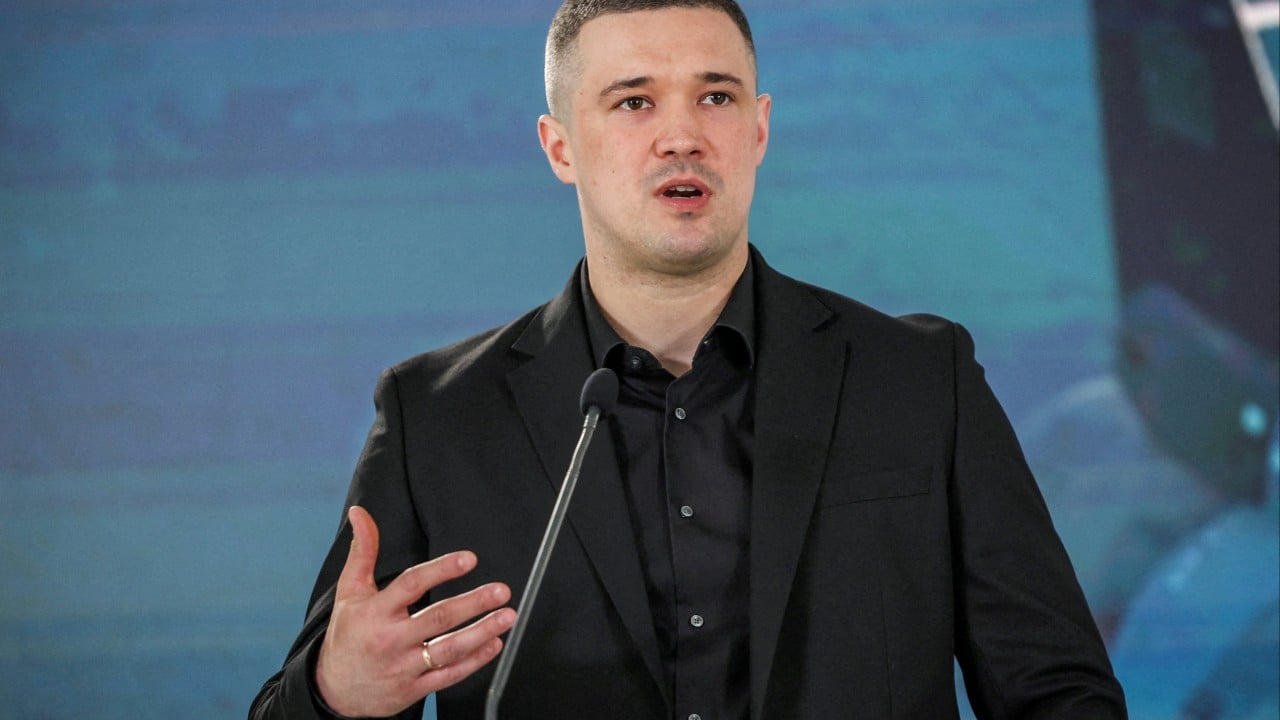
The headlines are writing themselves. Whenever a high-profile cabinet shakeup happens in Kyiv, the pundit class treats it like a soap opera. They look for personal friction, ego clashes, and dramatic rifts between Volodymyr Zelensky and his former defense minister, Mykhailo Fedorov. It is lazy, superficial analysis designed to turn a structural evolution into a personality contest.
Stop buying the boardroom drama myth.
When people ask why leadership changes happen at the top of Ukraine's defense apparatus, they expect a story about backstabbing or political survival. That is the wrong question entirely. The real story is about institutional scaling, specialization, and the brutal math of modern attrition.
The Myth of the Personality Rift
I have watched organizations blow millions trying to keep visionary generalists in operational seats long after their shelf life expired. The lazy consensus surrounding the Fedorov departure is that a falling out occurred over strategy or control. Commentary drips with speculation about bruised egos and rival power bases.
This view misunderstands how wartime governments actually function under extreme stress.
Fedorov built a digital transformation machine from scratch. He turned bureaucracy into software. But running a ministry focused on administrative innovation and scaling military tech is fundamentally different from managing the grinding, meat-grinder logistics of a multi-year industrial war. When a leader shifts out of that portfolio, it is rarely because two men cannot stand each other in a room. It is because the phase of the war changed, and the required skill set shifted from rapid prototyping to institutional institutionalization.
Think of it like a startup moving from seed stage to enterprise operations. The founder who hacks together the first prototype is rarely the person who can scale supply chains across ten time zones without burning the company to the ground.
The Core Misunderstanding of Wartime Bureaucracy
Let us define terms. In peacetime, a defense minister is a political manager and budget negotiator. In total war, that same office becomes a logistics bottleneck if it tries to micromanage tactical innovation.
Commentators love to frame every personnel swap as a crisis of confidence. They want you to believe that President Zelensky is constantly fighting fires within his own inner circle. This narrative plays well on cable news, but it collapses under the weight of operational reality.
Ukraine does not have the luxury of keeping people in roles out of sentimentality or political comfort. Every single appointment is a cold calculation of output per hour. If a minister hits a structural ceiling—where the ministry requires deep manufacturing integration rather than agile digital disruption—they move. That is not a rift. That is ruthless efficiency.
Real institutional adaptation looks messy from the outside because observers mistake friction for failure.
What the Pundits Miss About Military Tech
Fedorov's legacy is tied up in unmanned systems, electronic warfare scaling, and electronic governance. Observers assume his exit signals a retreat from technological modernization.
That logic is backwards.
Scaling tech is an engineering problem; sustaining it under artillery fire is an industrial problem. The transition from garage-startup drone production to standardized, front-line manufacturing requires a different kind of execution. You need procurement specialists who speak the language of heavy metallurgy, international supply chains, and ballistic quality control just as fluently as software developers speak Python.
When a government swaps leadership in these positions, it is usually because the previous phase succeeded wildly. The baseline changed. The sandbox phase is over. We are in the era of mass industrial output.
The Downside of Constant Turnover
Let us be completely honest about the risks here. My contrarian take is not that constant cabinet shuffles are painless. They cause friction.
Every time a major portfolio changes hands, institutional memory takes a temporary hit. Contracts pause. Middle managers hesitate while waiting for new directives. Bureaucratic inertia rears its ugly head. I have seen corporate turnarounds stall out for six months simply because a new executive wanted to rebrand the stationary.
In a war zone, that kind of friction carries a real cost in blood and steel.
Pretending that leadership changes are seamless or universally positive is dishonest. They are risky gambles. Zelensky takes those gambles because the alternative—letting an organization stagnate under a leader whose peak utility has passed—is far more lethal.
Stop Asking About the Drama
If you are still reading news articles trying to decode secret personal feuds between Ukrainian leaders, you are wasting your cognitive bandwidth. The drama is a distraction generated by people who have never had to manage a single crisis larger than a delayed flight.
The real metric to watch is not who sits in the chair, but how fast supply lines adapt when the old playbook stops working.
Stop looking for enemies in the cabinet. Start looking at the industrial output charts.
The next time a major official steps down, ignore the gossip about rifts and egos. Ask a better question: what operational bottleneck did they finally outgrow?