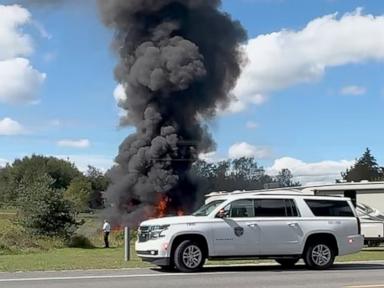
When an F-16 Fighting Falcon goes down, the immediate aftermath is a blur of flashing emergency lights, local evacuations, and official statements promising a thorough investigation. But the smoke clears long before the real accounting begins. Behind every military aviation accident lies a complex chain of mechanical wear, operational strain, and institutional pressure that rarely makes it into the evening news cycle.
Military aviation is inherently unforgiving. Flying a high-performance multirole fighter jet requires pushing both human biology and mechanical engineering to their absolute limits. When an accident occurs, populations living beneath flight paths are reminded of the invisible risks they host daily. Evacuations ordered after a crash are not merely precautionary measures against potential explosions or structural fires. They are urgent containment operations dealing with hazardous materials, unspent munitions, and toxic composite fibers released into residential neighborhoods.
The Maintenance Deficit
Decades of high operational tempos have taken a heavy toll on global air fleets. The F-16 remains the backbone of numerous air forces worldwide, yet many active airframes are flying well past their original design service lives. Upgrading avionics and structural bulkheads can extend an aircraft's operational window, but it cannot reverse metal fatigue at the microscopic level.
Ground crews face mounting pressure to maintain high mission-capable rates with shrinking budgets and persistent spare parts shortages. When technicians must choose between thorough preventative maintenance and meeting flight-hour quotas, safety margins narrow. A single overlooked hydraulic line or a degraded sensor can transform a routine training sortie into an emergency situation within seconds. Pilots are trained to handle catastrophic system failures, but margin for error shrinks exponentially when maintenance intervals are stretched to accommodate operational demands.
Training Realities And Pilot Fatigue
The modern military pilot operates in an environment of chronic resource scarcity. Flight hours are precious commodities, tightly rationed due to rising fuel costs and maintenance overhead. This scarcity forces training programs to compress complex tactical scenarios into fewer sorties, raising stress levels for both rookie wingmen and seasoned flight leads.
Spatial disorientation and controlled flight into terrain remain leading killers in tactical aviation, accounting for a significant percentage of annual losses. When pilots fly fewer hours per month, muscle memory and instinctive reactions degrade. High-G maneuvers demand peak physical conditioning and frequent repetition. Without adequate flight time, the cognitive load of managing a supersonic platform during an emergency can easily overwhelm even a well-trained aviator.
The Community Impact
For the towns and suburbs situated near tactical fighter wings, the crash of an F-16 shatters the routine of coexistence. Residents frequently voice concerns over noise pollution and safety, but these anxieties are often dismissed as the price of national security. When an aircraft experiences a catastrophic engine failure or control loss over a populated area, the pilot's final moments are spent steering away from homes, schools, and hospitals.
This split-second decision-making often dictates whether an accident becomes a localized scare or a major tragedy on the ground. Yet, even when casualties are avoided, the disruption is immense. Families displaced by mandatory evacuations face days or weeks of uncertainty while military explosive ordnance disposal teams clear crash sites of hydrazine, depleted uranium, or toxic debris.
Reevaluating Operational Risk
As defense ministries look toward the next generation of uncrewed systems and advanced fighters, fleets of fourth-generation aircraft will continue to fly operational missions for years to come. Managing the risks inherent in aging airframes requires a cultural shift within military leadership. Prioritizing safety over optics means grounding aircraft earlier, expanding maintenance workforces, and accepting lower operational readiness rates in exchange for long-term fleet integrity. Until systemic pressures on maintenance and training are addressed, the threat of falling fighter jets will remain an accepted, if tragic, hazard of modern defense policy.