The sky above the Dominican Republic does not care about human ambition. To a tourist looking out from a resort window in Puerto Plata, the Caribbean blue looks like a postcard. It promises escape. But to a pilot, that same sky is a complex, shifting grid of pressure, wind shear, and unforgiving physics. Aviation is a discipline of margins. You measure life and death in knots, degrees of pitch, and seconds of reaction time. When those margins vanish, they do so in silence, right up until the moment of impact.
On a quiet afternoon, two American pilots boarded a twin-engine aircraft, a Piper PA-34 Seneca bearing the tail number N112GA. They had a routine flight plan. They had thousands of hours of collective experience vibrating in their hands. They had families waiting for them across the ocean.
They never made it home.
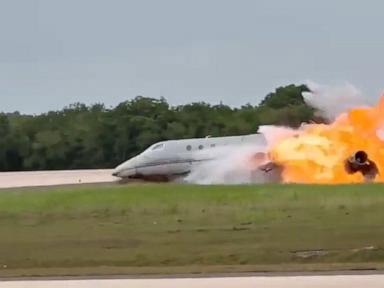
The aircraft came down in a fiery wreckage near the community of Estero Hondo, in the northern province of Puerto Plata. The crash was violent, sudden, and absolute. In the immediate aftermath, the internet did what it always does. It spawned headlines. It broadcasted shaky cell phone footage of black smoke billowing against a tropical backdrop. It reduced two lived experiences, two lifetimes of dedication, into a brief blip on the global news cycle.
But a tragedy is not a headline. To truly understand what happened in the skies over the Dominican Republic, we have to look past the smoke. We have to look at the invisible stakes of private aviation, the mechanics of a crisis at ten thousand feet, and the heavy price of the choices made in the cockpit.
The Illusion of the Routine Flight
Every pilot learns a fundamental truth early in their training: the air does not recognize routine. You can fly the same route a hundred times, but the hundred-and-first time will present a variable you never saw coming.
The Piper Seneca is a workhorse of the general aviation world. It is a twin-engine light aircraft, favored for its stability and its ability to handle multi-engine training and light cargo or passenger transport. It is a machine built to respect the laws of aerodynamics. When both engines are humming smoothly, it feels invincible.
Consider the mechanics of a twin-engine flight. The presence of a second engine is supposed to be a safety net. If one fails, the other should carry you to safety.
But twin-engine flight introduces a deadly paradox known as asymmetrical thrust. When one engine dies, the working engine continues to push forward with massive force. Because that force is only on one side of the aircraft, the plane wants to yaw and roll violently toward the dead engine. If the pilot does not react instantly with heavy rudder pressure, the aircraft will enter a lethal spin.
Imagine driving a car at eighty miles per hour when suddenly, the two wheels on the left side lock up completely while the right wheels keep spinning. That is the reality of an engine failure in a light twin-engine plane. It requires split-second recognition. It demands muscle memory.
We do not yet know if an engine failure caused N112GA to plunge into the terrain near Estero Hondo. The Dominican Civil Aviation authorities and accident investigators are still sifting through the charred metal to find answers. But the nature of the crash—the sudden loss of altitude, the catastrophic impact, the immediate fire—suggests a loss of control that caught two experienced airmen completely off guard.
When the Sky Closes In
To understand the weight of this event, we have to put ourselves in that cockpit. The Dominican Republic features a beautiful but deceptive geography. Mountain ranges like the Cordillera Septentrional rise sharply from the coastal plains. These peaks alter weather patterns without warning, creating localized turbulence, sudden downdrafts, and pockets of low visibility.
When a crisis occurs in this environment, the cockpit transforms from a place of controlled focus into a pressure cooker.
First comes the sensory overload. Alarms blare. The instrument panel flashes. The physical sensations of a dropping floor or a banking wing distort your internal equilibrium. Pilots call this spatial disorientation. Your inner ear tells you that you are flying straight and level, but the instruments tell you that you are diving toward the earth.
Who do you trust? Your body or the glass screen in front of you?
In those critical seconds, the human brain undergoes a massive chemical dump. Adrenaline surges. Tunnel vision sets in. The absolute hardest thing for a pilot to do in that moment is to maintain a broad situational awareness. You have to fly the airplane first. You have to navigate second. You have to communicate third. Aviate, navigate, communicate. It is a holy trinity drilled into every student pilot. But when the ground is rushing up at hundreds of feet per second, holding onto that hierarchy is an act of supreme willpower.
The witnesses on the ground near Puerto Plata heard the engine roar before the impact. They heard the desperate, mechanical scream of a machine pushed beyond its limits. Then came the sound of tearing metal, a concussive boom, and a column of thick, oily smoke that stained the Caribbean sky.
The Empty Spaces Left Behind
The immediate reaction to an aviation accident is a rush to assign blame or find a neat, tidy explanation. Was it mechanical failure? Was it pilot error? Was it fuel starvation? We want a single culprit because it gives us the illusion of control. If we can point to a broken part or a bad decision, we can convince ourselves that it won’t happen to us.
The reality is rarely so simple. Aviation accidents are almost always the result of an error chain.
Think of it as a series of Swiss cheese slices lined up back-to-back. Each slice has holes in it representing different vulnerabilities—a minor maintenance oversight, a sudden shift in the wind, a moment of distraction, a miscommunicated air traffic control instruction. Usually, the holes don't line up. The solid part of one slice blocks the hole of another. The flight lands safely. But every once in a while, the holes align perfectly. The hazard passes straight through every layer of defense.
When that happens, the cost is counted in human lives.
The two US pilots who perished in N112GA were not statistics. They were individuals who belonged to a tight-knit global community of aviators. It is a community bound by a shared love for the sky and a shared understanding of its dangers. When a plane goes down, every pilot feels a cold chill. We look at our own logbooks. We think about our own close calls. We remember the times we pushed the envelope just a little too far and got away with it.
The families of these pilots are now left with an agonizing void. They must navigate the bureaucratic aftermath of an international accident investigation. They must wait months, sometimes years, for a final report from the authorities that will try to piece together the last minutes of their loved ones' lives.
And even when that report arrives, it will offer data, not comfort. It will list airspeed readings, weather charts, and impact angles. It will not capture the courage of two men fighting for control of a failing aircraft until the very last second.
The True Cost of Flight
We take the miracle of aviation for granted. We board commercial airliners with the same casual indifference we bring to boarding a city bus. We expect to defy gravity, cross oceans, and land smoothly without ever considering the immense infrastructure and human effort required to keep us safe.
General aviation—the world of small, private planes like the one that crashed in the Dominican Republic—is different. It is raw. It is intimate. There are no flight attendants, no reinforced cockpit doors, no massive redundancy systems like those found on a Boeing or an Airbus. It is just the human spirit, a pair of wings, and the elements.
It is a world of immense beauty, but it demands absolute humility. The sky does not negotiate. It does not offer do-overs.
As the investigation into the wreckage of N112GA continues in the tropical heat of Estero Hondo, the aviation community will watch closely. Lessons will be learned from this tragedy. A specific part might be recalled. A training procedure might be updated. A safety briefing will use this flight as a case study to ensure that future pilots recognize the specific trap that snapped shut on this afternoon.
But for now, the smoke has cleared over Puerto Plata. The wreckage will be hauled away, piece by piece, to an investigation hangar. The waves of the Atlantic will continue to crash against the northern coast of the island, indifferent to the tragedy that unfolded just a few miles inland.
Two American pilots set out to conquer the sky, and instead, they became part of its long, solemn history. Their final flight reminds us that every departure is an act of faith, and every safe landing is a gift we must never take for granted.