The map of a conflict is rarely drawn in ink. It is drawn in dust.
Walk through the alleyways of any southern neighborhood in the strip, and you realize that every concrete beam, every twisted piece of rebar, and every pulverized slab of foundation tells a story of an unfinished calculation. The air tastes of dry earth and pulverized mortar. It settles on your skin, heavy and relentless. For months, people have lived in the margin between survival and total erasure, waiting for a signal that the architecture of their daily terror has changed. But the language spoken in the high-level security briefings thousands of miles away sounds entirely different from the language of the street.
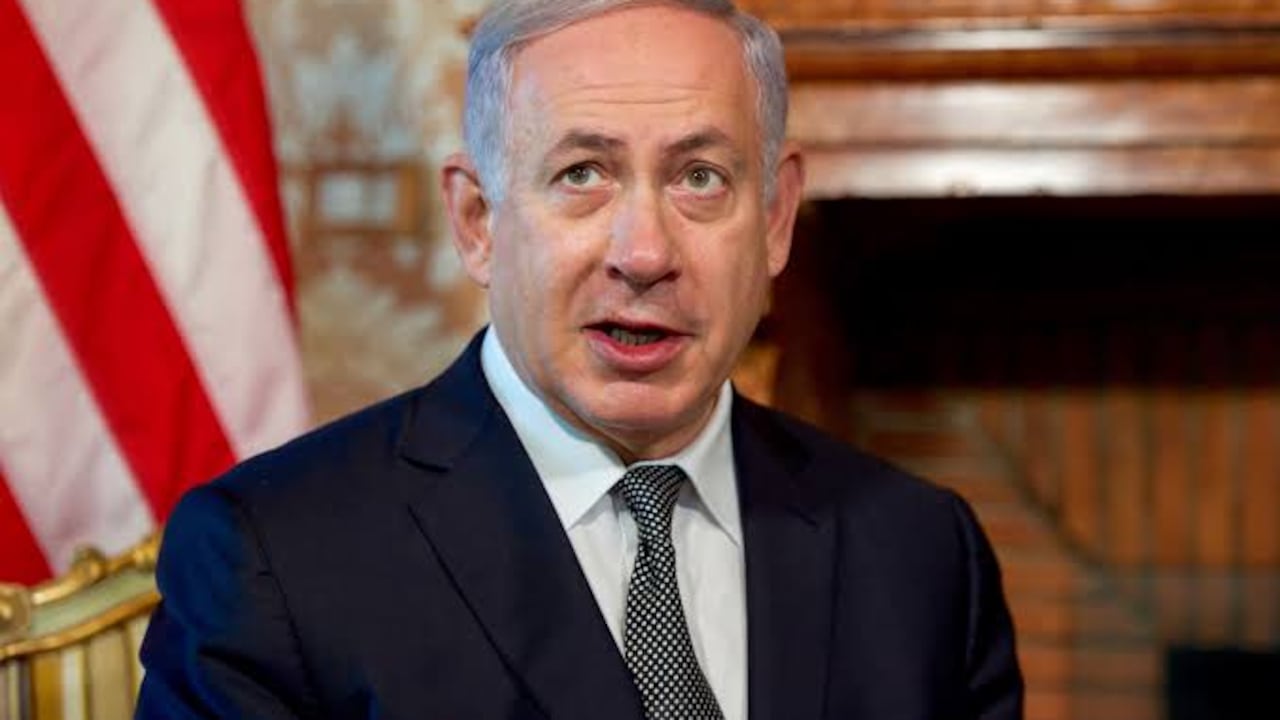
Benjamin Netanyahu stands at a podium, flanked by flags and microphones, and delivers a posture carved out of granite. Israel will not leave. Not until the underground arsenals are empty. Not until the infrastructure of governance belonging to Hamas is systematically dismantled.
To the diplomats in Geneva or Washington, these are strategic objectives. They are talking points on a slide deck. They are conditions precedent for a ceasefire.
To the mother sitting on a plastic stool outside a shattered storefront, watching her barefoot son kick a rusted bolt through the sand, these words mean something much heavier. They mean the horizon remains closed. They mean the uncertainty stretches out into months, perhaps years, of permanent emergency.
To understand why this uncompromising stance is held with such absolute conviction, we have to look past the political posturing and examine the raw mechanics of deterrence in the modern Middle East.
Consider what happened on October 7. That day fundamentally shattered the social contract between the Israeli state and its citizens. For decades, the implicit promise of the security apparatus was simple: boundaries might be contested, and rockets might occasionally arc across the sky, but the interior was a sanctuary. The iron dome would catch the falling metal. The border fences would hold.
When those barriers failed in a morning of unimaginable violence, the psychological foundation of an entire nation fractured.
A country the size of New Jersey cannot afford a strategic repeat of an existential breach. In a state where every suburb is within artillery range and every city is a frontline, security is not a policy preference. It is the oxygen of daily life.
This is why the demand for complete disarmament is not negotiable from the perspective of Jerusalem. If a single armed battalion remains intact in the subterranean tunnels beneath Rafah or Khan Younis, the deterrence is incomplete. If the command structure retains the capacity to manufacture rockets or rebuild launch ramps, the clock simply resets to zero for the next cycle of bloodshed.
Yet, looking at this through only one lens leaves out the human catastrophe unfolding in real time on the ground.
I remember speaking with a former humanitarian worker who spent weeks coordinating food distribution near the border. She described the exhaustion not as a physical state, but as a dense fog that enveloped everyone she met. "You talk to people about politics," she told me, her voice dropping to a quiet register, "and they look right through you. They don't care who wins the strategic argument. They care whether tomorrow morning brings flour, clean water, and a roof that doesn't leak when the coastal wind picks up."
The tragedy of the current posture is that the strategic necessity for Israel and the humanitarian necessity for the civilian population exist in a state of violent, irreconcilable friction.
Every day the military operation extends to hunt down the remaining leadership and structural assets, the civilian toll compounds. Hospitals run on fumes and backup generators that stutter in the dark. Schools are converted into crowded shelters where privacy is an impossible luxury and children fall asleep to the low, vibrating hum of surveillance drones overhead.
Hamas built its entire military strategy around this very friction. By embedding command nodes beneath hospitals, schools, and dense residential blocks, the leadership engineered a grim mathematical equation: either the state of Israel backs down to spare civilian infrastructure, allowing the militant group to survive and rearm, or Israel presses forward, absorbing the immense international moral cost of urban devastation.
Netanyahu’s insistence on total disarmament is an explicit refusal to accept the first option.
He is betting that the long-term survival of the nation outweighs the immediate diplomatic penalties of a protracted campaign. From the vantage point of the security cabinet, stopping halfway is merely hitting the pause button on an inevitable war. They point to past ceasefires, which were routinely utilized by militant factions to dig deeper tunnels, smuggle heavier munitions, and refine launch capabilities. From their perspective, a partial victory is a delayed defeat.
But what happens when the military objective is theoretically achieved?
Even if every rocket launcher is crushed and every senior commander is located, the vacuum left behind poses its own terrifying set of questions. Nature abhors a vacuum. Politics does too.
Who governs the rubble? Who collects the garbage, pumps the water, and teaches the children when the current authority is eradicated root and branch? An occupying force cannot simply walk away into an empty space without inviting total chaos or the rise of an even more radical successor. The roadmap forward is entirely blank, obscured by smoke and mutual distrust.
We are watching a collision between two absolute imperatives. On one side, a traumatized nation demanding the permanent removal of a force sworn to its destruction. On the other side, a civilian population paying the catastrophic price for a war they did not declare and cannot stop.
There are no clean resolutions here. There are only choices between bad outcomes and worse ones.
As the sun dips below the Mediterranean, casting long, sharp shadows across the concrete dust of the coast and the manicured lawns of Tel Aviv alike, the reality remains unchanged. The speeches will continue. The diplomatic cables will cross continents. But down in the dust, the wait for an end that feels human continues in silence.