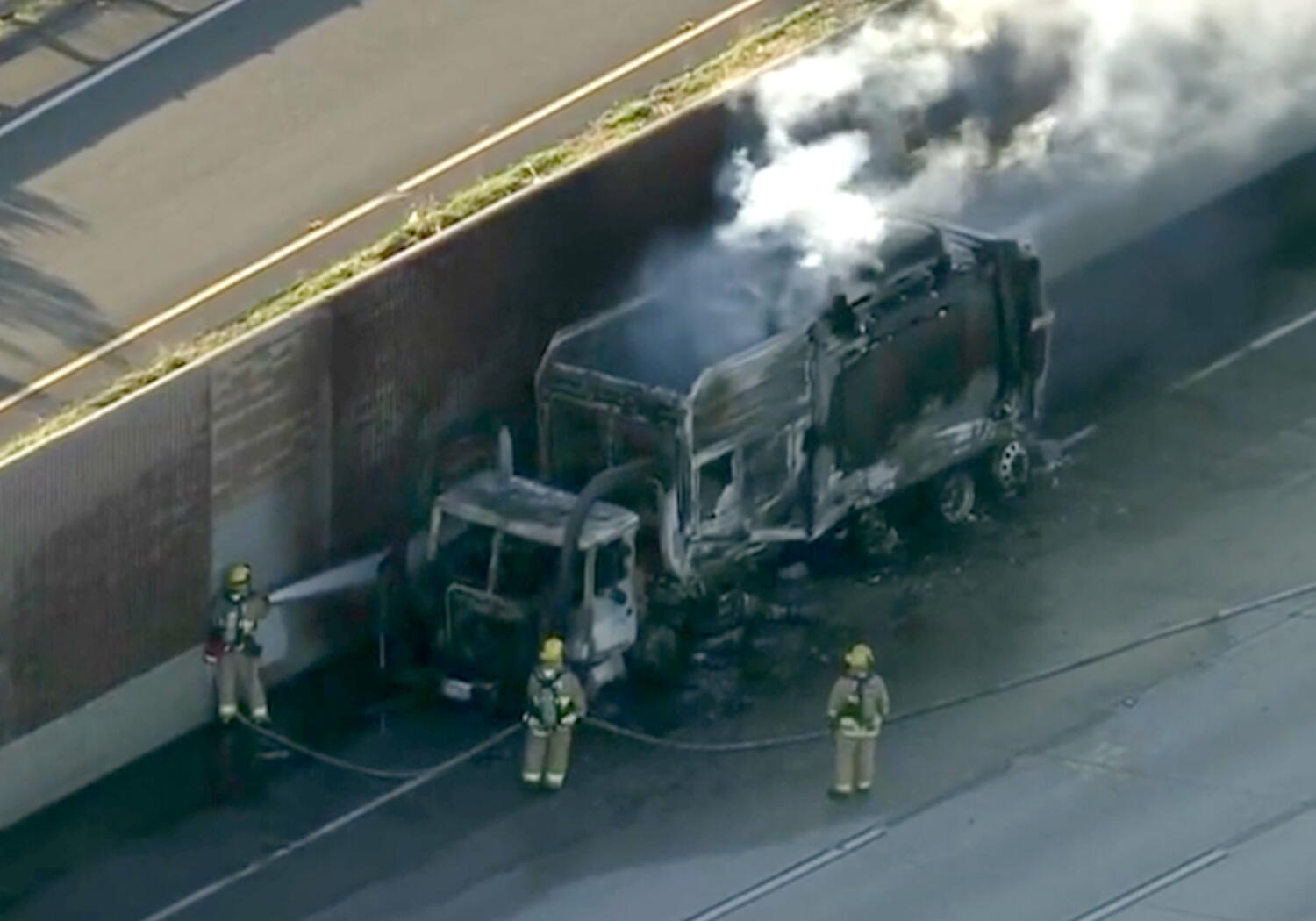
Silence.
When a twin-engine business jet loses both of its turbines at three thousand feet, the most terrifying sensation isn’t the sudden drop in your stomach or the violent shudder of the airframe—it is the abrupt, suffocating absence of that familiar, high-pitched mechanical hum you didn’t even realize you were relying on to keep you alive.
I have spent twenty-two years around private aviation hangars, breathing in the sharp, sweet tang of Jet-A fuel and watching seasoned captains run their pre-flight walkarounds with religious devotion. You learn quickly in this industry that airplanes rarely fall out of the sky because of a single catastrophic bolt snapping in half. They come down because of chains. Tiny, seemingly forgivable links of human assumption, mechanical fatigue, and split-second hesitation that lock together until there is no runway left beneath you.
In February 2024, a Bombardier Challenger 600—an aircraft built on the same foundational DNA and operational philosophy as the legendary Learjet family—attempted an emergency landing on Interstate 75 near Naples, Florida, after both engines flamed out simultaneously. Years earlier, a Learjet 60 suffered a similarly devastating fate in South Carolina, and across Florida’s crowded private air corridors, Learjet incidents have repeatedly forced aviation experts to stare into the cockpit voice recorders and ask an agonizing question. How do two independent, hyper-reliable jet engines die at the exact same moment?
When veteran Learjet specialists dissect these tragedies, they don't point to mysterious weather anomalies or freak bird strikes first. They point to what happens in the quiet, pressurized bubble of the flight deck long before the warning chimes ever start screaming. They call them crucial errors. To the families waiting at the fixed-base operator terminal with chilled water and rental cars, those errors are the invisible wall between a routine Tuesday afternoon arrival and a column of black smoke rising above the Florida palms.
The Illusion of Redundancy
To understand why a twin-engine Learjet can suddenly turn into a forty-thousand-pound glider, you have to understand the seductive lie of redundancy.
Every pilot who transitions into light business jets is trained on a comforting mathematical certainty: two engines are twice as safe as one. If the left turbine ingests a seagull or suffers a fuel control unit failure on takeoff, the right turbine has more than enough thrust to climb out, circle back, and land safely. That redundancy breeds confidence. Over thousands of uneventful flight hours, confidence quietly curdles into routine.
Consider a hypothetical flight crew—let’s call them Captain Miller and First Officer Vance—flying a mid-size Learjet out of Fort Lauderdale on a humid afternoon. Neither man is reckless. Both have thousands of hours logged in their leather-bound books. They know the checklist by heart, which is precisely where the danger begins. When you know a checklist by heart, your eyes stop reading the words and start scanning the shapes of the letters. Your fingers flip switches out of muscle memory rather than deliberate verification.
In aviation safety, experts call this "normalization of deviance." It is the gradual erosion of strict standards because nothing bad happened the last fifty times you cut a corner. Maybe the fuel crossfeed valve was left open during an earlier ground test. Maybe a fuel filter bypass light flickered briefly on the taxiway, and because the engine temperatures looked normal, the crew decided to monitor it in the air rather than delay a high-profile passenger.
Think of a twin-engine jet’s fuel system like the plumbing in an old house. Normally, the kitchen sink and the upstairs shower draw water from separate lines. If a pipe bursts upstairs, you shut off that valve and the kitchen still works fine. But if someone leaves the emergency crossover valve open between the two lines, a single leak drains the entire house dry in minutes.
According to Learjet maintenance instructors and crash investigators who have examined Florida’s aviation accidents, fuel management and crossfeed configuration errors remain among the most lethal traps in light jet operations. Two engines don't fail simultaneously by coincidence. They fail simultaneously because a single shared vulnerability—contaminated fuel, an improperly configured crossfeed valve, or a misread fuel quantity gauge—starves both turbines from the exact same source.
When the Checklist Becomes a Trap
There is a specific physiological panic that hits a human brain when cockpit alarms go off below five thousand feet. Your peripheral vision narrows until you are staring down a cardboard tube. Your heart rate spikes past one hundred and sixty beats per minute, stripping away your capacity for complex, multi-step reasoning.
In a Learjet, which climbs like a homesick angel and lands fast—often approaching the runway at speeds exceeding one hundred and thirty knots—time is compressed into razor-thin slices. The aircraft is famous among pilots for its hot-rod performance and demanding handling characteristics. It does not forgive sloppy airspeed management.
When an abnormal situation develops on approach into a busy Florida airport like Opa-locka, Boca Raton, or Naples, the crew suddenly faces a brutal cognitive overload. Air traffic control is vectoring them around commercial traffic. Coastal afternoon thunderstorms are building off the Everglades. The passenger in the back is checking their watch.
And then, the master warning light flashes amber.
Learjet experts who review crash transcripts frequently highlight a critical breakdown in what the industry calls Crew Resource Management. In moments of acute stress, experienced pilots often revert to their earliest, most primitive training. Instead of flying the airplane first—maintaining airspeed, pitch, and altitude—both pilots dive headfirst into diagnosing the glowing warning light on the annunciator panel.
Imagine driving down a pitch-black highway at ninety miles an hour during a torrential downpour, and suddenly your dashboard lights up like a Christmas tree. If both you and your passenger lean down to stare at the fuse box under the steering column to figure out why the radio died, nobody is steering the car.
That happens in cockpits far more often than the flying public wants to believe. In several documented Learjet accidents, cockpit voice recordings revealed that the pilots spent crucial, irrecoverable seconds arguing over what a warning light meant or cycling circuit breakers, completely unaware that their airspeed was bleeding away toward a stall or that their descent rate had doubled. By the time someone looked back out the windshield, the ground was already filling the glass.
The Hidden Mechanics of Thrust and Drag
There is another, far more technical error that Learjet specialists emphasize when examining takeoff and landing crashes, particularly in warm, humid climates like South Florida. It involves the delicate, violent physics of thrust reversers and aerodynamic lift.
A Learjet’s wing is thin, swept back, and designed for high-altitude speed rather than slow-speed grace. To get that sleek missile stopped on a wet Florida runway, the aircraft relies heavily on ground spoilers—flat metal panels on top of the wings that pop up after touchdown to kill lift and press the tires firmly onto the asphalt—and thrust reversers, which clamshell shut behind the engines to redirect exhaust forward.
If a crew deploys thrust reversers prematurely, or if a mechanical fault causes one reverser to deploy asymmetrically while the aircraft is still airborne or bouncing on touchdown, the aerodynamic consequences are instantaneous and catastrophic. Even more insidious is a crew attempting to abort a takeoff after passing V1—the critical decision speed beyond which the jet no longer has enough runway left to stop.
I once watched a test pilot demonstrate a rejected takeoff past V1 in a full-motion Level D simulator in Dallas. Even though I knew it was a computer simulation, the visceral terror of watching the end of the runway rush toward the nose while the brakes glowed cherry-red and the tires blew out left my palms slick with sweat. In real life, on a short municipal runway surrounded by canals and highways, hesitating for just two seconds between deciding to abort and actually pulling the thrust levers to idle eats up nearly five hundred feet of concrete.
Experts analyzing Learjet crash patterns point out that crews sometimes miscalculate takeoff performance data on hot Florida afternoons. High temperature and high humidity make the air thin. Thin air means the wings generate less lift and the engines produce less thrust. If a pilot uses standard sea-level numbers out of habit instead of adjusting for density altitude, the aircraft eats up far more runway than expected before its wheels ever leave the ground.
Why Private Aviation Feels Different From the Airlines
Whenever a tragic Learjet or private jet crash dominates the evening news, travelers inevitably ask why business aviation seems to suffer these sudden, shocking accidents at a higher rate than major commercial airlines.
The answer lies in the invisible infrastructure surrounding the cockpit.
When you board a commercial airliner in Miami or Orlando, those two pilots are backed by an army of dispatchers, meteorologists, load planners, and maintenance controllers monitoring every parameter of the flight in real time via satellite data links. If a fuel sensor acts strangely over Georgia, an engineer in Atlanta knows about it before the captain finishes his coffee.
In private aviation, especially under Part 91 corporate or private owner operations, that safety net shrinks dramatically. Often, the two pilots sitting up front are their own dispatchers, their own baggage handlers, their own weather briefers, and their own weight-and-balance calculators. They may have woken up at four in the morning, flown three legs across four states, waited six hours in a pilot lounge while their boss attended meetings, and then climbed back into the cockpit at dusk to fly home through coastal weather.
Fatigue doesn't announce itself with a dramatic yawn. It sneaks in as a subtle dulling of judgment. You forget to cross-check your altimeter setting. You mishear a clearance from air traffic control. You trust a fuel gauge that hasn't moved in twenty minutes because your tired brain rationalizes that the burn rate must just be remarkably efficient today.
Learjet experts aren't being harsh when they label these incidents as crucial pilot or operational errors. They are being brutally honest about human biology. We did not evolve to process three-dimensional spatial orientation at five hundred miles an hour while managing pressurized fuel systems in the dark. Every procedure written into the Learjet flight manual was paid for in blood by someone who came before, yet the pressure to get the owner home on time constantly whispers in the crew's ear to bend the rules just a fraction.
The Anatomy of an Impossible Choice
Return for a moment to those final three minutes over Florida when both engines go quiet.
At three thousand feet, without thrust, a business jet drops at roughly fifteen hundred to two thousand feet per minute. Do the math. That gives the crew somewhere between ninety seconds and two minutes before the aircraft meets the earth.
Ninety seconds.
In that span, the pilots must recognize the dual failure, attempt an airstart while the engine cores are still spinning fast enough to catch a spark, declare an emergency to air traffic control, search through the windshield for a stretch of straight asphalt without power lines or rush-hour traffic, configure the flaps and landing gear using emergency hydraulic accumulators, and keep the wings level as the airspeed decays toward stall speed.
When investigators listen to the final moments of these flights, they look for one defining discipline: did the pilot flying keep flying the airplane all the way into the crash?
The single deadliest mistake a pilot can make during a dual-engine flameout is trying to stretch the glide. When you see the runway or a stretch of highway coming up short in the windshield, every survival instinct screams at you to pull back on the yoke to lift the nose and reach the pavement.
Pulling back on the yoke without engine power does not make the airplane go farther. It slows the airplane down until the airflow separates from the top of the wings. The jet stalls, drops a wing violently, and slams into the ground nose-first in an unsurvivable spin.
The survivable path—the one that requires superhuman restraint—is pushing the nose down toward the earth to maintain best glide speed, accepting that you will not make the runway, and flying a controlled, wings-level impact into whatever open space lies directly ahead.
What Changes After the Smoke Clears
Every time the National Transportation Safety Board reconstructs the twisted aluminum of a Learjet in a Florida hangar, laying out the control cables and fuel valves like bones on a concrete floor, the same uncomfortable truth emerges. The aircraft almost always did exactly what the laws of physics and the positions of the cockpit switches commanded it to do.
Modern aviation has largely solved the problem of catastrophic structural failure. Wings don't simply fold up in clear air anymore, and turbine blades rarely shatter without warning. What remains is the infinitely harder problem of the human mind inside the machine—the quiet assumptions, the rushed pre-flight checks, the crossfeed valve left open, the hesitation at V1.
Down on the ramp at any South Florida executive airport tonight, the line crews are topping off fuel tanks under bright yellow floodlights while pilots walk slowly around sleek white fuselages with flashlights in hand, peering into turbine intakes and checking tire treads. Each of them carries the same invisible contract with the people stepping up the airstair door behind them: that no matter how routine the flight feels, no matter how many thousands of times they have done it before, tonight they will treat every switch, every gauge, and every checklist line as if their lives depend on it. Because at three thousand feet, when the engines go quiet, there is no one left to call.