The media has found its latest geopolitical anxiety vector, and it comes wrapped in a lab coat.
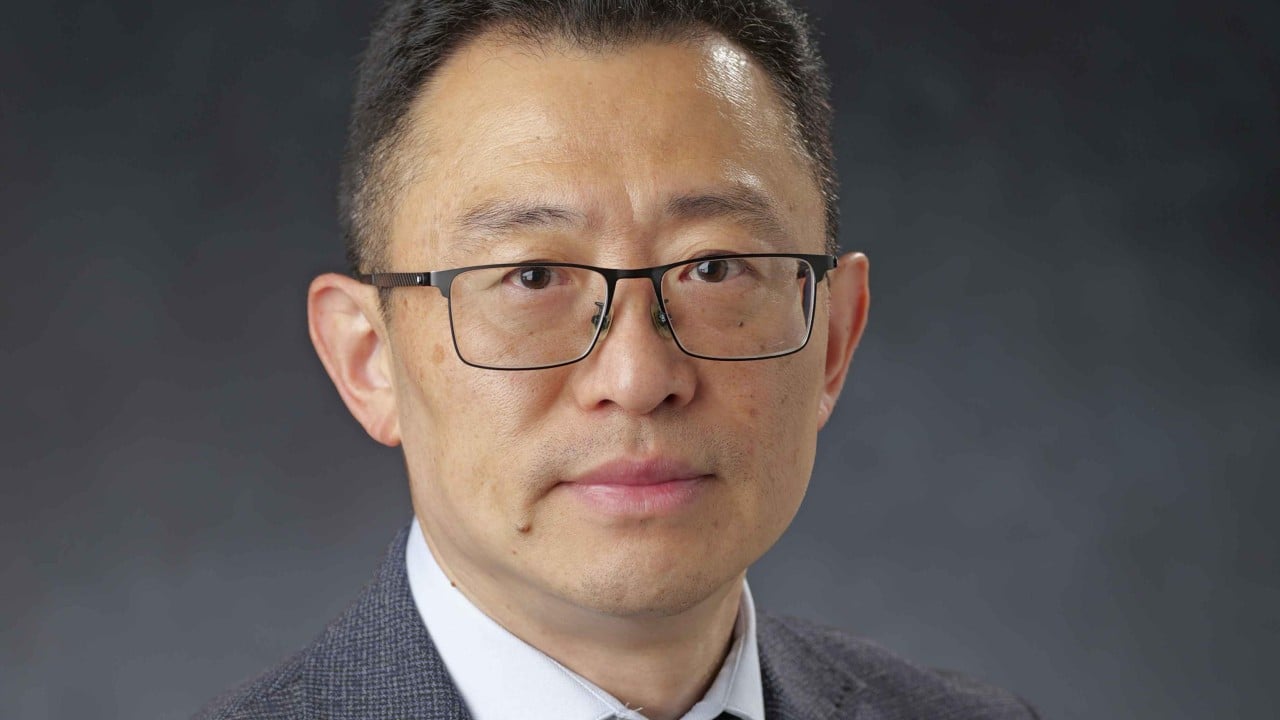
When award-winning chemist Zhang Wei packed his bags to leave the United States for Great Bay University in Dongguan, China, the reaction from the Western academic establishment was a mix of panic and self-flagellation. We were told this was a catastrophic loss. We were warned that the "reverse brain drain" is hollowed out American labs. The narrative is neat, terrifying, and completely wrong.
The departure of established, highly cited researchers like Zhang Wei is not a sign of American scientific decline. It is a necessary, structural purge.
For decades, the American university system has suffered from a profound bottleneck at the top. We are drowning in administrative bloat, hyper-specialized optimization, and senior faculty who occupy tenured chairs for forty years, suffocating the chaotic, high-risk exploration that actually drives scientific revolutions.
By exporting late-stage, highly decorated academics to state-funded Chinese institutions, the US is inadvertently executing a brilliant geopolitical trade. We are trading expensive, incremental optimization for raw, youthful discovery space.
The Zero-to-One vs. One-to-N Fallacy
To understand why Zhang Wei’s move to Great Bay University (GBU) is a net positive for the scientific ecosystem, we have to look at the mechanics of scientific discovery. Science operates in two distinct phases.
Phase 1: Zero-to-One (The Chaos Phase)
This is the birth of a discipline. It is highly inefficient, wildly unpredictable, and relies on intellectual deviance. It thrives in environments with high tolerance for failure, weak centralized control, and erratic funding structures that allow a rogue researcher to chase a hunch. Historically, this has been the crown jewel of the American research university.
Phase 2: One-to-N (The Scaling Phase)
This is where a discovered principle is optimized, scaled, and prepared for industrial application. It requires massive capital, army-like lab staff, top-down coordination, and relentless, repetitive experimentation. It is capital-intensive and highly structured.
What GBU and other heavily subsidized Chinese institutions are buying is not the chaotic spark of Phase 1. They are buying the industrial-scale machinery of Phase 2.
Chemists at the peak of their careers—especially those specializing in established fields like green chemistry, materials science, or traditional synthesis—are no longer doing Zero-to-One work. They are managing empires. They run massive, multi-million-dollar labs that act as factories for incremental paper production.
When China builds brand-new institutions like Great Bay University in the heart of the Guangdong-Hong Kong-Macao Greater Bay Area, they are building scaling factories. They want to connect academic chemistry directly to Shenzhen's manufacturing base. That is a perfectly valid national strategy for China. But for the US to pretend that losing a manager of a scaling factory is a fatal blow to its foundational scientific edge is a deep misunderstanding of how innovation actually happens.
The Gilded Cage of State-Funded KPIs
The common consensus assumes that because China is pouring billions into universities like GBU, they will inevitably surpass the West in scientific breakthroughs. This ignores the structural pathology of state-driven academia.
I have spent years analyzing academic budgets, patent pipelines, and laboratory outputs. When you look past the glossy press releases of these new mega-campuses, you find a system choking on its own metric-driven anxiety.
Chinese academic appointments are tied to rigid, hyper-specific Key Performance Indicators (KPIs). To maintain their massive funding, researchers must hit strict quotas:
- A set number of publications in high-impact Science Citation Index (SCI) journals.
- Direct alignment with five-year state economic plans.
- The immediate filing of patents, regardless of their commercial viability.
This environment is fantastic for producing volume. It is catastrophic for producing novelty.
When a top-tier scientist enters this system, they are handed unprecedented resources—state-of-the-art equipment, armies of obedient graduate students, and virtually unlimited budgets. But they are also handed a straightjacket. You cannot schedule a scientific breakthrough on a five-year state timeline. You cannot order a researcher to discover a new state of matter by next Tuesday to meet a municipal government funding milestone.
By relocating to GBU, researchers are trading academic freedom for raw industrial power. They get to build bigger labs, but they lose the liberty to fail spectacularly. The US system, with all its messy funding battles and chaotic peer reviews, still allows a researcher to spend five years chasing a dead end and emerge with a completely unexpected, industry-defining discovery. China's new institutions do not have the patience for dead ends.
The Myth of the Irreplaceable Scientist
Let us address the "People Also Ask" subtext of this entire debate: Can the US survive the loss of its top intellectual capital to geopolitical rivals?
The short answer is yes, because the premise of the question is flawed. It assumes that scientific talent is a scarce, non-renewable resource like oil. It assumes that if Zhang Wei leaves, his genius is gone forever, leaving a permanent void.
In reality, academic talent is a highly renewable resource that is currently being suppressed by a massive supply-and-demand mismatch.
Consider the typical path of a brilliant young chemistry postdoc in the United States today:
- They spend 6 to 8 years working 80-hour weeks for near-poverty wages.
- They compete with 500 other hyper-qualified applicants for a single tenure-track assistant professor position.
- If they get it, they spend the next seven years writing grant proposals to the NIH or NSF instead of doing science, desperately trying to survive the "tenure track" while established, eighty-year-old professors refuse to retire from the department’s endowed chairs.
When an established, highly decorated figurehead leaves a major American university to go to China, it does not leave a void. It opens up a bottleneck.
It frees up tenure-track lines. It releases millions of dollars in domestic grant funding that was previously locked up by legacy prestige. It allows a hungry, thirty-something researcher with a wild, unproven idea to finally get their own lab, hire their own students, and do the high-risk work that the established elite had long since abandoned in favor of comfortable administrative oversight.
We should not be mourning the departure of these academic giants. We should be packing their bags and thanking them for clearing the runway.
The True Bottleneck is Industrial Metabolism, Not Lab Space
The real danger to American competitiveness has nothing to do with where Zhang Wei chooses to draw his paycheck. The danger lies in our inability to translate the chaotic discoveries of our young researchers into domestic physical infrastructure.
If we want to worry about China’s rise, we should stop obsessing over the location of university chemistry labs and start looking at the factories down the street from GBU.
The Greater Bay Area is a manufacturing marvel. If a chemist at Great Bay University discovers a slightly more efficient polymer or a new battery electrolyte, they can walk down the hall, partner with a local manufacturer in Dongguan or Shenzhen, and have a prototype running in a pilot production line within weeks.
In the US, if a young chemist at MIT or Stanford makes a similar discovery, they face a decade-long slog:
- Navigating a bloated University Technology Licensing Office that treats intellectual property like a hostage situation.
- Searching for rare domestic venture capital willing to fund "hard tech" rather than software or biotech.
- Trying to find a domestic manufacturing partner in a country that has systematically outsourced its chemical and physical production capabilities for forty years.
The problem is not a brain drain. It is an execution drought.
A Brutally Honest Re-evaluation of the Talent War
If we want to win the global scientific race, we must stop playing defense. We must stop trying to lock scientists in our borders through xenophobic surveillance programs like the now-defunct China Initiative, which only succeeded in alienating brilliant minds and accelerating their departure.
Instead, we must lean into our structural unfair advantages:
| Metric | The US Academic Model | The GBU / China Model |
|---|---|---|
| Funding Philosophy | Decentralized, chaotic, high-risk | Centralized, metric-driven, low-risk |
| Talent Strategy | Open global magnet for young rebels | High-priced acquisition of legacy prestige |
| Primary Output | Zero-to-One foundational concepts | One-to-N optimized scaling and patents |
| Structural Weakness | Squeezed middle-tier, lack of scaling | Top-down conformity, bureaucratic stifling |
We must stop treating academic institutions as national security vaults. Science is a global, open-source endeavor. A chemical formula discovered in Dongguan works exactly the same way in Boston. The country that wins the future will not be the one that hoards the most Nobel laureates in gilded university offices; it will be the one that creates the most frictionless path from a chaotic young mind’s whiteboard to a functioning physical product.
Let the legacy stars go to GBU. Let them build the massive, high-throughput optimization labs that state budgets demand. We will keep the messy, chaotic, unstructured sandbox where the next generation of rebels will discover what comes next.