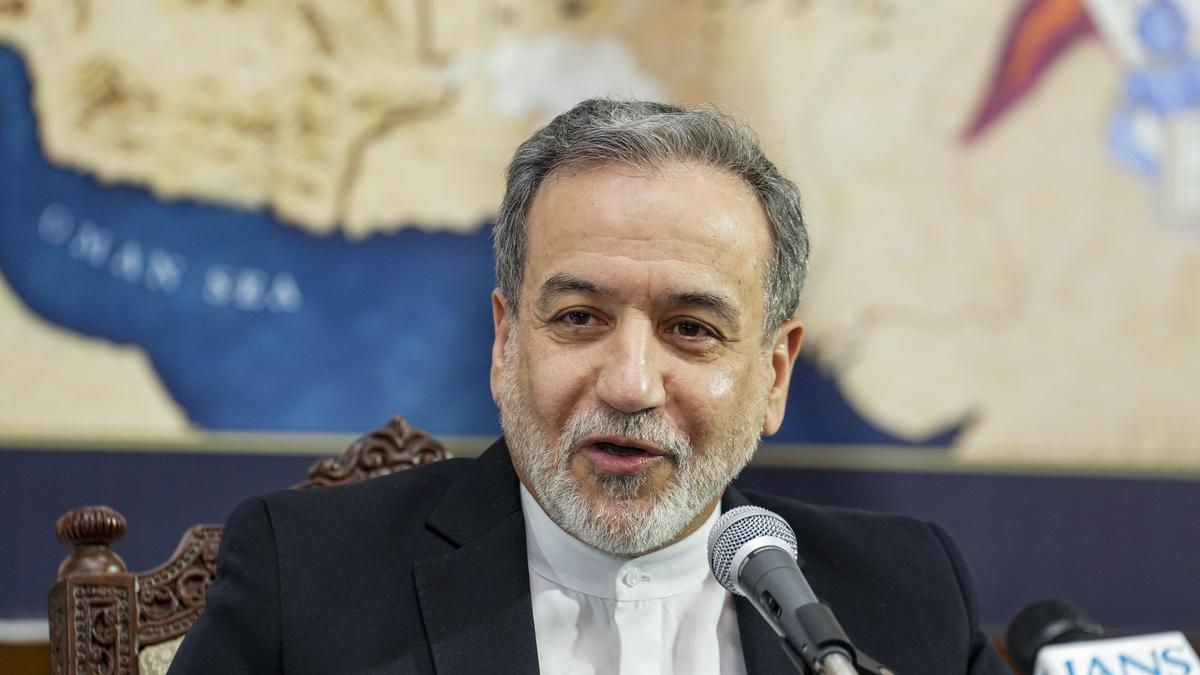
Mainstream media outlets love a predictable script. Whenever tensions flare in the Levant, headlines immediately mirror the official press releases of regional powers, treating theatrical saber-rattling as an inevitable blueprint for regional escalation. When Iran’s Foreign Ministry declares that any military action against Beirut will trigger a full-scale resumption of war, the established press corps treats it as a definitive strategic pivot.
They are missing the entire point.
The lazy consensus in modern geopolitical reporting assumes that public warnings from state officials reflect actual operational red lines. It assumes that state rhetoric is designed to precede action. In reality, the loudest declarations are often designed to mask structural limitations and prevent the very conflicts they claim to be ready for.
By analyzing these public threats as literal promises of total war, analysts fall into a trap of superficial interpretation. The real mechanics of regional deterrence operate on a completely different frequency.
The Myth of the Automatic Escalation Trigger
Western intelligence circles and defense analysts frequently operate under the assumption that regional conflicts follow a linear, domino-effect logic. The narrative suggests that if Party A crosses an arbitrary line drawn by Party B, a massive, uncontained conflagration automatically begins.
This model is fundamentally flawed. It ignores thirty years of asymmetric warfare history in the Middle East.
Major state actors and their non-state allies do not launch existential wars based on emotional reactions to a single red line being crossed. They operate on cold calculus, resource availability, and internal political survival. When a diplomat states that an attack on Beirut means total war, it is not an operational command. It is a classic exercise in rhetorical deterrence.
True strategic escalation is silent. When state actors intend to fundamentally alter the status quo through military force, they do not announce the exact geographic boundaries of their threshold weeks in advance on state television. They adjust troop deployments, shift logistics chains, and secure supply lines in silence. The noise is meant to substitute for action, not signal it.
The Cost of True Total Conflict
Let us dismantle the premise that a full-scale regional escalation is a viable or desired outcome for any of the parties currently issuing these warnings.
A genuine, uncontained conflict across multiple fronts carries astronomical economic and political liabilities. State sponsors of regional networks are dealing with severe domestic economic pressures, currency depreciation, and internal dissent. Committing to a total war scenario over a specific urban center would require an allocation of resources that simply does not exist.
- Financial Exhaustion: Modern asymmetric warfare requires billions of dollars in continuous material supply, drone manufacturing, and missile replenishment.
- Domestic Stability: Protracted conflicts place immense strain on civilian infrastructure, risking domestic backlash that poses a greater threat to ruling regimes than any external adversary.
- Asymmetric Depletion: The primary value of proxy networks lies in their existence as a deterrent. Utilizing them in a total war scenario expends the very leverage that guarantees the sponsor's security in the first place.
I have spent years analyzing regional defense budgets and procurement pipelines. The data consistently shows a massive divergence between defensive expenditures and the offensive capabilities required to sustain the type of total conflict that talking heads warn about on cable news. The infrastructure is built for localized, high-intensity friction, not prolonged regional campaigns.
Why the Press Always Gets Deterrence Wrong
The media consistently misinterprets diplomatic posturing because it treats state communication as a uniform product. Analysts fail to differentiate between three distinct audiences that every official statement aims to reach.
The Domestic Audience
First and foremost, aggressive rhetoric is designed to satisfy domestic hardliners and maintain political legitimacy. When a government faces internal economic stagnation, projecting strength abroad is the oldest tool in the political playbook. It signals to the core support base that the state remains a dominant regional broker, regardless of the reality on the ground.
The Adversary's Analysts
The second audience consists of the intelligence analysts in rival capitals. The goal here is to inject uncertainty into the adversary's decision-making matrix. By setting the stated cost of an action absurdly high, the state hopes to make the adversary's legal and military advisors hesitate, pausing to debate whether the threat is real. It is a psychological stalling tactic, nothing more.
The Regional Network
Finally, the rhetoric serves to reassure regional allies that they have major state backing. It maintains morale among proxy forces without requiring the immediate deployment of state troops or sovereign assets. It is cheap reassurance wrapped in expensive language.
The Flawed Logic of People Also Ask
If you look at the common questions surrounding regional security, the fundamental premises are almost always upside down.
People ask: "Will an attack on a major capital city start World War 3?"
The brutal reality is that local escalations rarely expand into global or even total regional wars unless the vital national security interests of a global superpower are directly compromised. Urban centers have been subjected to severe military pressure throughout modern history without triggering the automatic participation of neighboring states. State actors are highly skilled at compartmentalizing violence to avoid self-destruction.
Another frequent question is: "How can state actors afford to back up these threats?"
The honest answer is that they cannot, and they know it. Geopolitics is not a game of honor where a country must fight to save face because of a public statement. It is a game of survival. When a red line is crossed, states routinely move the goalposts, redefine what constitutes a violation, or delay their response indefinitely under the guise of choosing the right time and place.
Stop Reading the Script
To understand where the region is actually heading, you must stop reading the official transcripts of diplomatic press briefings. They are noise designed to distract from structural vulnerabilities.
Look at the cargo manifests of transport aircraft. Track the movement of fuel oil and specialized engineers. Monitor the central bank interventions and currency fluctuations in the capitals of the shouting nations.
When a state is actually preparing to escalate a conflict to a catastrophic level, the currency markets react long before the foreign minister takes the podium. Right now, the financial markets and logistical networks show no signs of preparing for a total regional war. They show a region priced for managed friction, localized containment, and rhetorical theater.
The next time an official stands in front of a microphone and threatens a full-scale resumption of war over a specific geographic flashpoint, understand it for what it is. It is not a declaration of power. It is an admission that words are the only asset they can afford to spend.


