Thirty-six hours.
That is the entire distance between pulling a soaked, wind-whipped cardboard pirate hat out of a storm drain on a Tuesday night and reaching for seventy-SPF sunscreen on a Thursday afternoon.
If you live anywhere between Santa Barbara and the Mexican border, you know the physical sensation of this particular meteorological prank. Your sinuses feel like they have been scrubbed with dry sandpaper. Your static-charged hair stands off your collar. On your morning commute along the 405, you are blasting the defroster to clear a gray marine gloom, and by the time you walk out of your office at four o'clock, the steering wheel is too hot to grip without a sleeve.
The local news anchors smile brightly at the graphics behind them. They point at big red arrows sweeping down from the Great Basin and call it a warming trend. A nice little weekend treat after a messy holiday.
They are missing the real story.
Because when Southern California lurches from October rainstorms straight into eighty-degree November heat, the shift is not merely a wardrobe inconvenience. It is a violent atmospheric gear-grind that dries out thirty million acres of brush in a matter of hours, strains an aging electrical grid, scrambles the biological clocks of everything growing in the dirt, and quietly erodes our collective sense of what a season is supposed to feel like.
The Anatomy of a Forty-Eight-Hour Mirage
To understand why this feels so jarring, picture a hypothetical neighbor—let’s call her Elena—living in a 1920s bungalow in Pasadena.
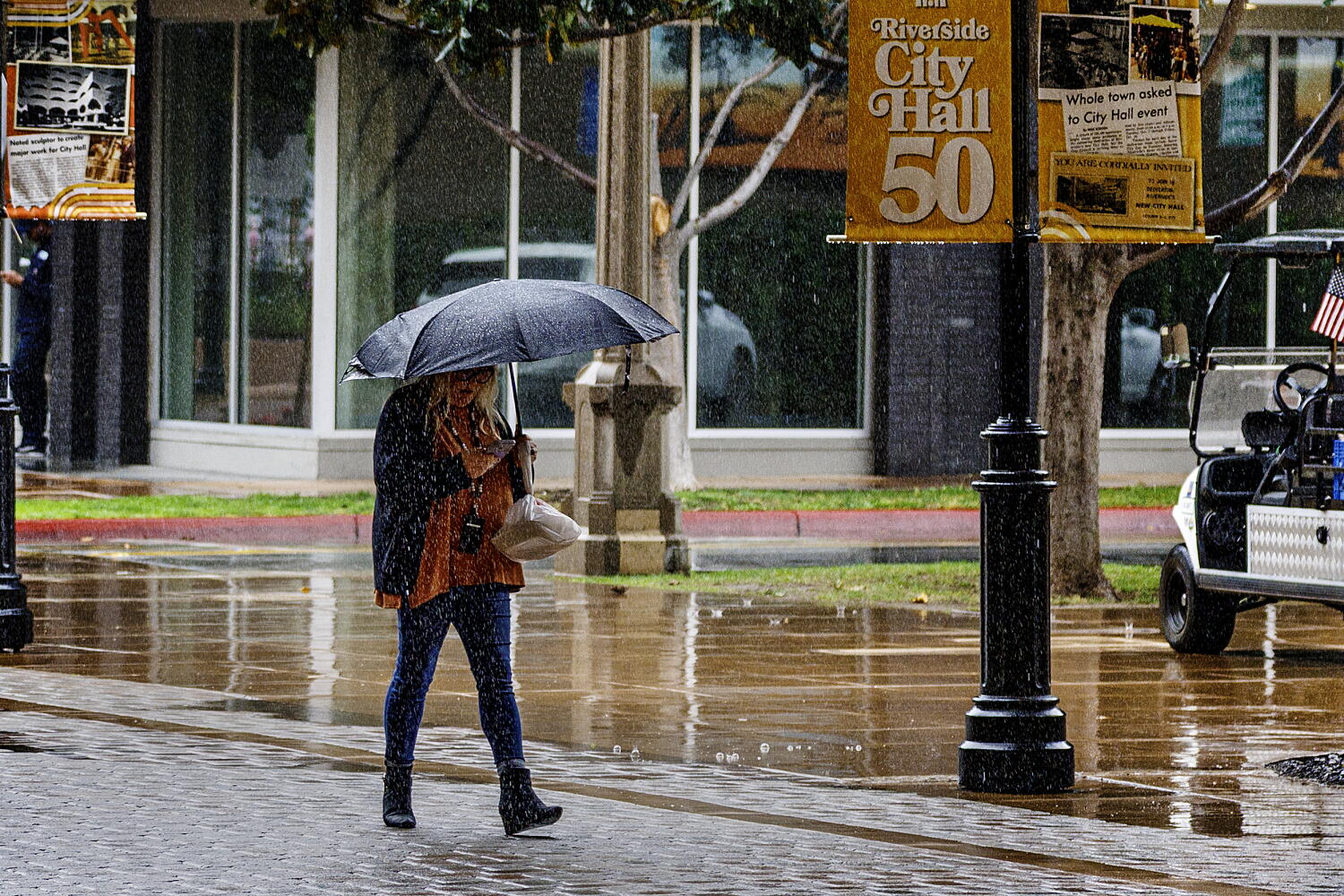
On Halloween night, Elena is standing on her porch with a towel wrapped around her shoulders, watching cold rain sheet off the eaves. A late-October storm system, riding a dip in the jet stream, has dropped half an inch of water across the Los Angeles Basin and dusted the San Gabriel peaks above seven thousand feet with early snow. Trick-or-treaters are sprinting from awning to awning in soggy sneakers. The air smells like wet asphalt, rotting oak leaves, and ozone. Temperature at seven in the evening: fifty-four degrees.
Elena goes to bed thinking about soup. She pulls the heavy flannel duvet up to her chin.
Forty-eight hours later, she wakes up at three in the morning because the bedroom feels like a closed greenhouse. Outside, the palm fronds are rattling with a dry, metallic hiss. By noon, the thermometer on her back patio reads eighty-six. The air is so clear you can see the radio towers on Mount Wilson as if they were standing across the street, yet the humidity has cratered to nine percent.
What happened in those two days?
Meteorologically, the answer is a classic atmospheric seesaw. When a low-pressure trough exits eastward over the Rockies, a massive dome of high pressure often settles right behind it over Nevada and Utah. Think of high pressure as a heavy, invisible piston pushing air downward. As that air gets squeezed down the western slopes of the Sierra Nevada and the San Gabriel mountains toward the Pacific coast, it compresses.
Compression creates heat.
It is the exact same physics you feel when you pump up a bicycle tire and the bottom of the metal cylinder gets hot in your hand. The air isn't warming up because the sun suddenly moved closer; it is warming up because gravity and pressure are cramming the molecules together as they tumble down five thousand feet of elevation toward the beach. By the time those Santa Ana winds spill through the Cajon Pass and the Santa Clarita Valley, the moisture has been wrung out of them entirely.
Wet Halloween. Beach-weather Thursday.
Why a Half-Inch of Rain Does Not Save Us
Here is the trap almost everyone falls into when this pattern hits.
You see rain on the windshield on October thirty-first, and a deep, primal part of your brain relaxes. Good, you think. Fire season is over. The hills got a drink.
That instinct is dangerously backward.
When a quick autumn storm drops half an inch of rain, it wets the surface of dead mustard grass and chaparral, creating a brief, deceptive illusion of safety. Then the high-pressure ridge builds in. Within twenty-four hours of offshore winds blowing at thirty miles an hour with single-digit humidity, every drop of that surface moisture evaporates back into the sky.
What is left behind is worse than what was there before.
To understand why, consider a kitchen sponge left on the counter. If you splash a few drops of water onto a bone-dry sponge and immediately set it in front of a space heater, it doesn't stay damp—it warps, stiffens, and becomes brittle. Southern California’s coastal sage scrub behaves the exact same way. A passing storm doesn't penetrate deep enough into the soil to hydrate the roots of manzanita and chamise. Instead, the subsequent eighty-degree heat and desiccating wind strip the remaining cellular moisture right out of the leaves.
Firefighters in Ventura and Riverside counties watch this transition with a specific kind of dread. While residents are dusting off patio furniture and planning weekend barbecues, fire crews are quietly pre-positioning engines at the mouths of canyons. They know that eighty-five degrees in November, paired with wind, carries a completely different threat profile than eighty-five degrees in July. In July, the marine layer usually rescues the coast by sunset. In November, under an offshore pressure gradient, the heat and dryness hold all night long. The hills never get a chance to breathe.
The Invisible Toll on the Ground
Even if a single spark never touches dry brush, this sudden thermal whiplash leaves quiet casualties everywhere you look.
Walk through any neighborhood orchard or backyard garden after a forty-degree swing, and you will see plants suffering from acute confusion. Citrus trees that began shutting down their sap flow during the chilly October rain suddenly receive a chemical signal that spring has arrived early. Blossoms pop out in November—fragile, out-of-season buds that will be killed off the moment the next cold front arrives in December, costing homeowners next summer’s harvest.
Avocado growers in Fallbrook and Carpinteria spend weeks like this staring anxiously at soil moisture sensors. Shallow-rooted avocado trees cannot drink fast enough when the air temperature jumps thirty degrees in two days. Without emergency irrigation cycles, the leaves curl inward like brown cigars, and immature fruit drops straight to the dirt.
And then there is the human body, which is far less adaptable than we like to pretend.
Urgent care clinics across Orange County and the Inland Empire see a predictable spike every time this weather pattern snaps into place. The cold, damp storm brings people indoors, circulating early-season respiratory viruses. Forty-eight hours later, the bone-dry wind blasts nasal passages until they crack, stripping away the mucous membranes that act as our primary immune barrier while simultaneously kicking up months of settled pollen, mold spores, and freeway brake dust.
People walk around exhausted, nursing unexplained migraines, wondering why they feel hungover when they haven't had a drink. Barometric pressure swings—dropping sharply ahead of a storm and spiking rapidly behind it—trigger genuine physiological stress. Blood vessels constrict and dilate. Inner-ear pressure fluctuates. Joints ache.
We laugh about how spoiled we are when we complain about eighty-degree weather in late autumn. We text photos of palm trees and blue skies to cousins shoveling slush in Chicago, inviting their envy.
Truthfully, though, living without a reliable autumn exacts a subtle psychological tax.
The Grief of the Missing Season
I have lived in Southern California long enough to know that our seasons have always been whisper-quiet. We do not get the theatrical drama of New England maples turning scarlet, nor the clean, decisive slam of a Midwest blizzard. Our autumn has always been measured in smaller, subtler currencies: the angle of the afternoon light turning amber around four o'clock, the first crisp morning where you actually need a jacket to walk the dog, the smell of woodsmoke drifting out of a neighbor's chimney in Sierra Madre.
When a Halloween storm arrives, it feels like a promise. It feels like the land is finally exhaling after six relentless months of summer glare. You pull sweaters out of the cedar chest. You buy cinnamon sticks. You allow yourself to believe that the year is turning its page.
When the thermometer shoots back to eighty-four two days later, that promise breaks.
Suddenly, you are standing in the grocery store aisle wearing a wool cardigan you bought three days ago, sweating through your shirt while "Let It Snow" plays over the ceiling speakers. The cultural calendar and the physical world fall completely out of sync. It is disorienting to carve a turkey when the air outside feels like the Fourth of July. It is exhausting to prepare for winter when the sun is still scorching the paint off your south-facing fence.
Meteorologists tell us these sharp autumn swings are entirely consistent with Southern California’s Mediterranean climate—a region defined by high variability rather than steady averages. Historical weather logs from downtown Los Angeles show plenty of November days breaking ninety degrees over the past century, often right on the heels of early-season rain.
Yet knowing the history doesn't make the lived experience any less surreal. In a warming climate, the baseline shifts upward. The cold troughs have to fight harder to dip south, and the high-pressure ridges that follow them burn hotter and linger longer. The swings feel sharper because the ceiling keeps rising.
Living Inside the Pendulum
So how do you actually live here without losing your mind—or getting caught off guard—when the weather refuses to pick a lane?
You stop trusting the calendar, and you start reading the air.
People who have spent decades in the foothills learn to dress in architectural layers—a light cotton shirt underneath a windbreaker that can be stuffed into a backpack by noon. They learn never to put the patio umbrella away for good until January, and never to pack away the heavy blankets until May.
More importantly, they learn to respect the deceptive calm of a sunny November afternoon. When the sky turns that hyper-real, crystalline blue and the breeze starts blowing from the desert instead of the ocean, you don't let the recent rain fool you. You clear the dry pine needles out of the rain gutters anyway. You keep the gas tank at least half full. You water the perimeter shrubs even though it rained on Tuesday.
Look closely at the hills above the freeway the next time this forty-degree whiplash hits.
At first glance, everything looks like a postcard—golden light, sharp shadows, endless summer stretching effortlessly toward the holidays. Look closer, though, and you can see the tension held in every dry branch and shimmering heat wave rising off the asphalt. Southern California isn't a place where seasons gently fade into one another; it is a place where two entirely different worlds collide over the span of a single weekend, leaving the rest of us standing in the middle, holding an umbrella in one hand and a pair of sunglasses in the other.