The light in a September sky can deceive you. It arrives with a crisp, indifferent clarity, washing over limestone facades and asphalt with an almost pastoral gentleness. For those who stood behind a viewfinder on a Tuesday morning a quarter-century ago, that light is permanently stained.
We talk about history in dates and death tolls. We mark decades with solemn ceremonies, quiet bell tolls, and politicians reading names off laminated cards. But history is actually stored in smaller containers. It lives in the grain of a negative, the twitch of a shutter finger, and the heavy, metallic silence that follows a loud noise.
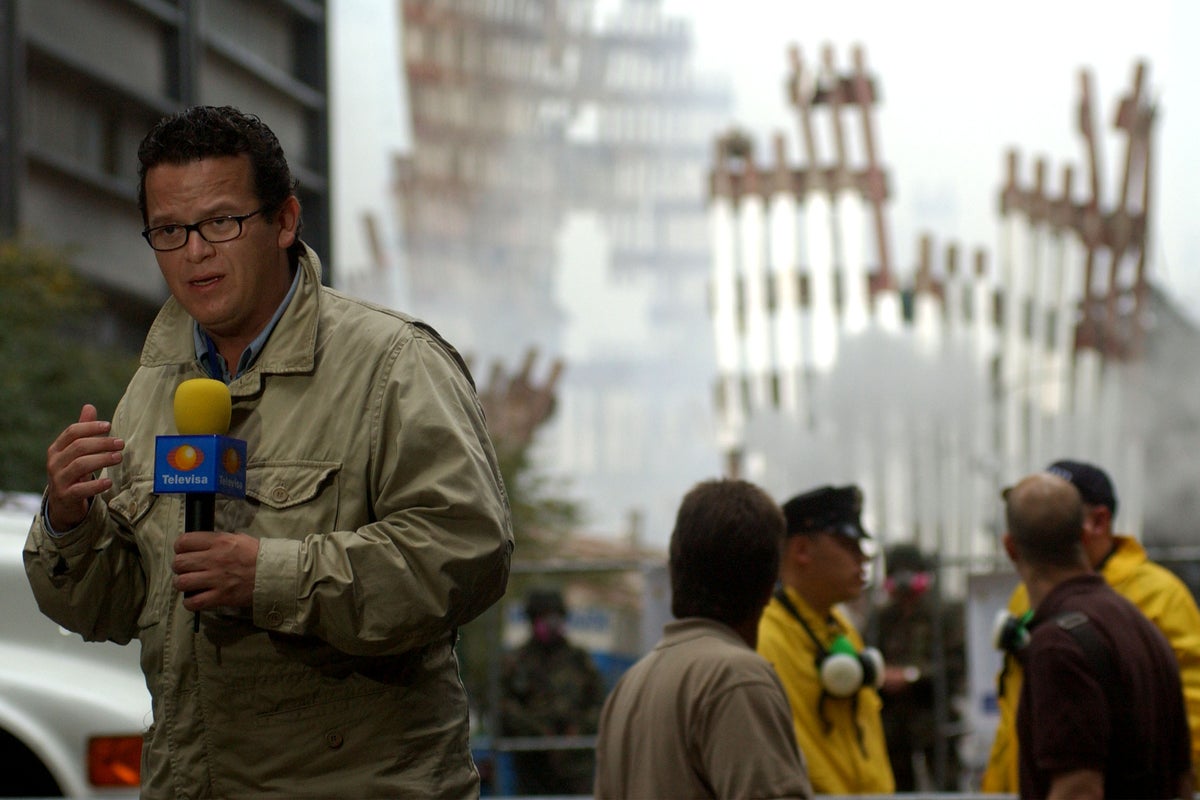
Consider the person behind the lens. To understand what lingers for a journalist twenty-five years after the catastrophe, you have to strip away the press pass and the professional detachment. Imagine a photographer standing at the corner of Church and Vesey. Dust is knee-deep, gray and alkaline, tasting like crushed drywall and burnt hair. The air is so thick it feels like breathing wet concrete. In that instant, instinct overrides terror. The camera rises to the eye. The shutter clicks. Clack-whir. Clack-whir.
That mechanical heartbeat is the sound of documentation. But it is also the sound of detachment. To do the job, a human being must temporarily split in two. One half weeps; the other half adjusts the aperture.
Decades pass. The dust settles into municipal archives and history textbooks. Yet for the men and women who captured the descent of the towers, the frames never stopped developing in the dark room of memory.
The human brain is not built to process total catastrophe. When the scale of violence exceeds comprehension, sensory details become shrapnel. A veteran photojournalist might not recount the macroeconomics of a geopolitical shift or the structural engineering failures of steel trusses. Instead, they remember a shoe. Just a single, pristine white sneaker lying abandoned in the middle of a four-lane avenue, untouched by soot, looking entirely ordinary in a landscape turned apocalyptic.
Why does that specific image haunt a mind for twenty-five years? Because trauma relies on contrast. The greater the horror, the more violently the brain clutches onto trivial normalcy.
When we look back at the iconic visual record of that day—the figures falling against a blindingly blue canvas, the skeletal remains of steel reaching like broken fingers toward the clouds, the firefighters resting against a fire engine with expressions carved from utter exhaustion—we are looking at a shared cultural inheritance. Those photographs did not just record the event. They anchored our collective grief. They ensured that erasure was impossible.
Yet the photographers who gifted us that permanence paid a toll that rarely makes the evening news.
Every time a lens captures an atrocity, the photographer becomes a reluctant custodian of someone else's worst moment. They carry the frame home. It sits on the kitchen table during dinner. It whispers from the corner of the bedroom at three in the morning. Long after the darkrooms faded into digital software libraries, the haunting persists not because the memories are fresh, but because they refuse to fossilize. They remain raw, bleeding edges in the psyche.
We often ask veterans of conflict zones how they survived the fire. We rarely ask how they survived the silence afterward.
As the years accumulate, stacking up toward the half-century mark, the physical spaces change. New glass towers replace the footprint of the old ones. Trees grow in the memorial pools where the water cascades down into an endless void. Pedestrians rush past with coffee cups and smartphones, living in a world shaped entirely by what happened before most of them were old enough to understand it.
The world moves forward with ruthless velocity. But memory has a different clock.
For the journalists who stood in the storm of that September morning, time did not heal all wounds so much as it sharpened them. The urgency of deadline reporting vanished long ago, leaving behind only the unfiltered weight of what was witnessed. They are older now. Their hair is silver, their hands perhaps less steady. But when they close their eyes, the sky is still that terrifying, impossible shade of blue, and the shutter is still clicking in the dark.