Paris wants out of Beijing's mineral choke-hold, and it's looking straight at Southeast Asia to make that happen. Securing rare earths from Malaysia isn't a simple trade deal you sign over a quick diplomatic dinner in Kuala Lumpur. It requires navigating raw material export bans, decades of local environmental trauma, and a massive technical gap between digging dirt out of the ground and building finished magnets for Airbus jets or Renault electric vehicles.
If you've tracked European industrial policy over the last few years, you know the panic in Brussels and Paris is real. Europe relies on China for nearly 98% of its rare earth permanent magnets. That's a terrifying vulnerability when you're trying to decarbonize an entire continent's auto fleet and modernize defense systems at the same time. Malaysia sits on an estimated 16.1 million metric tons of non-radioactive rare earth elements, mostly locked in ion-adsorption clays across states like Perak, Pahang, and Kelantan. Even better, Malaysia already hosts the largest rare earth processing facility outside China—Lynas Rare Earths' massive plant in Gebeng, Pahang.
On paper, it looks like a match made in industrial heaven. France brings aerospace giants, high-tech chemical companies like Solvay (and its spin-off Syensqo), and state-backed investment cash. Malaysia brings the geology and existing midstream infrastructure.
Reality is way messier.
Why Malaysia Won't Just Ship Raw Dirt to Europe
Here is what most casual observers miss about Malaysia's mineral strategy. Kuala Lumpur has zero interest in being a pit-to-port quarry for Western manufacturers.
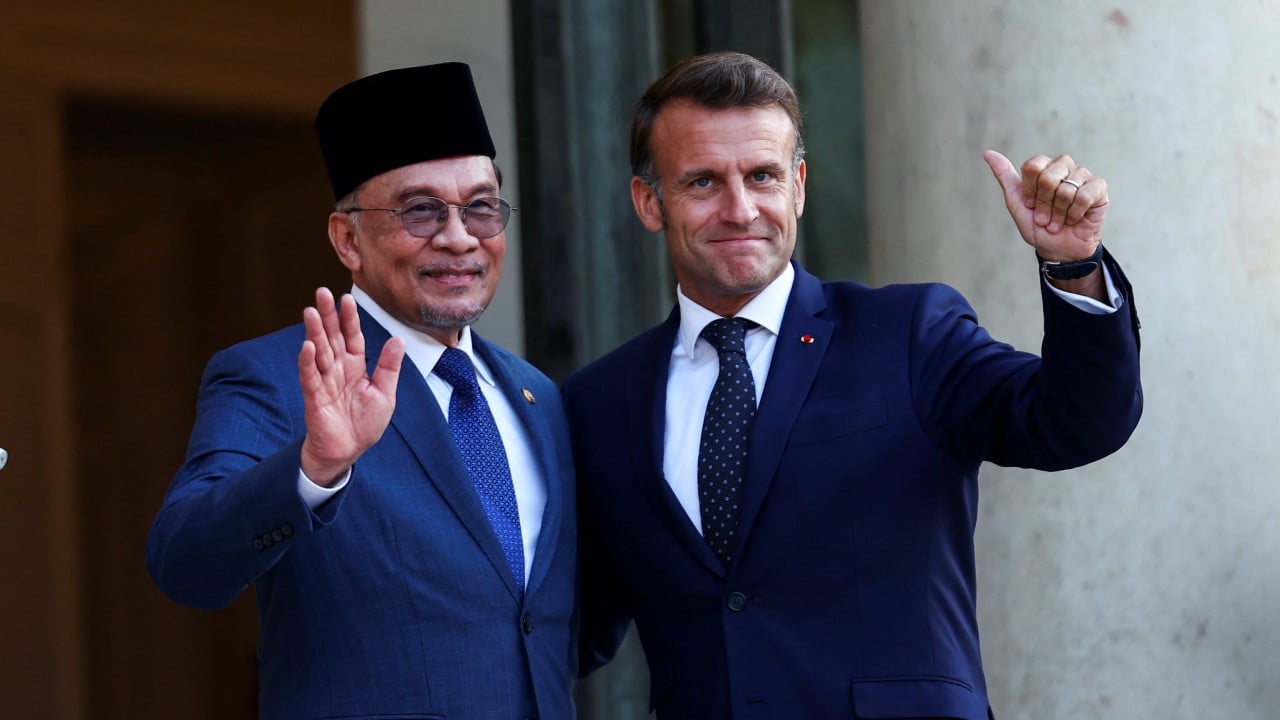
In 2023, Prime Minister Anwar Ibrahim announced a strict ban on the export of raw rare earth elements. The policy took effect in early 2024 and completely changed the rules of engagement for foreign buyers. Malaysia watched Indonesia ban raw nickel exports and successfully force foreign companies to build billions of dollars' worth of local smelters and battery plants. Anwar's government wants that exact same playbook for rare earths.
If France wants Malaysian neodymium, praseodymium, or dysprosium, French companies can't just buy raw ore and ship it to a separation facility in La Rochelle. They have to invest in midstream and downstream processing inside Malaysia.
Think about what that demands from Paris. French industrial players must transfer intellectual property, train local engineers, and build joint ventures with Malaysian state-linked companies. You don't get the minerals unless you help Malaysia capture the high-value manufacturing steps that happen after mining. Honestly, it's a fair demand from Kuala Lumpur's perspective, even if it gives European boardrooms a massive headache.
The Ghost of Bukit Merah Still Haunts Every Mining Permit
You can't talk about rare earths in Malaysia without talking about radiation and public outrage. Most Western analysts treat Malaysia's supply chain as a pure logistics puzzle, completely ignoring the fierce domestic politics surrounding toxic waste.
Back in the 1980s, a Japanese-backed joint venture called Asian Rare Earth operated a processing plant in Bukit Merah, Perak. The facility dumped radioactive thorium waste carelessly, leading to a spike in leukemia cases, birth defects, and miscarriages among local residents. It took years of protests and legal battles to shut it down, and the cleanup cost over $100 million.
That trauma never went away. When Australian miner Lynas opened its processing plant in Pahang over a decade ago, it sparked massive protests and became a defining political issue for the Pakatan Harapan coalition—the very coalition now leading Malaysia's government.
Because of this history, Malaysia strictly enforces rules around radioactive byproducts. While Malaysia's domestic deposits are mostly ion-adsorption clays—which carry much lower levels of thorium and uranium than hard-rock monazite ores—environmental scrutiny remains intense. Any French company looking to fund mining or separation projects in Malaysia has to meet environmental standards that go far beyond basic compliance.
- Strict waste management protocols: Companies must prove they have permanent, leak-proof disposal or neutralization methods for all chemical and mildly radioactive residues before breaking ground.
- Forest reserve protections: A huge chunk of Malaysia's rare earth deposits sits underneath permanent forest reserves. Environmental groups and federal ministries fiercely resist clearing primary rainforest for in-situ leaching operations.
- State versus federal friction: Under Malaysia's constitution, land and mineral rights belong to individual state governments, while export licenses and environmental approvals sit with the federal government in Putrajaya. Foreign investors often get caught in the crossfire between state sultans or chief ministers eager for mining royalties and federal regulators trying to enforce sustainability rules.
What France Actually Brings to the Table
France isn't showing up empty-handed. Unlike many other European nations that allowed their chemical and metallurgical processing sectors to wither away over the last thirty years, France actually kept a foothold in rare earth separation.
Look at La Rochelle on France's Atlantic coast. Solvay—now operating its specialty materials business under Syensqo—has run a rare earth separation and formulation plant there since 1948. In 2023 and 2024, the company announced major investments to expand La Rochelle into a European hub for permanent magnet materials, aiming to supply roughly 30% of Europe's demand by 2030.
France also brings serious financial muscle and diplomatic backing. President Emmanuel Macron has pushed hard for European "strategic autonomy," backed by the EU's Critical Raw Materials Act. Paris has set up dedicated investment funds, including a €2 billion critical minerals fund managed with private partners like InfraVia, specifically designed to take equity stakes in overseas mining and refining projects.
French companies also hold deep expertise in solvent extraction—the complex, multi-stage chemical process used to separate individual rare earth elements from one another. Separating heavy rare earths like dysprosium and terbium requires hundreds of mixer-settler stages and precise chemical recipes. China dominates this step, holding roughly 90% of global refining capacity. France is one of the very few Western countries with engineers who actually know how to run these circuits at commercial scale.
The Missing Link Between Separation and Finished Magnets
Even if French capital helps unlock Malaysian ion-adsorption clays, and even if Lynas or new joint ventures separate those oxides in Pahang, a massive bottleneck still sits right in the middle of the supply chain.
Raw oxides don't power electric motors. You have to turn those oxides into metals, turn the metals into alloys, and sinter those alloys into high-performance neodymium-iron-boron (NdFeB) magnets.
Right now, metallization and magnet-making are almost entirely monopolized by China. Even Lynas, despite operating a massive separation plant in Malaysia, has historically shipped much of its separated material to China or Japan for the final steps of metal and magnet production, though it is actively building out new capacity in the US and Australia.
For France to truly secure a China-free supply chain from Malaysia, Paris has to solve three brutal industrial challenges at once.
1. Building Midstream Metallization Capacity
Turning rare earth oxides into pure metals requires high-temperature molten salt electrolysis. It's energy-intensive, messy, and requires specialized equipment that few European firms operate today. France needs to either fund metallization plants directly inside Malaysia's industrial parks—like the Gebeng industrial estate—or ship separated oxides back to France to feed domestic metal-making facilities.
2. Competing With Chinese Pricing Power
Rare earth markets aren't free markets. Whenever Western projects get close to commercial production, Chinese state-backed producers tend to flood the market, crashing prices for neodymium and praseodymium oxide until Western ventures go bankrupt. We saw this happen repeatedly between 2012 and 2024. French buyers—companies like Safran, Thales, and Stellantis—have to commit to long-term offtake agreements with price floors. If French automakers keep chasing the cheapest spot price on the global market, no Malaysian mining or processing project will ever survive past its first five years.
3. Navigating Malaysia's Non-Aligned Diplomacy
Malaysia plays a careful diplomatic game between Washington, Brussels, and Beijing. China is Malaysia's largest trading partner, and Chinese firms are already active in Malaysia's downstream manufacturing sector. Kuala Lumpur won't sign any deal with France that looks like an explicit anti-China containment pact. French diplomats have to frame their rare earth partnerships around mutual industrial development, green technology transfer, and commercial resilience—not geopolitical rivalry.
How a Realistic France-Malaysia Deal Looks in Practice
Forget grand, sweeping treaties that promise millions of tons of minerals overnight. Real progress between Paris and Kuala Lumpur happens through targeted, unglamorous industrial partnerships.
First, expect French technical agencies—like the French Geological Survey (BRGM)—to expand joint mapping and sustainable extraction trials with Malaysian state agencies. In-situ leaching, the standard method for extracting rare earths from ion-adsorption clays, can easily contaminate groundwater with ammonium sulfate if done poorly. Demonstrating cleaner, closed-loop leaching technologies gives Malaysian state governments the political cover they need to approve new mining licenses outside protected forest zones.
Second, watch for joint ventures focused on recycling and urban mining alongside primary extraction. Malaysia is a massive electronics manufacturing hub, generating huge volumes of industrial scrap and e-waste. French chemical recyclers like Carester—which is building a major rare earth recycling and refining plant in Lacq, southwestern France—offer technologies that complement Malaysia's existing industrial base.
Third, pay close attention to financing structures. Private banks hate rare earth projects because of price volatility and permitting delays. Any successful Franco-Malaysian venture requires blended finance: export credit guarantees from Bpifrance, sovereign co-investment from Malaysian funds like Khazanah Nasional, and binding purchase contracts from European aerospace and defense contractors.
If you're tracking critical mineral investments or managing supply chain risk in European manufacturing, don't watch diplomatic press conferences for clues. Track three concrete indicators over the next 18 months: new state-level mining leases issued in Perak or Pahang that include foreign technical partners, binding offtake contracts signed by French industrial groups with floor-price guarantees, and capital commitments for metallization facilities inside Malaysia's east coast industrial corridors. Until those three pieces lock into place, France's rare earth ambitions in Malaysia remain a promising blueprint rather than a functioning pipeline.