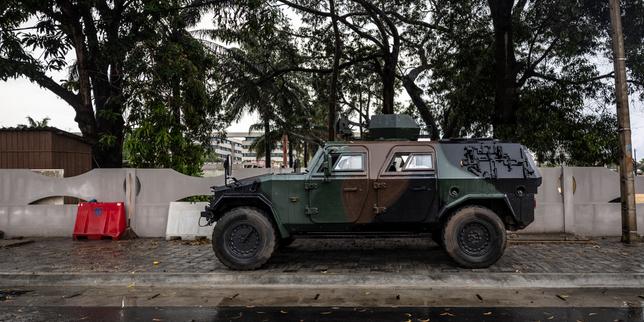
The quiet expansion of French military involvement in northern Benin marks a desperate pivot in West African security. For months, small units of French special forces have operated alongside the Benin Armed Forces (FAB) to stem the southward bleed of extremist violence from Burkina Faso. This is not a formal deployment under a wide-reaching treaty like the now-defunct Operation Barkhane. Instead, it is a surgical, almost invisible presence designed to keep a fragile state from collapsing without triggering the populist, anti-French sentiment that recently cleared French boots out of Mali, Niger, and Burkina Faso.
Benin was once considered a bastion of stability in a volatile region. That changed as the W and Pendjari National Parks became transit corridors for groups linked to Al-Qaeda and the Islamic State. These groups do not just bring bombs; they exploit long-standing grievances over land rights and resource management. By the time the first major attacks hit Beninese soil, the insurgency had already spent years grooming the local population. France is now trying to help Cotonou win a race it has already been losing for half a decade.
The Strategy of Forced Discretion
The current French presence in Benin is a masterclass in military minimalism. Gone are the sprawling desert bases and the heavy convoys that became symbols of "neocolonialism" in the Sahel. In their place, a handful of elite instructors and operators work in the shadows. They focus on intelligence, surveillance, and reconnaissance (ISR) and tactical training.
Paris has learned a bitter lesson from its neighbors. Any visible French flag acts as a lightning rod for Russian-backed disinformation and local frustration. Consequently, the missions are framed strictly as "partnership actions." French operators often wear sanitized uniforms or remain confined to specific training zones in the north. They provide the eyes in the sky—drones and satellite data—that the FAB desperately needs to track highly mobile insurgent cells moving through the dense bush.
This discretion is a mutual requirement. For Beninese President Patrice Talon, acknowledging a heavy Western military presence is a political risk. For the Élysée, it is a way to maintain influence in the Gulf of Guinea without the domestic blowback of a "forever war." However, the effectiveness of such a light footprint is questionable when the enemy is increasingly integrated into the local social fabric.
Why the Parks Became a Front Line
The geography of the W-Arly-Pendjari (WAP) complex is the insurgents' greatest asset. These vast, cross-border protected areas are difficult to patrol and even harder to govern. When the Beninese government stepped up conservation efforts, often with the help of international NGOs, they inadvertently created a vacuum. Local herders and hunters found themselves displaced or criminalized by new park regulations.
The jihadists filled that void. They offered protection to those the state had sidelined. They regulated the very land the government tried to fence off. By the time French special forces arrived to train the FAB in "jungle warfare," the insurgents were already the de facto local government in several border hamlets.
Military intervention cannot fix a land-use crisis. While French intelligence can help the FAB intercept a motorbike convoy, it cannot help the state rebuild trust with a Fulani herder who has lost his grazing rights. The tactical wins provided by French technical superiority are frequently neutralized by the strategic failure of local governance.
The Equipment Gap and the Logistics of Desperation
The Benin Armed Forces are undergoing a rapid transformation, but they are starting from a position of severe disadvantage. Until recently, the FAB was primarily a ceremonial and peacekeeping force, ill-equipped for high-intensity counter-insurgency.
France has stepped in to bridge the gap with "structural cooperation." This involves more than just shooting drills. It includes:
- Intelligence Sharing: Providing real-time tracking of insurgent movements crossing from Burkina Faso.
- Tactical Medicine: Training units to survive the initial moments after an IED (Improvised Explosive Device) blast.
- Air Support Coordination: Teaching Beninese officers how to integrate air assets with ground maneuvers.
Despite this, the FAB remains outgunned in the realm of asymmetric warfare. Insurgents use the terrain to their advantage, employing cheap, effective IEDs that negate the mobility of Beninese patrols. The French are trying to professionalize a force that is learning on the fly, under fire, in a region where the enemy has all the time in the world.
The Russian Shadow
The ghost of the Wagner Group (now rebranded as Africa Corps) hangs over every French move in Cotonou. The Kremlin has successfully exploited French military failures elsewhere to install its own mercenaries as "security partners." Benin has so far resisted this siren song, preferring the institutional stability of Western partnerships. However, if the French-supported FAB fails to show clear results in the north, the pressure on Talon to look toward Moscow will intensify.
France is no longer the only shop in town. This competition has forced Paris to be more flexible, offering better terms and more advanced equipment with fewer strings attached. It is a buyers' market for security in West Africa, and Benin is shopping with an awareness that French support is a dwindling resource.
The Failure of the "Buffer Zone" Concept
For years, coastal West African states like Benin, Togo, and Ghana were viewed as "buffer zones" that would protect the Gulf of Guinea from the Sahelian fire. That theory is dead. The fire has jumped the line.
The insurgency in northern Benin is no longer an "overflow" problem. it is a localized movement with local recruits. French special forces are essentially trying to put out a fire that has already reached the basement. They are focusing on the border, but the cells are already operating much further south than Cotonou likes to admit.
The military approach assumes that the enemy is a foreign invader. In reality, the enemy is often a local resident who has been radicalized by a combination of religious fervor and economic despair. You cannot "special forces" your way out of a systemic collapse of rural authority.
The Cost of Silence
The secrecy surrounding these operations carries its own danger. By keeping the French involvement "discreet," both governments avoid public scrutiny. This lacks the transparency needed to build genuine public support for the war effort. When the public only hears about the military through rumors or leaked reports of French casualties, it breeds suspicion.
The insurgents thrive on this suspicion. They portray the FAB as puppets of a foreign power, even when the French are merely providing logistics and training. The "invisible" war is a gamble. If it works, France stays relevant and Benin stays intact. If it fails, the exit will be as messy and public as the ones in Bamako and Niamey.
The reality on the ground is a grueling war of attrition. There are no major battles, only sudden ambushes and the slow, grinding fear of the next roadside bomb. French special forces bring technical expertise, but they cannot bring the political will required to reform the northern territories.
The Hard Edge of the North
The frontline is currently moving through the Alibori and Atacora departments. Here, the heat is oppressive and the vegetation is thick enough to hide a thousand men. This is where the French "partnership" is being tested. Success here isn't measured in territory captured, but in the number of days a village goes without an assassination or a kidnapping.
The FAB has become more aggressive. They are conducting more patrols and engaging in more frequent contact with the enemy. This increased activity is a direct result of the training and intelligence provided by their French counterparts. But aggression comes at a cost. Casualties are mounting, and the state's resources are being stretched to the breaking point.
France is effectively providing a life-support system for the Beninese military. They are keeping the patient stable, but they aren't curing the disease. The disease is a lack of state presence in the periphery, and that is something no amount of elite military training can solve.
The Intelligence Trap
Relying on French ISR creates a dependency that might be impossible to break. If France were to withdraw tomorrow, the Beninese military would be effectively blinded. They do not yet possess the indigenous capability to maintain the high-tech surveillance net that the French have draped over the north.
This dependency is a double-edged sword. It ensures that Benin stays aligned with Paris, but it also means the FAB is fighting a war according to a Western doctrine that may not be sustainable in the long term. The French are teaching the Beninese to fight like a modern Western army, with all the logistical baggage that entails. In the rugged terrain of the WAP complex, a simpler, more localized approach might actually be more effective.
The insurgents don't need satellites. They have the local markets, the mosques, and the kinship networks. They have the best intelligence of all: the eyes of the people who live there.
The Inevitability of Escalation
Despite the desire for discretion, the conflict in northern Benin is escalating. The attacks are becoming more sophisticated, involving larger numbers of fighters and more complex tactics. This will inevitably draw the French deeper into the fold. You cannot provide "discreet support" to a losing side for long before you are forced to either get in or get out.
The current strategy is a holding pattern. France is waiting to see if the FAB can turn the tide; Benin is waiting to see if the French will provide more heavy weaponry. Meanwhile, the insurgents are digging in. They are establishing permanent bases within the national parks and creating shadow administrations that collect taxes and dispense justice.
The "discreet" phase of this war is likely coming to an end. As the threat moves closer to the commercial hubs of the south, the pressure for a more overt and robust response will become overwhelming. At that point, the French will have to decide if they are willing to risk another high-profile African intervention or if they will leave Benin to find its own way, perhaps with partners who don't care about discretion.
The French special forces in northern Benin are currently the only thing standing between the current stalemate and a total security collapse. They are the invisible glue holding a fractured front together. But glue is not a permanent fix for a structure that is rotting from the inside.
Move the focus from the tactical to the political, or the northern departments will become a permanent sanctuary for the very groups France has spent a decade trying to eradicate.