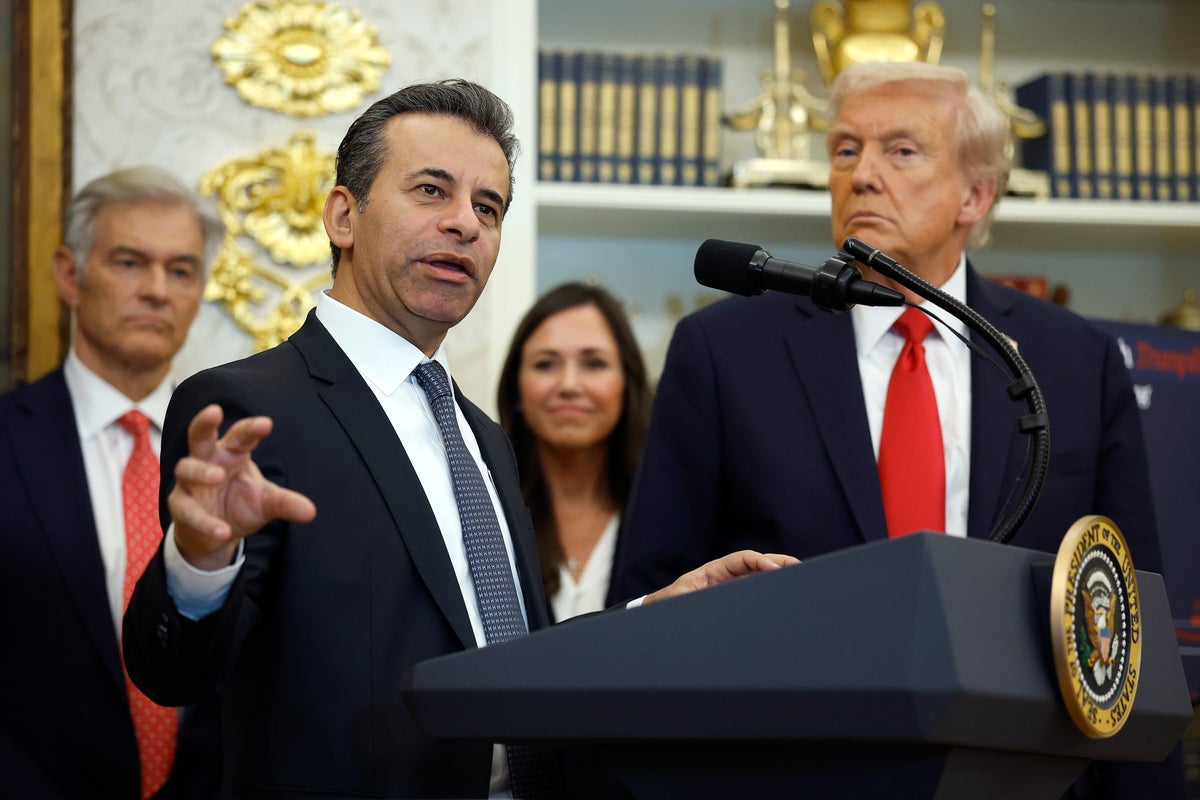
The oval conference table in the West Wing does not care about public health statistics. It cares about momentum. Over a tense weekend, the air inside the room grew heavy with the kind of political math that keeps presidents awake at night. On one side of the ledger was a dwindling approval rating among Gen Z voters, a critical sliver of the electorate that was quietly slipping away. On the other side was a campaign promise, scrawled in the permanent marker of populist rhetoric: a vow to save flavored vaping.
Between those two realities sat Dr. Marty Makary, the Food and Drug Administration Commissioner. For months, Makary had operated under a traditional bureaucratic philosophy, holding the line against sweet, fruity e-cigarettes out of an institutional fear of hooking a new generation on nicotine. But the phone calls from the residence over the weekend weren't about philosophy. They were sharp, direct, and increasingly impatient. By Monday, advisers were whispering that the commissioner was becoming a liability, an obstacle to an administration eager to throw a bone to young, libertarian-leaning supporters. Expanding on this topic, you can find more in: The Death of Neutrality and the High Stakes of the Ivorian Power Play.
Then, on Tuesday, the dam broke.
With unprecedented speed, the FDA authorized the marketing of four new flavored vape products from Los Angeles-based manufacturer Glas Inc. Among them were two menthol varieties, alongside two distinctly sweet profiles: mango and blueberry. It was a staggering policy U-turn that left public health advocates blinking in disbelief. A regulatory fortress that had rejected more than a million flavored vape applications under the previous administration crumbled in a matter of days. Experts at NPR have also weighed in on this matter.
To understand how a single weekend of political pressure could dismantle years of regulatory precedent, you have to look past the marble facades of Washington and into a living room in Ohio, where someone like Marcus sits on a worn fabric sofa.
Marcus is forty-two. For twenty of those years, his mornings began with the metallic click of a plastic lighter and the harsh, familiar burn of a combustible cigarette. His cough was a permanent fixture of his family's household audio track. Two years ago, his daughter bought him an e-cigarette. He tried the tobacco-flavored pods first; they tasted like ash and failure. It wasn't until he tried a mango-flavored liquid that the psychological chain broke. The sweetness didn't feel like a vice; it felt like an exit ramp.
For millions of adults like Marcus, the debate over flavors is not an abstract policy discussion. It is a matter of harm reduction, a tangible tool that separates them from the carcinogens of burning paper and tobacco. Public health data estimates that smoking claims 480,000 American lives every single year through cancer, heart disease, and emphysema. To the vaping industry and its advocates, a ban on fruit flavors is a de facto sentence returning desperate adults to the arms of Big Tobacco.
Yet, walk three blocks down from Marcus’s house to the local high school, and the narrative flips entirely.
There, a school counselor locks a desk drawer filled with confiscated high-tech plastic rectangles. To the educators and parents patrolling those hallways, blueberry and mango aren't exit ramps for dying smokers. They are bait. Sweets and candies are the universal language of adolescence, and the explosion of youth vaping over the last decade was fueled almost entirely by these forbidden flavors. Even with youth vaping rates recently hitting a ten-year low, the fear of a resurgent epidemic remains a raw, pulsing nerve for parents across the country.
This is the agonizing paradox that the FDA has weaponized, ignored, and struggled to balance for a decade. How do you give Marcus his exit ramp without building an entrance ramp for his children?
The answer, according to the FDA’s sudden Tuesday announcement, lies not in prohibition, but in a piece of code.
Glas Inc. did not win its marketing order merely by surviving a chemical review. It won because it promised to turn the smartphone into a digital bouncer. The newly authorized Glas G2 system introduces an aggressive, legally mandated layer of friction to the simple act of taking a puff.
Consider how the device actually functions in the wild. A user cannot simply buy a pod, click it into a battery, and inhale. Instead, they must download a proprietary smartphone application. They must upload a government-issued identification card. They must take a live selfie to verify their identity through facial recognition software. Only after this digital gauntlet is cleared does the smartphone send a Bluetooth signal to unlock the vape.
If the phone is separated from the device, the vape dies. If the app demands a random biometric check-in during the day and the user fails to provide their face, the vape dies. It is an intricate electronic cage designed to ensure that an adult’s vice remains strictly in adult hands.
Bret Koplow, the acting director of the FDA’s Center for Tobacco Products, brokenly summarized the institutional hope behind the decision, calling the device-access restrictions a potential breakthrough in preventing youth use. The logic is elegant on paper: if a teenager steals their parent’s blueberry vape pod, it becomes nothing more than a useless piece of plastic without the parent's face and phone nearby.
But out in the real world, elegant logic often collides with human ingenuity and systemic reality.
Anti-tobacco advocates are already sounding the alarm, viewing the authorization as a dangerous Trojan horse. They point out that the vast majority of American teenagers who currently vape are already using illicit, completely unauthorized disposable devices shipped from overseas—devices that feature no age-gating, no Bluetooth, and zero regulatory oversight. By opening the legal floodgates to domestic fruit flavors, critics argue the government is normalizing the olfactory profile of youth addiction, regardless of how complex the lock on the bottle happens to be.
There is also a deeper, more cynical question of accessibility. The adults who smoke at the highest rates in America often belong to marginalized, low-income communities. They are people working hourly shifts, sometimes balancing multiple jobs, who may not own the latest smartphone, or who may find the constant friction of biometric check-ins and Bluetooth pairing too tedious to endure. If a harm-reduction tool requires a high-end digital ecosystem to function, it risks becoming a boutique luxury for the middle class, leaving the most vulnerable populations to stick with the cheap, lethal simplicity of a twenty-pack of cigarettes.
What transpired this week was not a clean victory for scientific consensus. It was a demonstration of raw political gravity. The regulatory process is supposed to be a slow, grinding mill that sifts through clinical trials, toxicological data, and long-term behavioral studies. Yet, when an administration determines that a bureaucratic agency is moving too slowly to satisfy a campaign pledge, the mill can be forced to spin at terrifying speeds.
The immediate fallout inside the agency remains uncertain. Speculation regarding Makary’s job security continues to swirl through Washington corridors, a stark reminder of the invisible stakes for those tasked with policing the nation’s health. The FDA has insisted that this authorization is not an endorsement, nor is it a green light for the rest of the industry. It is a highly controlled test case.
The air remains thick with uncertainty. We have entered an era where public health policy is dictated via Bluetooth handshakes and late-night executive ultimatums. For the millions of Americans watching from the sidelines—the parents searching backpacks, the smokers trying to clear their lungs, the politicians counting votes—the true cost of this week’s compromise won’t be measured in press releases or stock prices. It will be measured in the data points of the years to come, written in the breath of a generation trying to decide what it means to be free.