The operational realities of the Strait of Hormuz resist the binary narrative of absolute closure or uninterrupted flow. While U.S. Central Command asserts that traffic continues to move through this vital artery, Tehran's declaration of an administrative blockade reveals a deeper structural shift in regional escalation. The confrontation is no longer merely an exchange of kinetic strikes; it is a systemic contest between physical maritime enforcement and administrative denial. Understanding the current crisis requires moving past the political rhetoric to analyze the underlying mechanics of maritime chokepoint economics, kinetic degradation parameters, and the structural failure of the interim sixty-day diplomatic framework.
The Dual Architecture of Chokepoint Leverage
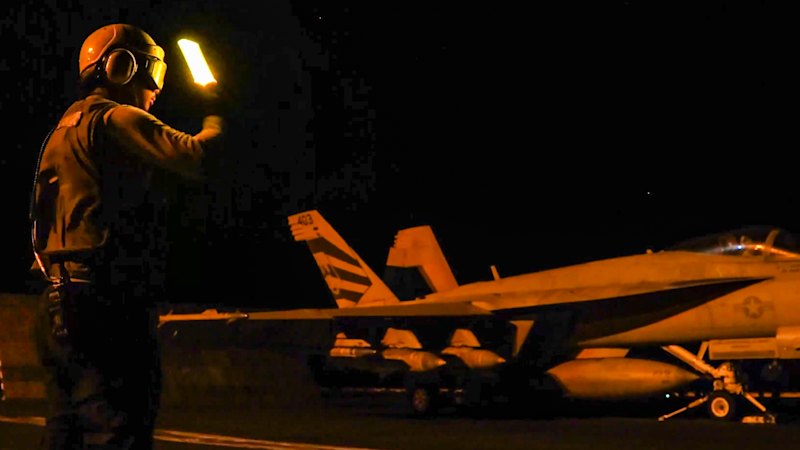
Control over an international waterway operates on two distinct vectors: physical interdiction and administrative friction. The United States military approaches the crisis through the lens of physical access, deploying carrier strike groups, tactical aviation, and advanced unmanned aerial and surface assets to maintain open sea lanes. From the perspective of U.S. Central Command, as long as commercial hulls can physically clear the geographical boundaries of the strait, the corridor remains open.
Conversely, the Islamic Republic of Iran utilizes an administrative friction framework. Through the establishment of the Persian Gulf Strait Authority, Tehran has attempted to transition the waterway from an international passage governed by the United Nations Convention on the Law of the Sea to a sovereign regulatory zone. By demanding that commercial vessels submit formal transit requests and threatening to levy unilateral transit fees, Iran introduces legal and financial liabilities that alter the risk calculus of global shipping firms.
This creates a structural bottleneck that does not rely on a permanent physical barrier. Commercial maritime operations are governed by insurance underwriting, crew safety thresholds, and predictable scheduling. By introducing legal ambiguity and demonstrating the intent to execute targeted interdictions—such as the strike on the Cyprus-flagged container ship—Tehran triggers exponential increases in war-risk insurance premiums. The blockade is therefore structural rather than absolute; ships may physically fit through the strait, but the economic viability of the transit collapses under the weight of systemic risk.
The Attrition Calculus of Kinetic Degradation
The U.S. military strategy rests on a doctrine of rapid kinetic degradation. By striking hundreds of Iranian military assets, including coastal radar installations, anti-ship missile sites, drone launch platforms, and Islamic Revolutionary Guard Corps Navy fast attack craft, Washington aims to reduce Tehran’s operational capacity below the threshold required to execute successful interdictions.
However, this degradation model faces three distinct structural limitations:
- Asymmetry of Reconstruction: Suppressing fixed radar installations and conventional missile batteries requires expensive precision-guided munitions. Conversely, the IRGC relies heavily on decentralized, low-cost assets such as one-way attack drones and mobile anti-ship cruise missile launchers. These platforms are easily concealed within the rugged terrain of the southern Iranian coastline and can be replaced at a fraction of the cost incurred by the striking forces.
- The Sensor-Shooter Asymmetry: Air defense systems and coastal radars can be temporarily disabled, but the narrow geography of the strait means Iran can maintain situational awareness through basic visual observation, commercial AIS tracking, and small civilian vessels acting as spotters. A comprehensive blind spot is structurally impossible to enforce in a waterway that narrows to twenty-one nautical miles.
- The Introduction of Novel Vectors: The deployment of one-way attack sea drones alongside conventional aerial assets introduces a multi-domain threat vector that strains the defense capacity of escorting naval vessels. The defensive envelope must simultaneously account for sub-surface, surface, and aerial threats within a highly restricted operational space, reducing reaction windows to seconds.
The tactical reality is that absolute degradation is an unattainable metric. Even if U.S. strikes diminish Iran’s conventional capabilities by eighty percent, the remaining twenty percent remains entirely sufficient to execute asymmetrical harassment operations capable of halting commercial shipping traffic.
The Regional Externalization Shift
A critical miscalculation in the current deterrence framework is the assumption that the conflict can be contained to the immediate maritime domain of the Persian Gulf. Because direct kinetic confrontation inside Iranian territory carries significant escalatory risks, the theater of operations has rapidly externalized into neighboring states.
Iran's strategic response to U.S. airstrikes has been the systematic targeting of regional infrastructure hosting American military personnel. Ballistic missile and drone salvos directed at installations in Jordan, Kuwait, Oman, and Qatar demonstrate a doctrine of horizontal escalation. By attacking the periphery, Tehran forces regional hosting nations to weigh the geopolitical benefits of alliance with the United States against the immediate domestic risk of infrastructure destruction and airspace violations.
This externalization creates a secondary vulnerability for the coalition. Host nations face acute security dilemmas. The interception of Iranian projectiles over Jordanian or Omani airspace strains local air defense networks and threatens domestic stability. When Oman summons diplomats to protest drone strikes near its territorial waters, it signals that the regional consensus supporting U.S. freedom-of-navigation operations is fracturing. Tehran leverages this friction to isolate Washington diplomatically, presenting regional states with a stark choice: participate in a protracted regional conflict or acquiesce to Iran’s administrative management of the strait.
The Dissolution of the Sixty-Day Diplomatic Window
The current military escalation marks the structural collapse of the interim memorandum of understanding signed in mid-June. The agreement was designed to establish a sixty-day pause in hostilities to facilitate long-term stabilization talks. The fundamental flaw of this diplomatic framework was its failure to decouple the status of the Strait of Hormuz from broader strategic leverage.
Both parties viewed the transition period not as a space for concession, but as a window to maximize their respective bargaining positions. The U.S. administration sought to enforce a status quo that neutralized Iran’s regional influence without offering significant sanctions relief. Iran, conversely, viewed the enforcement of its Persian Gulf Strait Authority as a permanent geopolitical reality that the West would eventually have to accept.
The transition from diplomacy back to active conflict was triggered by a predictable breakdown in deterrence. The moment Iran executed its strike against commercial shipping off the coast of Oman, it demonstrated that it valued the leverage of maritime disruption over the fragile benefits of the interim agreement. The subsequent U.S. declaration that the ceasefire is over shifts the strategic environment from managed competition to open-ended attrition.
The Economic Transmission Mechanism
The strategic deadlock in the Middle East translates directly into global macroeconomic volatility through well-defined transmission channels. The Strait of Hormuz historically handles roughly twenty percent of the global supply of liquid petroleum and significant volumes of liquefied natural gas. The threat of structural closure alters global markets long before physical supply shortages manifest.
- The Risk Premium Inversion: Crude oil prices respond instantly to the rhetoric of closure. This spike is driven not by an immediate deficit in barrels delivered to refineries, but by the financial sector pricing in the worst-case scenario of a prolonged total blockade.
- Supply Chain Rerouting Costs: When the risk profile of the strait becomes unacceptable, shipping firms are forced to consider alternate routes. For tankers originating in the Persian Gulf, there are few viable short-term alternatives. The utilization of pipelines traversing Saudi Arabia to the Red Sea is capped by capacity constraints and geographical vulnerabilities of its own. Rerouting vessels around the Cape of Good Hope adds weeks to transit times, drives up fuel consumption, and disrupts global container shipping schedules.
- The Inflationary Feedback Loop: Higher energy prices combined with increased maritime transit costs act as a tax on global consumption. The increased cost of moving goods and refining fuel feeds directly into core inflationary metrics in major importing economies, complicating central bank monetary policies and threatening global growth stability.
Tactical Realities of Maritime Escort Operations
To maintain the assertion that traffic is flowing, the United States and its allies must rely heavily on direct convoy escort operations. This operational model demands an unsustainable ratio of naval assets to merchant hulls.
A standard merchant vessel transiting the strait requires dedicated defensive coverage against simultaneous asymmetric threats. The physical constraints of the shipping lanes mean that naval vessels must operate in close proximity to a hostile coastline, exposing them to land-based anti-ship cruise missiles that possess extremely short flight times. This environment neutralizes many of the long-range radar advantages possessed by modern warships, forcing reliance on terminal point-defense systems.
Furthermore, the operational tempo required to escort hundreds of commercial vessels weekly creates severe maintenance and crew fatigue bottlenecks. Naval hulls deployed for continuous high-readiness operations suffer accelerated wear on propulsion and combat systems. Without a significant expansion of the international coalition—which remains unlikely given the regional diplomatic fracturing—the physical capacity to secure every transit will inevitably degrade, regardless of the rhetorical posture maintained by Washington.
The Strategic Path Forward
The confrontation has reached a point of diminishing returns for both kinetic intervention and diplomatic posturing. The United States cannot eliminate Iran’s asymmetrical capability through airstrikes alone without launching an existential campaign against the regime—a path that carries unacceptable global costs. Iran cannot permanently enforce its administrative blockade without triggering a decisive, multi-national military response that would devastate its domestic infrastructure and economic foundations.
The strategic play requires a shift away from tactical exchanges toward an institutionalized maritime framework. Washington must accept that tactical air superiority cannot completely secure a narrow waterway bordered by a highly armed adversary determined to project power. Security in the strait cannot be achieved through the destruction of targets; it must be managed through verifiable, reciprocal mechanisms that bind traffic management to broader regional security guarantees.
Future stability depends on establishing a clear mechanism for incident de-escalation that bypasses the public rhetoric of both capitals. This requires utilizing regional intermediaries like Oman to establish a joint maritime communications cell capable of resolving transit disputes in real-time before they trigger kinetic escalation. Until such a mechanism is established, the Strait of Hormuz will remain locked in a volatile cycle where strategic miscalculation by either side can instantly transform an administrative dispute into a global economic crisis.


