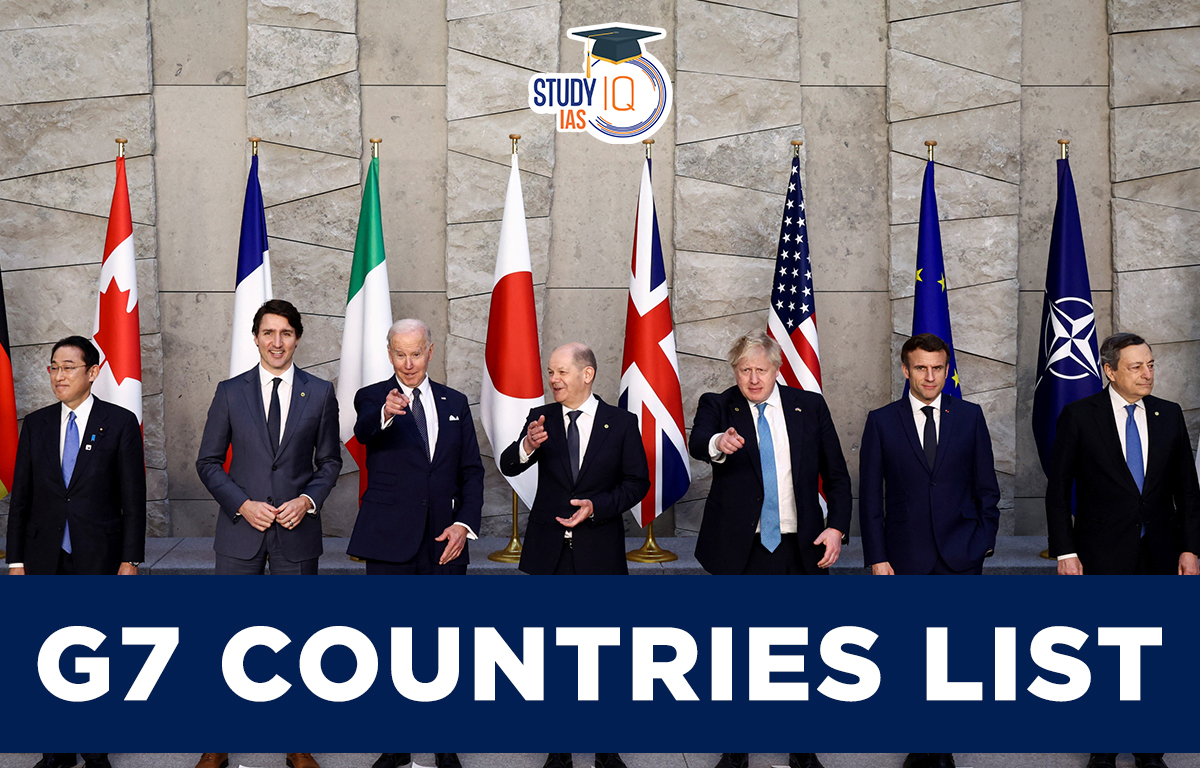
Western capitals are celebrating yet another sweeping summit declaration. The G7 nations, flanked by invited partner markets like India, have committed billions to shiny new global health and development initiatives. The press releases promise synchronized vaccine distribution, fortified health infrastructure, and a grand alliance to eradicate systemic inequity.
It sounds magnificent on paper. It fails miserably in practice.
The conventional consensus among policy elites is that top-down financial pledges from wealthy nations create a rising tide for global health. This belief is wrong. These massive, multi-nation packages rarely fix localized medical systems. Instead, they warp local economies, create permanent dependency, and prioritize Western political optics over actual patient outcomes.
We need to stop tracking the success of global health by the size of the check written in Europe or North America. We have to start looking at the wreckage left behind when that money collides with reality on the ground.
The Mirage of the Top Down Aid Package
Global health policy has a structural flaw. It operates on the assumption that a lack of capital is the primary barrier to quality medical care in developing regions. If Washington, London, or Tokyo pumps enough cash into a centralized fund, the benefits will naturally trickle down to a clinic in rural Bihar or sub-Saharan Africa.
I have spent years analyzing how international capital flows interact with regional public health structures. Here is the reality the bureaucrats will not admit to you: massive influxes of external capital routinely crush local healthcare markets.
When a G7-backed initiative floods a developing country with targeted funding, it does not build a sustainable ecosystem. It creates a temporary distortion.
- Brain Drain via Aid: International non-governmental organizations (NGOs) flush with G7 capital setup shop in capital cities. They offer salaries that local public health ministries and regional clinics cannot match. The result? The best doctors, researchers, and administrators leave the front lines of patient care to sit in air-conditioned offices managing grant compliance paperwork.
- The Disease of the Month Club: G7 funding is rarely general. It is highly specific, tied to whatever disease is currently capturing headlines in Western media. Millions will pour in to fight a singular high-profile pathogen, while the local clinic lacks basic antibiotics, clean water, or electricity to keep refrigerators running for routine childhood immunizations.
- The Compliance Trap: To access these billions, local health authorities must navigate labyrinthine reporting requirements designed by management consultants in Geneva or Washington. A staggering percentage of every dollar spent does not go to medicine; it goes to the administrative overhead required to prove the money was spent according to G7 guidelines.
Imagine a scenario where a local hospital receives a state-of-the-art diagnostic machine funded by a European grant. The ribbon is cut. The photo-op is shared on social media. Six months later, a minor component breaks. The hospital has no budget for proprietary Western replacement parts and no trained local technicians to fix it. The machine sits in a hallway gathering dust, a multi-thousand-dollar monument to bureaucratic short-sightedness. This is not an isolated hypothetical. It is the default state of international development.
Why Partner Nations Like India Need Autonomy, Not Alliances
The inclusion of India and other emerging economic giants in these G7 announcements is spun as a triumph of diplomatic collaboration. The narrative suggests that by looping these countries into Western-led frameworks, we create a unified front against global health crises.
This is a patronizing misreading of geopolitical capability.
India does not need the G7 to dictate its public health strategy. The country already runs the world's most extensive public health insurance scheme, Ayushman Bharat, which covers over 500 million citizens. It is the undisputed pharmacy of the world, producing massive volumes of high-quality, affordable generic drugs that keep healthcare systems alive across the global south.
When India hitches its wagon to G7 initiatives, it enters an asymmetrical partnership. Western nations use these alliances to enforce strict intellectual property (IP) regimes that protect their own pharmaceutical giants.
During the pandemic, the global community watched as wealthy nations hoarded vaccine supplies while paying lip service to equitable distribution through mechanisms like COVAX. The real breakthrough came when regional manufacturers used their own capacity to scale production independently.
True resilience does not come from waiting for a seat at the G7 table. It comes from regional self-reliance and the dismantling of the restrictive IP barriers that wealthy nations use to maintain market dominance.
Dismantling the Flawed Premises of Global Aid
Let us address the questions that policy analysts continuously ask, which completely miss the mark.
Does international aid improve long-term health metrics?
Only when it is decoupled from foreign political agendas. Most G7 aid is transactional. It is designed to buy diplomatic goodwill, secure trade concessions, or counter the geopolitical influence of rival superpowers like China. When aid is used as a tool of foreign policy, the health of the actual population becomes a secondary concern. The moment the political winds shift, the funding evaporates, leaving fractured, half-built systems behind.
How can we ensure better distribution of medical resources?
By stopping the fixation on distribution entirely and focusing on local production. Shipping crates of medicine from Western ports to developing nations is an expensive, inefficient logistical nightmare. It creates a supply chain that breaks down at the first sign of a global crisis. The solution is not to optimize the shipping route; it is to build factories, train scientists, and establish regulatory bodies within the regions that need the medicine most.
Why do global health initiatives fail to prevent major outbreaks?
Because they are fundamentally reactive. The G7 model relies on identifying a crisis, convening a summit, pledging money, and then deploying resources. By the time the cash clears the bank accounts, the outbreak has already evolved. You cannot fight a fast-moving biological threat with slow-moving bureaucratic consensus.
The Cost of the Contrarian Path
Shifting away from the G7 handout model is not a painless endeavor. If developing nations refuse to participate in these grand global initiatives, they will face short-term consequences.
Wealthy nations will threaten to pull funding from existing critical programs. Western pharmaceutical companies will lobby their governments to impose trade sanctions on countries that bypass traditional IP laws to manufacture generic alternatives. There is a massive financial risk in telling the international aid establishment that their money is no longer welcome under their current terms.
But the alternative is worse. The alternative is permanent subordination to a system that views the developing world as a charitable project rather than an economic equal.
Local Capital and Radical Deregulation
If we want to build a global health infrastructure that actually withstands the next systemic shock, we must dismantle the current apparatus.
Stop looking to the G7 for salvation. True health security is built from the ground up through aggressive domestic investment and radical regulatory reform.
Governments in emerging markets need to stop designing their health policies to appease Western donors. They must focus on creating an environment where local medical entrepreneurs, regional pharmaceutical manufacturers, and decentralized clinic networks can thrive. This means slashing the bureaucratic red tape that prevents new clinics from opening. It means investing heavily in domestic medical education to stop the talent drain. It means recognizing that a robust, self-sustaining local market is a infinitely better defense against disease than any international charity initiative.
The era of relying on wealthy nations to solve global health problems through grand declarations is over. The checks they write are designed to soothe their own consciences, not cure the world's ills. It is time to stop playing along with the theater of the summit and start building real, independent capability where it actually matters. No more handouts. No more western-centric frameworks. Build it locally, or prepare to watch the system fail again.