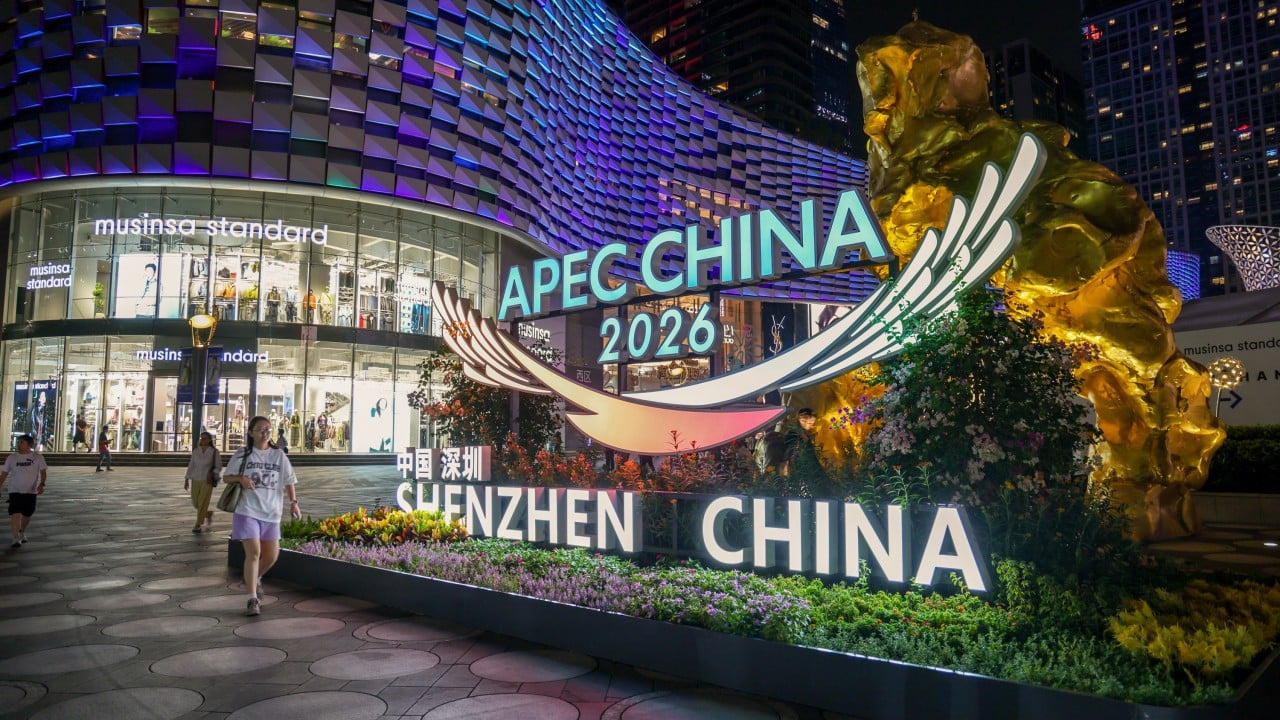
Deploying a concentrated delegation of senior business executives to the Asia-Pacific Economic Cooperation (APEC) CEO Summit is not a ceremonial networking exercise; it is a calculated sub-sovereign diplomatic operation designed to counteract capital flight, neutralise geopolitical friction, and re-anchor Hong Kong’s status as an indispensable financial intermediary. When standard coverage describes a "who’s who" roster of corporate leaders descending on a regional summit, it mistakes the visible personnel for the underlying strategic mechanism. In reality, the composition of such a delegation represents a deliberate deployment of institutional credibility—using private-sector balance sheets and executive reputational capital to achieve policy and market objectives that state-level diplomats cannot accomplish alone.
To understand the operational logic behind Hong Kong’s summit strategy, analysts must strip away public relations rhetoric and examine the structural pressures forcing the Special Administrative Region (SAR) to mobilize its commercial elite. The core blueprint relies on three interlocking mechanisms: signaling institutional autonomy through private-sector visibility, constructing bilateral regulatory bridges across fragmented trade blocs, and executing targeted capital-allocation defense.
The Architecture of Sub-Sovereign Commercial Diplomacy
In international political economy, sub-sovereign entities with distinct customs and monetary regimes—such as Hong Kong under the "One Country, Two Systems" framework—face a persistent signaling problem. Global institutional investors continuously price the risk of regulatory convergence between the SAR and mainland China. When geopolitical tensions escalate between Washington and Beijing, external capital allocators tend to treat Hong Kong’s market infrastructure as indistinguishable from mainland jurisdiction, applying a uniform risk premium across both.
Sending an apex delegation of tycoons, institutional asset managers, telecommunications executives, and infrastructure developers directly addresses this information asymmetry. Unlike government officials, whose statements are discounted by markets as mandated state messaging, private-sector leaders carry fiduciary accountability to international shareholders. Their physical presence and active participation in multilateral forums function as a costly signal—a concept derived from game theory wherein an actor demonstrates commitment by incurring visible, non-trivial reputational stakes.
The Three Tiers of Delegation Composition
A rigorous breakdown of a high-level Hong Kong commercial delegation reveals three distinct functional cohorts, each assigned a specific role in the summit's operational matrix:
- Legacy Conglomerate Principals: Heads of diversified holding companies spanning real estate, ports, utilities, and retail. Their primary function is demonstrating multi-generational capital commitment and operational continuity across Asia-Pacific supply chains. Because their physical assets are immovable, their advocacy carries inherent weight regarding long-term regional stability.
- Financial Infrastructure Stewards: Executives from stock exchanges, clearing houses, major commercial banks, and sovereign-linked investment vehicles. Their mandate is technical and transactional: defending the interoperability of Hong Kong’s capital markets, promoting cross-border liquidity channels, and countering narratives of financial decoupling.
- New-Economy and Innovation Operators: Leaders from biotechnology, green finance, supply-chain logistics, and enterprise technology firms. This cohort corrects the perception that Hong Kong’s economy remains overly reliant on legacy property and traditional banking, positioning the territory as a commercialization hub for mainland research and development.
The Mechanism of Bilateral Friction Reduction
APEC operates on non-binding consensus and voluntary cooperation, making it uniquely suited for pragmatic commercial diplomacy when formal bilateral trade negotiations stall. Within this environment, Hong Kong’s business delegation acts as a buffer—an economic shock absorber positioned between Western multinational corporations and Chinese state-owned or mainland-domiciled enterprises.
Bypassing Diplomatic Deadlocks
When state-level diplomatic channels experience gridlock, regulatory approvals, cross-border data flows, and green-finance taxonomies risk stagnation. Private-sector delegates utilize the APEC CEO Summit’s closed-door roundtables and bilateral side meetings to establish technical working consensus ahead of formal policy alignment.
- Regulatory Translation: Hong Kong executives operate natively within common-law legal frameworks while maintaining deep operational integration with mainland regulatory bodies. At APEC, they translate mainland industrial policy—such as green transition mandates or digital economy standards—into risk-adjusted investment frameworks intelligible to North American and European asset managers.
- Supply Chain Re-routing Validation: As multinational manufacturers execute "China Plus One" diversification strategies into Southeast Asia, Hong Kong’s logistics and trade-finance leaders use summit engagements to demonstrate that supply chain diversification does not require abandoning Hong Kong’s service ecosystem. Instead, they position the city as the treasury, legal arbitration, and supply-chain management headquarters for regionalized manufacturing networks.
Quantifying the Return on Executive Deployment
Evaluating the efficacy of a high-profile summit delegation requires abandoning vanity metrics—such as media mentions or the sheer number of memoranda of understanding (MoUs) signed—in favor of structural capital and trade indicators. An MoU signed at a multilateral summit carries zero binding financial obligation; it is merely an option contract on future negotiation.
True analytical evaluation tracks four downstream transmission channels over the subsequent four to eight quarters:
- Cross-Border Capital Flow Velocity: Changes in net inflows through established market-access mechanisms, alongside the issuance volume of green and sustainable debt instruments arranged in Hong Kong by Asia-Pacific issuers.
- Regional Headquarters Registration: Net additions of regional headquarters and regional offices established in Hong Kong by parent companies domiciled in APEC member economies, particularly within ASEAN, Japan, and South Korea.
- Bilateral Trade Settlement Mix: Shifts in the currency denomination of trade settlement handled by Hong Kong banks, specifically tracking the adoption of offshore Renminbi (CNH) facilities by Southeast Asian and Latin American counterparties met during summit engagements.
- Arbitration and Dispute Resolution Caseloads: Growth in commercial arbitration filings specifying Hong Kong as the seat of arbitration for cross-border joint ventures involving Asia-Pacific entities.
Structural Limitations and Execution Risks
While mobilizing an elite commercial delegation maximizes signaling power, this strategy faces hard structural constraints that no amount of executive diplomacy can fully override. Strategy consultants and institutional investors must account for three primary failure points in the delegation model.
The Extraterritorial Compliance Ceiling
Hong Kong business leaders can advocate for open markets and regulatory stability, but they cannot insulate international counterparties from extraterritorial sanctions, export controls, or outbound investment screening regimes enacted by third-party governments. When a sovereign legislature restricts capital flows into specific technology sectors—such as semiconductors, artificial intelligence, or quantum computing—private-sector assurances of local openness become operationally irrelevant to compliance-bound institutional investors.
Principal-Agent Divergence
The commercial interests of Hong Kong’s legacy conglomerates do not always align with the macroeconomic diversification goals of the SAR government. Conglomerates prioritize protecting domestic oligopolies, preserving asset valuations, and securing preferential access to mainland infrastructure projects. Consequently, during international summits, legacy principals may focus heavily on defending traditional capital structures rather than aggressively championing the disruptive, high-risk innovation ecosystems required for long-term economic renewal.
Narrative Saturation and Diminishing Marginal Returns
Repeating the "Hong Kong is back" or "super-connector" narrative across consecutive multilateral summits yields diminishing marginal returns. Institutional capital allocators suffer from messaging fatigue when high-level rhetoric outpaces visible microeconomic reform. If external investors encounter persistent friction in local talent acquisition, high commercial real estate costs, or protracted regulatory onboarding after returning from a summit, the credibility deficit widens rather than narrows.
The Capital-Allocation Imperative
For corporate strategists, institutional investors, and policymakers monitoring Hong Kong’s trajectory through its APEC engagements, the analytical mandate is clear: ignore the roster’s celebrity and audit the transactional follow-through. The presence of top-tier executives confirms that the SAR retains formidable institutional mobilization capacity and deep balance-sheet reserves. However, deployment is merely the opening move.
To extract actual value from this diplomatic push, market participants must bypass ceremonial summit plenaries and focus exclusively on technical working groups governing green taxonomy harmonization, cross-border data governance, and regional supply-chain financing. Watch the quarterly data on ASEAN-domiciled corporate listings and offshore Renminbi liquidity pools rather than summit press releases. Where those specific metrics expand, Hong Kong’s commercial delegation has successfully converted executive presence into structural market share; where they stagnate, the summit remains an expensive exercise in signaling against an unyielding geopolitical tide.