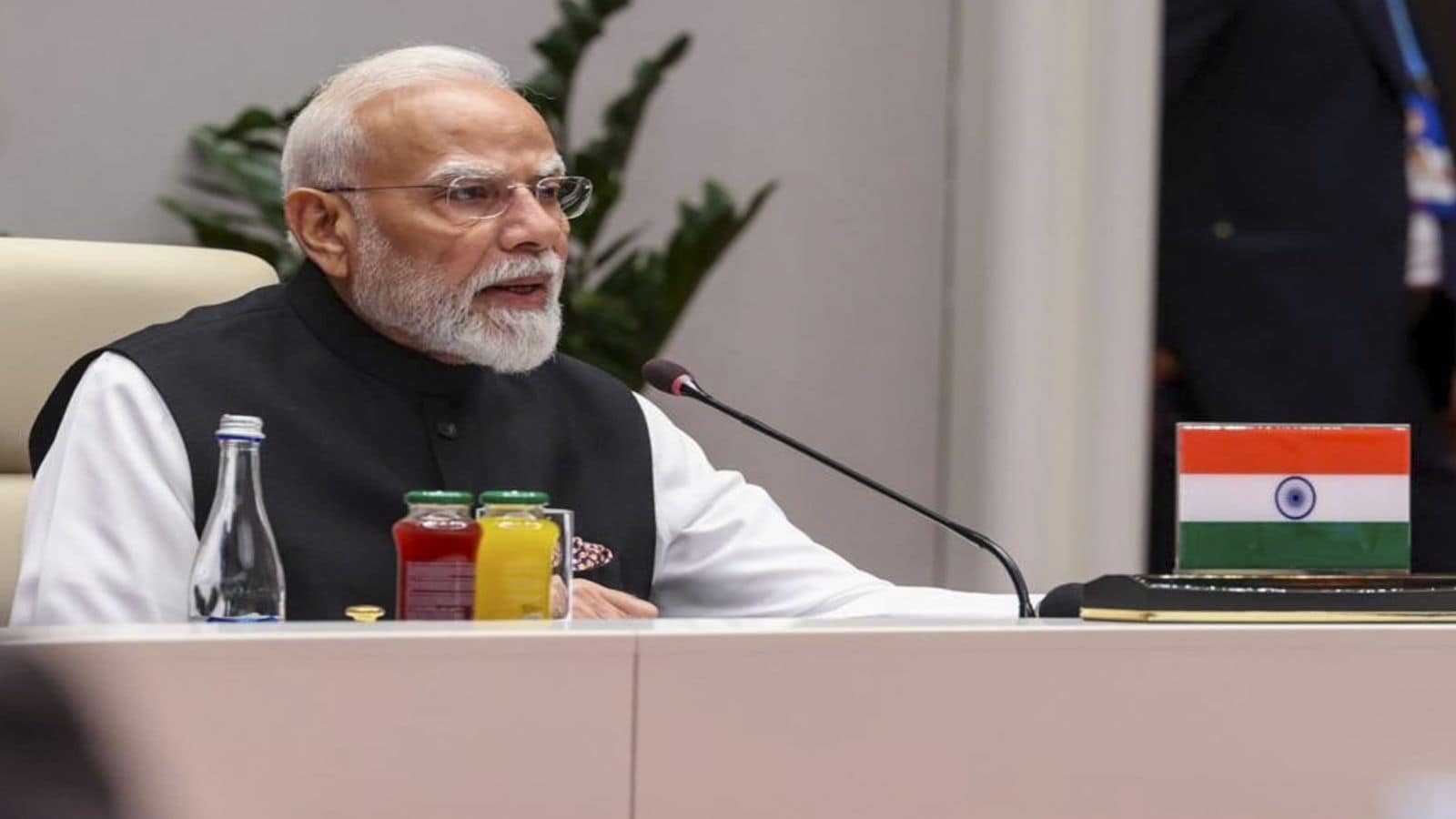
Multilateral summits function as high-frequency diplomatic clearinghouses where state actors compress months of bureaucratic friction into minutes of direct executive bargaining. During the 26th Shanghai Cooperation Organisation summit in Bishkek, Prime Minister Narendra Modi executed precisely timed structural engagements with Tajik President Emomali Rahmon and Lao People Democratic Republic President Thongloun Sisoulith. These interactions extend beyond polite diplomatic protocol, serving instead as calculated nodes in a broader architecture of regional security management and economic diversification.
Analyzing statecraft requires stripping away standard press release rhetoric to expose underlying systemic incentives. India faces distinct geographic and economic constraints in Central and Southeast Asia. Bilateral engagements with Tajikistan and Laos address specific vulnerabilities in supply chain security, counter-terrorism logistics, and diplomatic alignment within multilateral forums.
The Central Asian Security Matrix and Tajikistan
Tajikistan occupies a critical position on the frontline of regional security architecture. Sharing a porous 1,357-kilometer border with Afghanistan, Dushanbe functions as a primary buffer against cross-border narcotics trafficking, radicalization, and militant resurgence. For New Delhi, maintaining a robust security dialogue with Tajikistan is an operational necessity rather than a passive diplomatic gesture.
The structural mechanics of the India-Tajikistan bilateral vector rest on intelligence sharing and counter-terrorism coordination. Instability in Central Asia directly impacts the security calculus of the extended neighborhood. When executive leaderships convene on multilateral sidelines, the primary currency exchanged is threat assessment data and strategic reassurances regarding border integrity.
- Counter-terrorism operational interoperability remains the baseline driver of bilateral communication.
- Regional connectivity deficits require coordinated multilateral advocacy to bypass physical and logistical bottlenecks.
- Energy resource diversification demands stable political corridors linking South Asia to Central Asian asset holders.
Bypassing regional transit impediments necessitates alternative trade corridors. Because direct overland access through intervening hostile territories remains blocked, New Delhi relies on strategic partnerships with nations like Tajikistan and Iran to secure logistical footholds. Dushanbe provides a crucial anchor for India's broader Central Asia policy framework, which seeks to insulate regional economies from external shocks and asymmetric security threats.
Southeast Asian Integration and the Lao PDR Vector
While Tajikistan anchors the northwestern perimeter of strategic concern, Lao PDR represents an equally vital pivot within the Association of Southeast Asian Nations architecture. Laos currently occupies a central administrative node within Southeast Asian multilateralism, influencing regional consensus on maritime trade, economic integration, and external power balancing.
The strategic rationale for engaging Vientiane involves securing multilateral alignment within the broader Indo-Pacific theater. Smaller ASEAN member states often bear the brunt of great power competition, making bilateral trust-building essential for maintaining regional stability. New Delhi utilizes these structured interactions to reinforce its Act East policy, translating diplomatic goodwill into concrete developmental partnerships.
- Digital public infrastructure integration offers Laos a scalable model for economic modernization without debt traps.
- Capacity building and educational exchanges create long-term institutional linkages between civil services.
- Agricultural and pharmaceutical supply chain resilience serves mutual domestic stabilization objectives.
Economic metrics between India and Laos historically operate below potential capacity, creating a high-margin opportunity for targeted trade expansion. By focusing on niche areas such as resource exploration, hydropower cooperation, and pharmaceutical distribution, both nations can optimize bilateral utility. Vientiane provides New Delhi with a reliable voice within Southeast Asian voting blocs, balancing regional asymmetries through diplomatic coordination.
Systemic Outcomes of Multilateral Side-Meetings
The utility of a multilateral summit is inversely proportional to its formal plenary sessions. While grand declarations capture public attention, real strategic adjustments occur during closed-door bilateral pull-asides. The Bishkek summit functioned as an institutional testing ground for whether regional organizations can transition from twenty-five years of baseline dialogue into tangible, execution-oriented outcomes.
The mechanics of this transition depend on issue-specific coalitions. By simultaneously engaging a Central Asian frontline state facing radicalization pressures and a Southeast Asian inland state navigating economic transition, New Delhi constructs a multi-vector foreign policy matrix. This approach avoids over-reliance on any single power bloc, distributing diplomatic risk across multiple regional partners.
To maintain momentum, structural execution must supersede diplomatic signaling. Bilateral joint working groups must convert high-level executive directives into binding administrative timelines, specifically regarding counter-terrorism asset tracking and digital trade architecture deployment. The long-term efficacy of these engagements will be measured not by communiques signed in Bishkek, but by the operational resilience they generate across land and maritime trade corridors over the next quarter-century.