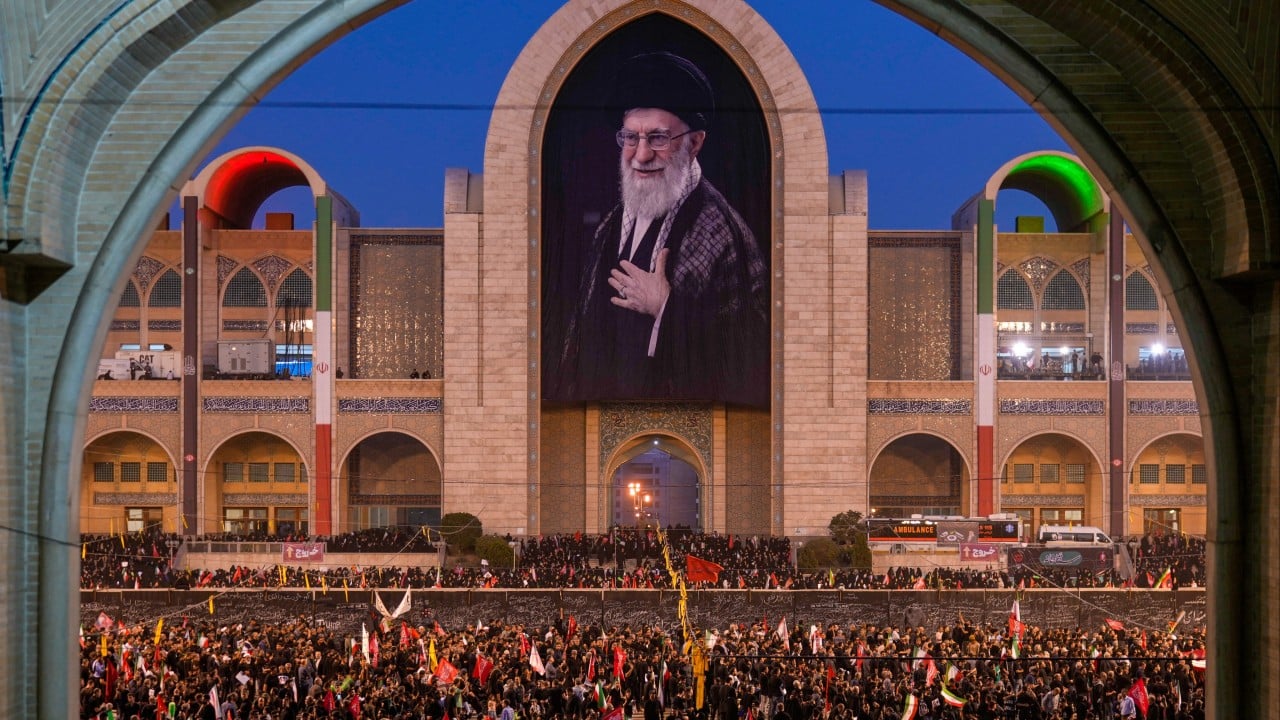
The institutional consolidation of Mojtaba Khamenei as Iran’s third Supreme Leader marks a critical juncture in Middle Eastern geopolitics and the broader Sino-Iranian comprehensive strategic partnership. Official affirmations from Beijing, conveyed during high-level diplomatic missions to Tehran, explicitly reinforce China's commitment to the new leadership structure. This alignment is driven by structural necessities rather than mere diplomatic affinity. For a regime navigating heightened kinetic vulnerability following the structural shocks of early 2026, the consolidation of ties with Beijing functions as an existential economic and strategic stabilization mechanism.
The Architecture of Interdependence
The relationship between Tehran and Beijing under the new leadership can be broken down into three operational pillars that govern their strategic alignment.
- Asymmetric Capital Flow: Iran offers deeply discounted hydrocarbon exports in exchange for non-convertible Chinese currency or manufactured goods, mitigating the impact of international banking isolation.
- Dual-Use Technology Integration: The transfer of surveillance systems, telecommunications infrastructure, and localized digital tracking mechanisms supports domestic security structures.
- Multilateral Diplomatic Shielding: China utilizes its structural position within the United Nations Security Council and global bodies like BRICS to dilute multilateral isolation strategies directed at Tehran.
This structural alignment operates on a transactional logic. While western analysts frequently mischaracterize the relationship as a formal ideological alliance, it functions more precisely as an asymmetric dependency framework. Iran provides China with guaranteed access to long-term energy reserves outside the immediate sphere of maritime choke points controlled by Western powers, while Beijing supplies the necessary liquidity to prevent complete macroeconomic collapse in Tehran.
The Succession Dynamics and Institutional Continuity
The transition of the Supreme Leadership to Mojtaba Khamenei resolves immediate succession ambiguities within the clerical establishment, yet introduces distinct institutional risks. Unlike his predecessor, the current leader operates with deep structural links to the Islamic Revolutionary Guard Corps (IRGC) rather than widespread theological consensus among the senior clerical elite in Qom. This shifts the internal power dynamics of the state toward a securitized autocracy.
The preference for expanded ties with China aligns directly with this internal shift. The IRGC manages large segments of the Iranian economy through various front companies, engineering firms, and industrial conglomerates. These entities require continuous integration with global supply chains to maintain operational capabilities, particularly regarding infrastructure and industrial defense production. Because Western capital and markets remain structurally inaccessible, China represents the sole viable industrial partner capable of absorbing large-scale infrastructure projects and delivering industrial components.
The security apparatus under the new leadership views Chinese technological governance models as a blueprint for internal stability. The integration of advanced communication networks and automated tracking frameworks provides the regime with the tools required to manage domestic dissent without triggering immediate economic paralysis. The choice to deepen alignment with Beijing is therefore an active strategy to reinforce domestic political control through technological and financial insulation.
Economic Deficit Mitigation under Sanctions
The core variable determining the longevity of the current Iranian governance model is its capability to manage its capital account deficit. The structural mechanism of this economic survival is governed by a distinct resource-to-capital function:
$$\Delta C = f(E_d, T_r) - S_c$$
Where $\Delta C$ represents net domestic capital stability, $E_d$ represents heavily discounted energy exports to independent Chinese refineries, $T_r$ represents non-dollar trade processing mechanisms, and $S_c$ represents the total compounding friction of international sanctions.
The first bottleneck in this equation is the reliance on independent Chinese refineries, often referred to as "teapots," located predominantly in Shandong province. These refineries operate outside the mainstream international banking system, clearing transactions via regional commercial institutions using Renminbi or barter arrangements. This system limits Iran's liquidity by restricting its foreign reserves to soft currencies that must be reinvested directly into Chinese industrial outputs.
The second limitation involves the structural discount Iran must accept to maintain market share. To compete against other sanctioned producers, Tehran must offer deep discounts relative to global benchmarks like Brent crude. This creates a diminishing marginal return on asset liquidation; the state must export higher volumes of physical assets merely to maintain baseline operational liquidity.
Strategic Outlook and Regional Implications
The evolution of the Sino-Iranian relationship under Mojtaba Khamenei will likely accelerate the formalization of a non-Western economic bloc in Western Asia. This development forces a reallocation of strategic resources by regional actors and Western intelligence networks.
The current trajectory indicates that Tehran will prioritize securing long-term capital guarantees from Beijing over pursuing diplomatic re-engagement or sanctions-relief negotiations with Western nations. This structural choice reduces the efficacy of traditional economic leverage tools employed by external powers, replacing them with a framework where regional stability is directly indexed to Chinese economic security objectives in the Persian Gulf.
External actors assessing this shift must adjust their predictive models. The assumption that economic pressure inevitably forces structural behavioral changes in Tehran overlooks the insulation provided by this asymmetric partnership. Strategic planning should focus on mapping the specific logistics corridors, front companies, and financial clearing houses that facilitate the bilateral flow of capital and dual-use assets between the two nations.