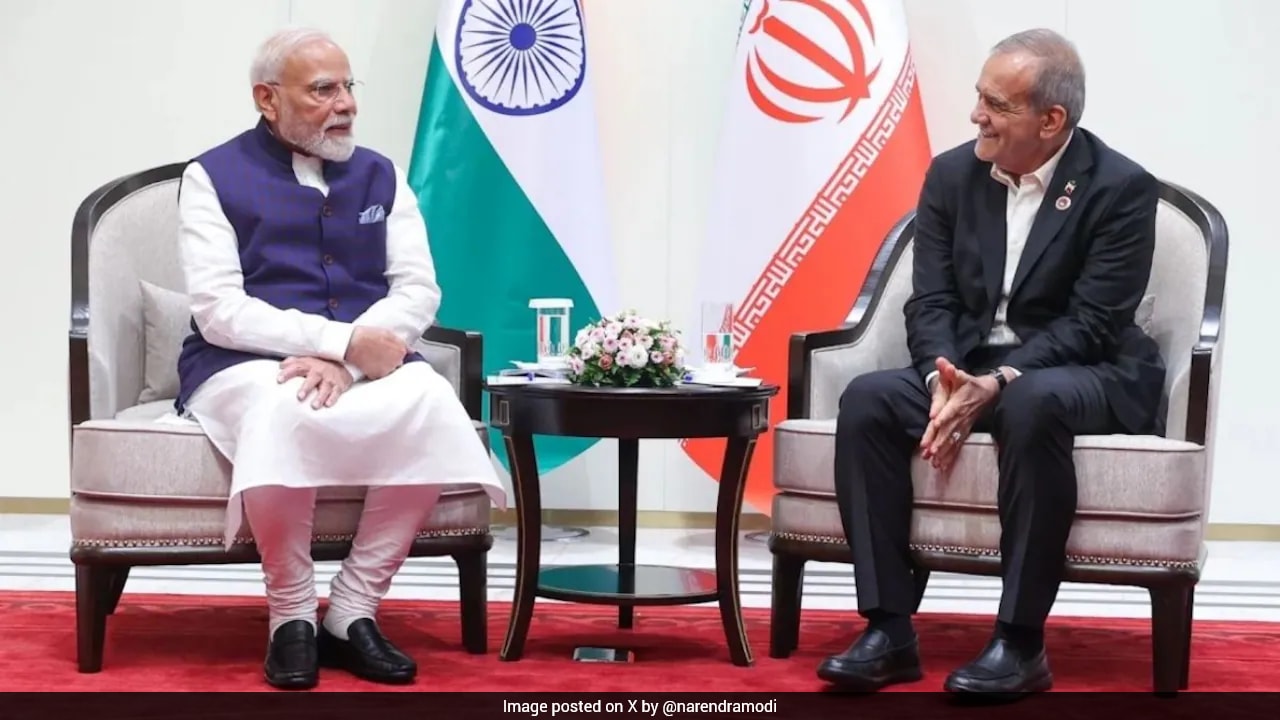
Statecraft operates on calculated exposure, where sovereign nations constantly weigh the utility of bilateral partnerships against the systemic gravity of extraterritorial penalties. When United States Secretary of State Marco Rubio issued a direct warning regarding secondary sanctions following the meeting between Indian Prime Minister Narendra Modi and Iranian President Masoud Pezeshkian at the Shanghai Cooperation Organisation summit in Bishkek, he exposed the friction point between independent foreign policies and global financial compliance. This interaction forces analysts to look past diplomatic platitudes and examine the structural mechanics of how secondary sanctions constrain regional trade corridors.
The Economic Mechanics of Secondary Pressure
Washington executes its containment strategy through extraterritorial financial jurisdiction. The primary objective is not merely to isolate Tehran from direct Western commerce, but to impose an exorbitant cost function on any third-party state attempting to architect alternative settlement mechanisms. When Rubio stated that no nation should assist Iran in generating revenue channels, he articulated a zero-sum enforcement model.
Secondary enforcement operates on a binary compliance threshold:
- Entities interacting with designated Iranian sectors face immediate exclusion from the United States banking infrastructure.
- Third-country firms must calculate whether the marginal utility of trade with Iran exceeds the total elimination of their access to dollar-denominated capital markets.
This architecture creates a severe bottleneck for emerging economies seeking energy security or regional transit rights. India's historical engagement with Iran, anchored by the strategic development of the Chabahar Port and regional connectivity initiatives toward Central Asia, runs directly into this compliance barrier. New Delhi requires energy corridors and stable maritime routes in West Asia, yet its expanding corporate footprint globally relies heavily on Western financial integration. The strategic calculus for India involves managing this exposure without capitulating on its core doctrine of strategic autonomy.
Geopolitical Divergence at the Shanghai Cooperation Organisation
Multilateral forums like the Shanghai Cooperation Organisation function as diplomatic pressure release valves where non-Western powers project alternative centers of gravity. President Masoud Pezeshkian utilized the Bishkek summit to frame American enforcement as an aggressive disruption of regional stability, positioning Tehran as a victim of unfulfilled international agreements. For regional powers, maintaining a dialogue with Iran is framed less as an endorsement of its domestic or regional actions and more as a baseline requirement for managing continental security.
The dialogue between Modi and Pezeshkian focused explicitly on expanding bilateral trade baskets and securing maritime commerce. Commercial shipping lanes in West Asia represent a vital artery for global energy supply chains and maritime freight. Disruptions caused by ongoing regional conflicts directly threaten Indian economic interests, making diplomatic engagement a logistical necessity rather than a symbolic defiance of Washington. Rubio’s acknowledgment that the United States itself maintains tactical channels with Iranian elements highlights the pragmatic hypocrisy inherent in great power competition: dialogue is an operational tool for superpowers, while secondary sanctions act as a disciplinary measure for regional states.
Risk Mitigation and Strategic Hedging
Faced with the threat of secondary penalties, third-party capitals do not completely sever diplomatic ties; instead, they alter their risk mitigation strategies. Nations compartmentalize their economic interactions to shield critical domestic sectors from extraterritorial exposure.
- Transaction Segregation: Governments encourage non-state commercial actors to decouple high-risk cross-border settlements from any financial institutions maintaining ties to Western clearing houses.
- Diplomatic Framing: Bilateral communiques deliberately emphasize humanitarian concerns, freedom of navigation, and regional stability over financial integration to preempt legal justifications for sanctions.
- Multilateral Hedging: Embedding bilateral disputes within broader multilateral coalitions such as BRICS or the SCO dilutes the immediate bilateral pressure applied by Washington.
The efficacy of American secondary enforcement ultimately depends on the willingness of major Asian economies to absorb the friction. If the cost of compliance begins to outweigh the cost of evasion, secondary sanctions lose their deterrent credibility, pushing target states to accelerate the creation of alternative currency settlements and non-dollar clearing networks.
Prioritize supply chain resilience by isolating long-term national infrastructure projects from short-term extraterritorial legal shifts, while restricting formal trade expansions to non-sanctioned commodity sectors that avoid dollar-clearing exposure entirely.