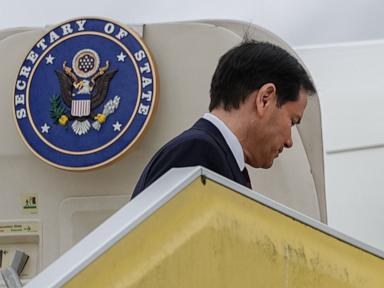
Bilateral statecraft operates on a structural cost function where the friction of economic protectionism directly degrades the efficiency of security alliances. The arrival of U.S. Secretary of State Marco Rubio in India for a four-day diplomatic mission—anchored by the Quadrilateral Security Dialogue (Quad) ministerial meetings—highlights this strategic bottleneck. While conventional commentary frames the visit as a routine diplomatic reset necessitated by recent bilateral strain, a structural analysis reveals an acute tension between American transactional trade policy and the structural demands of Indo-Pacific deterrence.
The primary vulnerability in contemporary U.S.-India relations stems from an policy incongruence: Washington expects high-level defense alignment through the Quad while simultaneously imposing aggressive tariff penalties on New Delhi. This analytical breakdown deconstructs the mechanics of this friction, isolates the core pillars of the diplomatic negotiation, and outlines the structural trade-offs governing the Indo-Pacific architecture.
The Tri-Pillar Friction Architecture
To evaluate the probability of a structural reset between Washington and New Delhi, the bilateral relationship must be isolated into three interdependent operational variables.
+-------------------------------------------------------------------+
|                  THE TRI-PILLAR FRICTION ARCHITECTURE             |
+-------------------------------------------------------------------+
|  1. TARIFF DISTORTIONS                                            |
|     - 50% initial tariff (25% penalty for Russian oil).           |
|     - Compresses bilateral trade value and margins.              |
|                                                                   |
|  2. SECURITY ASYMMETRY                                             |
|     - Divergent threat perception (Sino-centric vs. regional).    |
|     - Divergent views on regional actors (e.g., Pakistan).       |
|                                                                   |
|  3. ENERGY COMPLEMENTARITY                                        |
|     - U.S. seeking to replace restricted energy inputs.           |
|     - Mitigates risks from maritime bottlenecks (Hormuz).         |
+-------------------------------------------------------------------+
1. Tariff Distortions and Trade Compression
The baseline disruption in the bilateral equation is economic. Following the imposition of a 50 percent import tariff by the United States on specific Indian exports—which included a 25 percent targeted penalty aimed at neutralizing India’s procurement of Russian crude oil—the economic margins of the partnership contracted.
Although a tentative bilateral trade agreement attempted to scale the tariff rate down to 18 percent, subsequent domestic legal challenges within the United States scrapped the executive use of the International Emergency Economic Powers Act (IEEPA). This legal volatility leaves Indian exporters exposed to a high-tariff environment, converting trade policy from an economic engine into an active strategic tax on the broader alliance.
2. Security Asymmetry and Divergent Threat Perceptions
The second systemic friction point is a fundamental misalignment in threat prioritization. Washington views the Quad almost exclusively through a Sino-centric lens, designing it as an oceanic containment apparatus against Chinese maritime expansion in the South China Sea. India, by contrast, operates on a continental defense model. New Delhi's immediate security calculations are dictated by its shared land borders with China and persistent escalation risks along its western border with Pakistan.
This asymmetry deepened following renewed border conflicts and regional instability. When Washington alters its regional stance or fails to back New Delhi's continental security priorities, India's foreign policy establishment reacts by hedging, viewing American maritime commitments as insufficient compensation for immediate territorial threats.
3. Energy Complementarity vs. Sanctions Enforcement
The third pillar governs the transition mechanics of India's energy supply chain. Prior to his arrival, Rubio explicitly detailed an American objective to maximize liquefied natural gas (LNG) and energy exports to India, stating a desire to "sell them as much energy as they'll buy."
This represents an operational pivot. The United States is attempting to utilize its historic domestic energy production levels to displace Indian reliance on sanctioned Russian crude. For India, accepting American energy inputs is not merely a matter of price-per-barrel; it is an equation of systemic risk mitigation designed to insulate its economy against supply shocks, particularly given the acute vulnerability of traditional Middle Eastern maritime corridors like the Strait of Hormuz.
The Security Capital Bottleneck
The strategic viability of the Quad depends entirely on the concept of security capital—the measurable capacity of member nations to execute synchronized military, intelligence, and logistical operations. The structural downside of American economic nationalism is that it depletes this capital.
When tariff policies treat a core security partner as an economic adversary, it creates a strategic bottleneck that can be modeled by a basic efficiency function:
$$E_{\text{alliance}} = \frac{A_{\text{strategic}}}{1 + \sigma_{\text{tariff}}}$$
Where:
- $E_{\text{alliance}}$ represents the operational efficiency of the alliance.
- $A_{\text{strategic}}$ is the baseline alignment of geopolitical interests.
- $\sigma_{\text{tariff}}$ represents the friction coefficient generated by protectionist economic policies.
As $\sigma_{\text{tariff}}$ increases, the realized efficiency of the alliance drops, even if the shared security threat from external actors remains constant. Beijing exploits this structural gap. The Chinese diplomatic apparatus consistently frames the Quad not as a legitimate regional framework, but as an artificial, destabilizing containment mechanism designed to suppress regional economic growth. When the United States imposes severe tariffs on its own allies, it validates the narrative that Washington’s strategic frameworks are transactional rather than institutional.
Furthermore, the operational relevance of the Quad has degraded due to a lack of institutional continuity. The postponement of critical heads-of-state summits and the minimal emphasis placed on the grouping in updated U.S. national security doctrines suggest a shifting executive focus. If the executive branch of the United States treats minilateral groupings like the Quad as secondary to unilateral trade enforcement, the architectural integrity of Indo-Pacific deterrence diminishes.
Structural Trade-offs in the Energy Pivot
The American proposal to substitute Russian oil with U.S. energy exports presents India with an intricate set of structural trade-offs. The mechanization of this shift involves balancing three competing variables: price volatility, infrastructure adaptability, and strategic autonomy.
- Price Volatility and Discount Parity: Russian Urals crude has consistently traded at a structural discount relative to Brent global benchmarks due to Western sanctions mechanisms. For the U.S. to successfully displace these volumes, American exporters must achieve near-parity on a delivered ex-ship (DES) basis, accounting for the significantly longer maritime transit routes from the U.S. Gulf Coast to Indian import terminals compared to shorter maritime routes from western Russian ports.
- Infrastructure Adaptability: Indian public-sector refineries are highly optimized for specific medium-sour crude slates. A rapid shift to lighter, sweeter American West Texas Intermediate (WTI) grades introduces processing inefficiencies, requiring blending strategies or capital expenditure upgrades at refining facilities.
- Strategic Autonomy: New Delhi views diversification as a core national security doctrine. Relying excessively on American energy supply lines introduces an undesirable vulnerability to U.S. regulatory swings, policy shifts, and potential re-applications of long-arm statutory sanctions.
Strategic Action Plan
A realigned U.S.-India strategy requires moving away from short-term diplomatic statements toward structural trade-offs that balance economic costs against security benefits.
Strategic Play for Washington: Implement a Strategic Tariff Exemption
The United States must decouple its domestic trade enforcement from its primary Indo-Pacific security architecture. The executive branch should establish an explicit national security waiver under existing trade legislation that ties tariff relief directly to defense integration milestones. Specifically, the U.S. should lower the current tariff burden toward the previously negotiated 18 percent floor in direct exchange for India formalizing reciprocal logistics access agreements across critical Indian Ocean naval nodes. This effectively offsets the economic cost of tariff reductions by securing high-value maritime access that increases the efficiency of American naval deployment.
Strategic Play for New Delhi: Leverage Energy Procurement for Technology Transfer
India should decline any open-ended commitment to purchase American energy without reciprocal technology transfers. New Delhi must structure future state-backed LNG and crude acquisition contracts as a conditional purchase framework. Under this model, long-term volume commitments to American energy suppliers are legally contingent upon United States support for dual-use technology transfers under the Initiative on Critical and Emerging Technology (iCET).
+-------------------------------------------------------------------+
|                   CONDITIONAL LEVERAGE FRAMEWORK                  |
+-------------------------------------------------------------------+
|  INDIA'S INPUT:                                                   |
|  Long-Term Volume Commitments for U.S. LNG & Crude                |
|                                                                   |
|                             │                                     |
|                             ▼ (Legally Contingent Upon)           |
|                                                                   |
|  UNITED STATES' OUTPUT:                                           |
|  Dual-Use Technology Transfers & Co-Production (iCET)             |
+-------------------------------------------------------------------+
This guarantees that every dollar India spends on mitigating American trade imbalances directly capitalizes the domestic co-production of next-generation defense systems, including jet engines, unmanned aerial vehicles, and semiconductor manufacturing chains.
By executing these structural adjustments, both powers move away from the current volatile, transaction-heavy relationship model. This shifts the bilateral dynamic toward a predictable framework where economic costs are systematically weighed against long-term geopolitical outcomes.