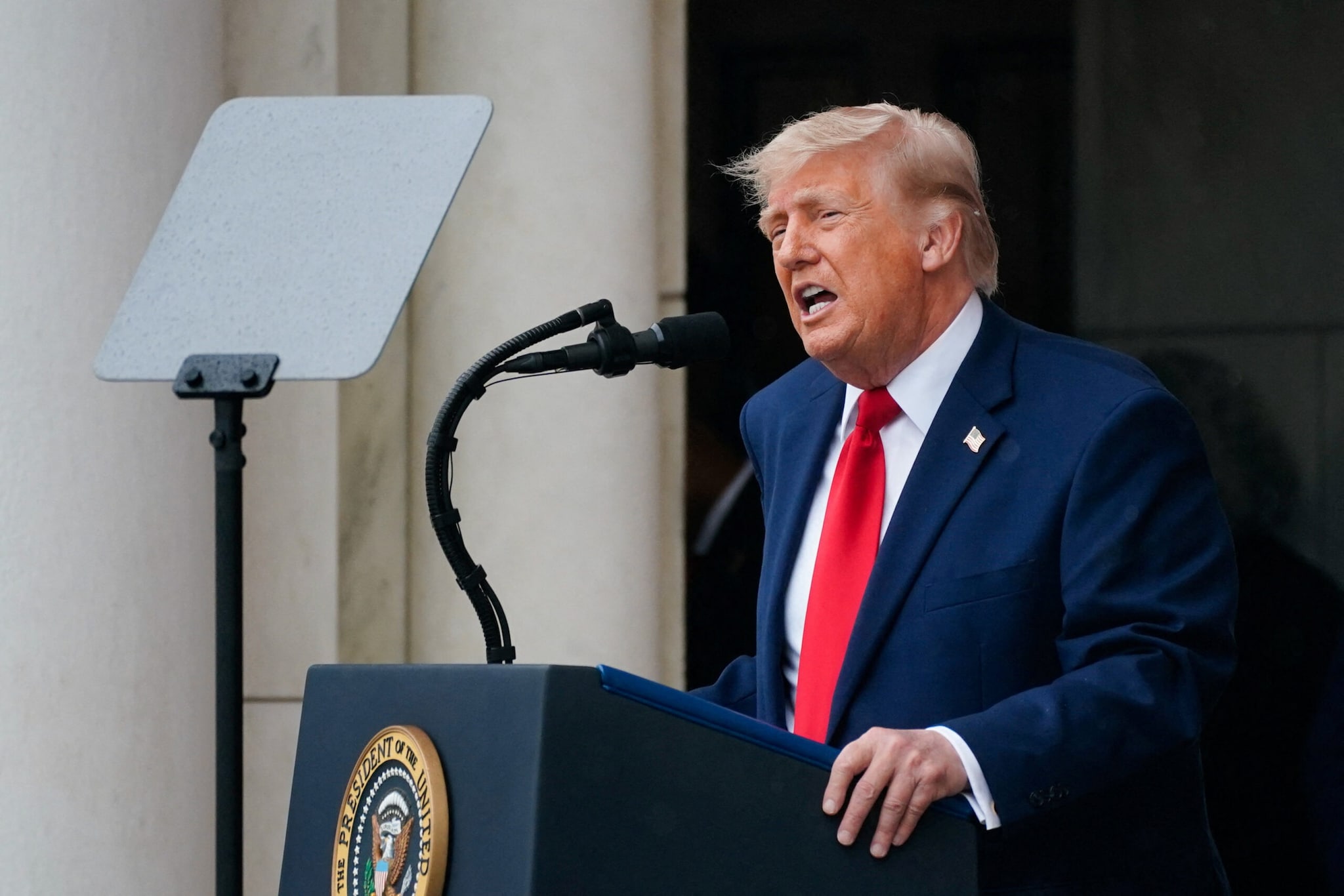
The sudden reallocation of capital across global equity and commodity markets following the reversal of US military threats against Iran exposes a predictable, quantifiable transmission mechanism between geopolitical risk and asset pricing. When military escalation is averted, markets do not merely react; they reprice a specific risk premium across decoupled asset classes. The immediate inflation of US equity indices and the simultaneous compression of crude oil prices represent two sides of a singular macroeconomic equation: the contraction of the geopolitical discount rate.
Understanding this shift requires moving past sentimental market commentary and examining the structural frameworks that govern energy supply chains, corporate cash flow discounting, and algorithmic risk parity models.
The Dual-Transmission Framework of Geopolitical Shocks
Geopolitical events alter asset prices through two primary vectors: the Supply-Disruption Premium in commodities and the Discount-Rate Expansion in equities. When a state actor threatens military action in a critical logistical choke point—such as the Strait of Hormuz—the probability density function for global energy supply shifts violently to the right, pricing in worst-case scarcities. Simultaneously, equity markets compress because the denominator in standard asset valuation models expands to account for heightened systemic uncertainty.
1. The Crude Oil Cost Function and the Volatility Smile
The pricing of Brent and West Texas Intermediate (WTI) crude during a geopolitical standoff is driven by a probability-weighted assessment of physical infrastructure destruction. The baseline cost of extracting and transporting a barrel of oil is augmented by a variable risk premium ($P_r$). This premium is formulated by the perceived probability of a supply interruption ($p$) multiplied by the economic impact of the potential volume lost ($V$).
$$P_r = p \times V$$
When military action is threatened, the market prices in the potential closure of the Strait of Hormuz, through which roughly one-fifth of the world's petroleum consumption passes. This creates an asymmetric upside bias in options chains, known as a volatility smile, where out-of-the-money call options become highly inflated.
The moment military intervention is explicitly called off, the probability factor ($p$) collapses toward zero. This triggers an immediate unwinding of long speculative positions held by non-commercial traders (hedge funds and money managers), forcing the front-month futures contract to converge back toward its physical supply-and-demand fundamentals. The drop in oil prices is not a reflection of altered current consumption, but a rapid draining of financialized anxiety from the paper derivatives market.
2. Equity Valuation and the Equity Risk Premium (ERP)
The mechanism driving the surge in US equity benchmarks rests on the Capital Asset Pricing Model (CAPM) and the Discounted Cash Flow (DCF) framework. The value of an equity index is the sum of its expected future cash flows, discounted back to the present value using the Weighted Average Cost of Capital (WACC).
WACC incorporates the Equity Risk Premium (ERP)—the excess return investors require to hold equities over risk-free assets. Geopolitical instability spikes the ERP. When the threat of war is removed, the systemic risk component diminishes, causing the required rate of return to drop.
$$\uparrow \text{Asset Value} = \sum \frac{\text{Cash Flows}}{(1 + \downarrow \text{WACC})^t}$$
As the denominator shrinks, the present value of future corporate earnings automatically expands, driving a broad-based equity rally even if the underlying cash-flow projections remain entirely unchanged. This explains why equity indices can jump several percentage points within minutes of a de-escalating diplomatic statement: the market is recalculating the discount rate in real time.
Capital Reallocation Mechanics Across Sectors
The transition from a wartime footing to a diplomatic holding pattern alters sector-level correlations. Money does not move into the market uniformly; it rotates based on the changing input costs and consumer sentiment expectations of specific industries.
The Margin Expansion Vector: Transportation and Manufacturing
Industrial sectors, logistics networks, and commercial airlines experience an immediate relief in operational cost projections when oil prices fall. Because energy functions as a primary variable input cost for these businesses, a sustained drop in crude translates directly into projected margin expansion.
- Aviation: Fuel typically constitutes 20% to 40% of an airline's operating expenses. A swift decline in oil prices lowers the implied cost of jet fuel hedges, increasing near-term free cash flow projections.
- Automotive and Industrials: Lower energy costs reduce the cost of running heavy manufacturing infrastructure and lower the freight rates for moving components through global supply chains.
The Reverse Rotation: Energy Sector De-leveraging
Conversely, the energy sector experiences capital capital flight during these de-escalation windows. Exploration and production (E&P) companies, whose revenues are directly levered to the spot price of crude, see their intrinsic value estimates downgraded. Algorithmic trading programs systematically rotate capital out of energy equities and into high-beta sectors like technology and consumer discretionaries, which benefit more from a lower-discount-rate environment.
| Sector | Short-Term Impact of De-escalation | Primary Driver |
|---|---|---|
| Technology | Highly Positive | Discount rate compression elevates long-duration growth valuations. |
| Transportation | Positive | Immediate reduction in variable input/fuel costs. |
| Energy (E&P) | Negative | Contraction of realized revenue per barrel benchmarks. |
| Defense Contractors | Neutral to Negative | Compression of near-term procurement and emergency funding expectations. |
The Role of Algorithmic Execution and Liquidity Pockets
Modern market micro-structure dictates that the velocity of these price movements is amplified by automated trading architectures. Systematic macro hedge funds, commodity trading advisors (CTAs), and high-frequency trading (HFT) algorithms monitor geopolitical news feeds via natural language processing (NLP) models.
When a headline confirms a shift from conflict to diplomacy, these systems execute pre-programmed order flows simultaneously. This creates a liquidity void on one side of the order book. In the case of crude oil, stop-loss orders placed by speculative longs are triggered sequentially, creating a cascading sell-off that pushes the price down faster than human asset managers can reassess fundamentals. In equities, short-sellers are forced to cover their positions rapidly to prevent losses in a rising market, adding mechanical buying pressure to the structural re-pricing.
Strategic Limitations of De-Escalation Rallies
While the immediate market response to defused geopolitical tension is overwhelmingly positive for equities, long-term strategists must account for the limitations of this price action. De-escalation eliminates a specific risk premium, but it does not alter macro-economic headwinds such as secular inflation, structural fiscal deficits, or central bank monetary policies.
The structural baseline of the economy remains unchanged by diplomatic breakthroughs. A reduction in geopolitical friction cannot fix broken corporate fundamentals or reverse slowing consumer demand; it merely removes a localized bottleneck to capital distribution. Therefore, the expansion in equity multiples observed during these episodes is often front-loaded and prone to mean reversion if macroeconomic data indicators fail to validate the optimism.
Corporate Capital Deployment Framework
Corporate treasury departments and institutional portfolio managers must neutralize the volatility inherent in these geopolitical micro-cycles by executing a structured capital allocation playbook.
- Locking Input Cost Predictability: Companies with high exposure to energy inputs must utilize the post-de-escalation dip in oil prices to layer on long-term fixed-price commodity hedges. Waiting for absolute bottoms is less effective than securing operational cost certainty when the geopolitical premium is temporarily absent.
- Rebalancing Equity Duration: Asset allocators should use the initial surge in long-duration equities (such as mega-cap technology) to rebalance portfolios into defensive, cash-generative sectors. The compression of the Equity Risk Premium offers an optimal liquidity window to exit overvalued positions that rallied on sentiment rather than structural earnings growth.
- Assessing Sovereignty Spreads: Investors in sovereign debt should re-evaluate the yield spreads of emerging market economies adjacent to conflict zones. De-escalation compresses these spreads, offering a strategic exit point before localized structural fiscal imbalances reassert themselves as the primary drivers of bond yields.


