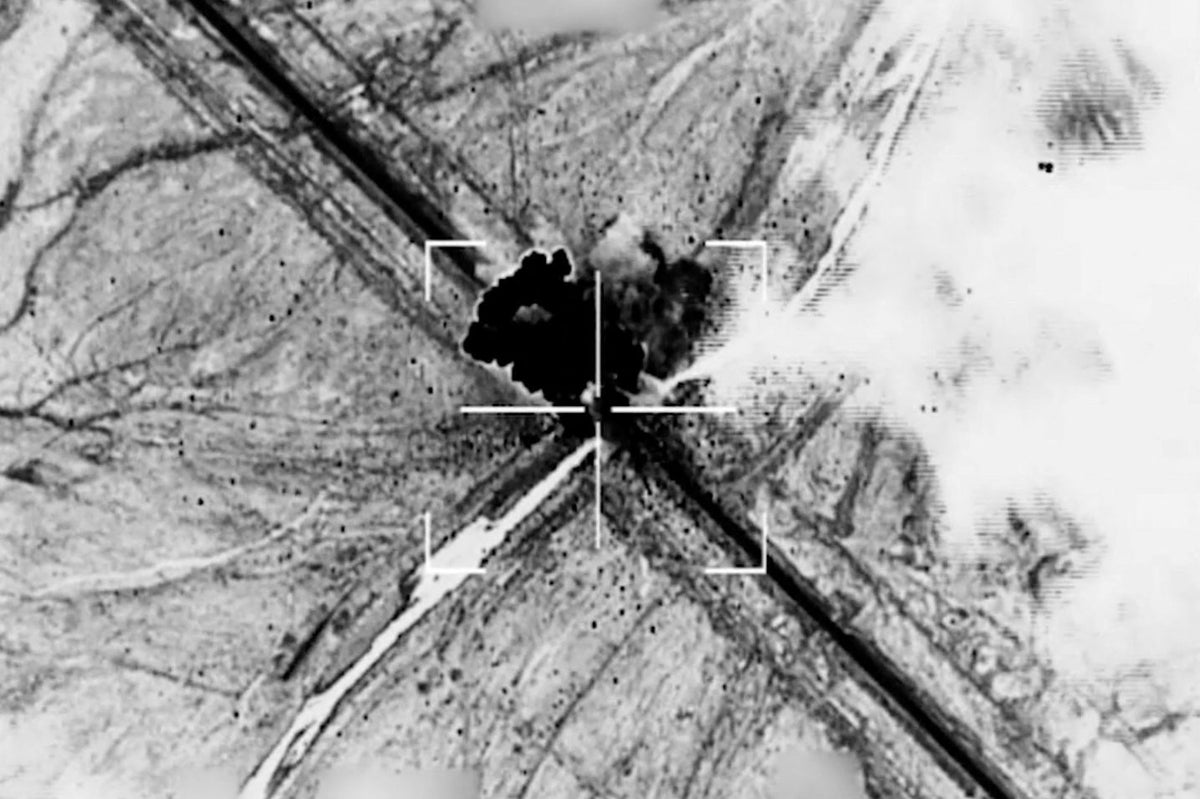
Escalation Dynamics and Naval Chokepoints
The escalation of military exchanges between the United States and Iran represents a critical structural threat to global energy security. At the center of this friction lies the Strait of Hormuz, a maritime chokepoint through which approximately 20 percent of the world’s petroleum liquids pass daily. Iranian threats to halt oil transit in response to campaign strikes highlight a fundamental asymmetry in modern naval warfare: a coastal state can deploy low-cost, asymmetrical assets to disrupt high-value, concentrated commercial shipping lanes.
The operational reality of enforcing a maritime blockade in Hormuz does not require a traditional, deep-water naval fleet. Instead, blockade dynamics rely on three distinct operational vectors.
- Anti-Ship Missile Deployment: Shore-based coastal defense missile batteries along the northern coastline create a high-risk envelope across the entire navigable channel.
- Asymmetric Swarm Tactics: Fast inshore attack craft equipped with short-range missiles and naval mines can target commercial tankers in restricted waters.
- Deep-Water Sea Mining: The deployment of smart mines within the Traffic Separation Scheme channels forces maritime traffic to halt due to risk assessment protocols and insurance invalidation.
+-------------------------------------------------------------------+
|                     STRAIT OF HORMUZ CHOKEPOINT                    |
|                                                                   |
|  [ Iran Coastline: Shore-Based Anti-Ship Missile Batteries ]      |
|                                                                   |
|   ================= Traffic Separation Zone ===================   |
|   ----> (Inbound Tankers)  |  (Outbound Tankers) <----            |
|   =============================================================   |
|                                                                   |
|  [ Asymmetric Swarm & Sea Mine Threat Vectors ]                   |
+-------------------------------------------------------------------+
Economic Cascades and Energy Market Vulnerabilities
The primary transmission mechanism of a Hormuz disruption is not merely the physical absence of crude oil, but the immediate repricing of maritime risk. Commercial shipping relies heavily on protection and indemnity clubs and war risk insurance markets. When a maritime passage enters a active combat zone designation, war risk insurance premiums skyrocket, effectively rendering commercial transit economically non-viable even before a physical loss occurs.
Military Escalation -> Risk Rating Reclassification -> War Risk Premium Spike -> Fleet Stoppage
Physical supply constraints compound this financial friction. Alternative pipeline routing capacity in the region—primarily Saudi Arabia's East-West Pipeline and the Abu Dhabi Crude Oil Pipeline—can bypass the Strait of Hormuz, but their combined capacity is strictly limited compared to total daily strait flows.
| Route / Asset | Daily Capacity Limit | Strategic Limitation |
|---|---|---|
| Strait of Hormuz | ~20–21 Million Barrels/Day | Primary maritime bottleneck; vulnerable to shore-based fires. |
| Saudi East-West Pipeline | ~5.0 Million Barrels/Day | Terminates at Red Sea ports; subject to regional transit risks. |
| Abu Dhabi Crude Oil Pipeline | ~1.5 Million Barrels/Day | Operates near baseline capacity during standard operations. |
The baseline capacity deficit creates an immediate market imbalance. The global economy cannot rapidly substitute the net loss of crude volume, leading to steep backwardation in benchmark futures contracts.
Strategic Deterrence and Operational Limits
Sustained naval interdiction in narrow waterways incurs severe strategic trade-offs for all participating parties. For regional actors, a total closure of the strait halts their own export revenues and strains relations with neutral trade partners who rely on energy imports. For external naval forces, maintaining open sea lines of communication requires extensive counter-battery operations, continuous mine countermeasures, and persistent air defense cover.
The operational burden of escorting commercial shipping through targeted chokepoints scales non-linearly with the length of the engagement. Surface combatants face relentless surveillance and saturation attacks, necessitating significant logistics tails and constant rotation of forward-deployed assets.
Military doctrine dictates that controlling a narrow maritime passage requires either persistent air superiority and anti-surface warfare dominance over surrounding landmasses, or a comprehensive diplomatic framework that reduces threat vectors at the source. Absent a diplomatic resolution, tactical counter-strike campaigns primarily serve to suppress targeted threat vectors temporarily rather than permanently securing commercial transit lines. Long-term stability remains dependent on resolving the underlying political drivers of the conflict.