The structural integrity of the US-UK "Special Relationship" is currently undergoing a stress test dictated by divergent national interest functions regarding Iranian hegemony. While the partnership is historically rooted in shared intelligence and nuclear cooperation, the strategic divergence between the Keir Starmer administration and the second Trump administration represents a fundamental clash between Integrated Deterrence and Maximum Pressure. This is not merely a disagreement of personality; it is a systemic conflict between the UK’s commitment to multilateral treaty frameworks and the US executive’s shift toward unilateral economic and kinetic escalation.
The Triad of Strategic Divergence
To understand the current strain, one must analyze the three specific pillars where London and Washington no longer align: legal obligations, regional stability models, and economic risk tolerance.
1. The Legal-Diplomatic Constraint
The UK government operates under a "Rules-Based International Order" framework that prioritizes the Joint Comprehensive Plan of Action (JCPOA) or its remnants. For Starmer, abandoning diplomatic frameworks without a viable successor mechanism creates a legal vacuum that complicates the UK's position within the E3 (UK, France, Germany). Conversely, the Trump administration views these frameworks as sunk costs that provide Iran with a "glide path" to nuclear breakout.
This creates a Diplomatic Bottleneck: The US requires UK participation to legitimize international sanctions, but the UK cannot provide that participation without violating its own commitments to European security partners.
2. Kinetic Escalation vs. Containment
The US strategy under Trump favors a high-variance approach. By utilizing targeted strikes and "snapback" sanctions, Washington aims to force a total collapse of the Iranian regime's external funding for proxies. The UK’s military doctrine, currently constrained by post-Brexit budget reallocations and a focus on the Eastern Flank (Ukraine), views a hot war in the Middle East as an unacceptable drain on resources.
The divergence can be mapped as a Risk-Reward Matrix:
- US Position: High Risk (Kinetic Conflict) for High Reward (Regime Change/Total Denuclearization).
- UK Position: Low Risk (Containment) for Moderate Reward (Regional Status Quo).
3. The Economic Sanctions Friction
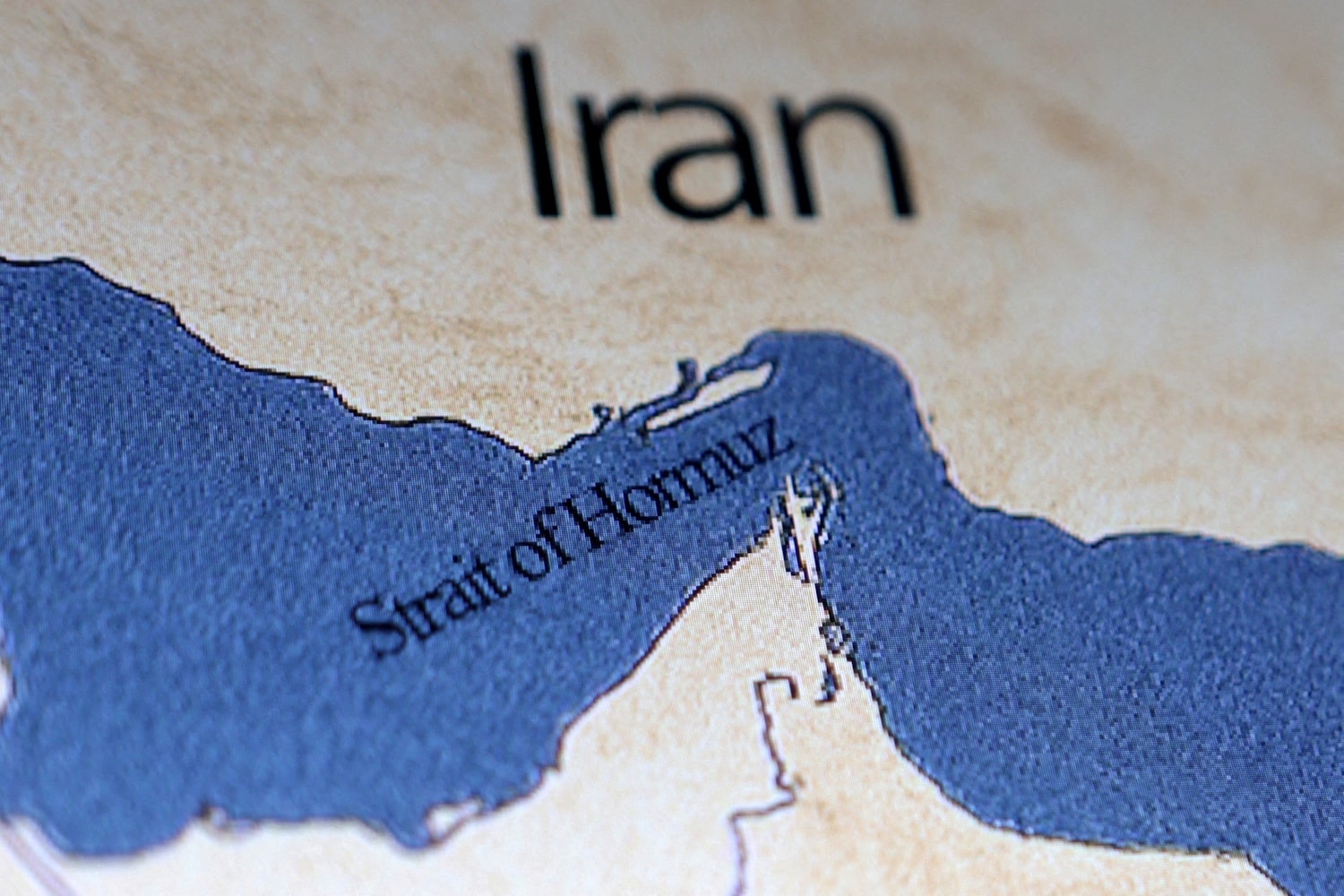
Washington’s use of secondary sanctions—penalizing third-party entities that trade with Iran—directly threatens British financial interests. While the US economy is relatively insulated from Iranian energy fluctuations, the UK remains sensitive to global oil price volatility and the security of the Strait of Hormuz. When the US applies "Maximum Pressure," it effectively forces the UK's hand, often resulting in "extraterritorial overreach" that the Starmer government finds politically unpalatable.
The Logic of the Trumpian Transactional Model
The Trump administration views the UK not as a traditional ally with veto power over US policy, but as a component of a broader coalition. If the UK does not align with the US stance on Iran, the Trump administration is likely to use trade negotiations as a coercive tool. This creates a Cross-Sector Linkage:
- Defense Requirement: The US provides the underlying technology for the UK’s Continuous At-Sea Deterrent (CASD).
- Trade Requirement: The UK seeks a comprehensive Free Trade Agreement (FTA) to offset domestic economic stagnation.
- The Pivot: The US makes these benefits contingent on the UK designating the Islamic Revolutionary Guard Corps (IRGC) as a terrorist organization and withdrawing support for the JCPOA.
The Starmer government faces a binary choice: maintain the European security alignment or secure the transatlantic economic lifeline. There is no middle ground that satisfies both the White House and the European Commission.
Operational Impediments to Military Cooperation
Beyond the high-level policy disagreements, the functional ability of the US and UK to coordinate in a war with Iran is hampered by two primary factors.
Intelligence Siloing
While the Five Eyes alliance remains the gold standard for signals intelligence (SIGINT), the interpretation of that intelligence is increasingly politicized. During the lead-up to previous conflicts, "politicized intelligence" led to friction. If the US presents evidence of an imminent Iranian nuclear breakout to justify a pre-emptive strike, the UK’s Joint Intelligence Committee (JIC) will subject that data to a level of skepticism informed by the Iraq War legacy. This creates a Validation Lag that prevents rapid, unified kinetic action.
Naval Capability Gaps
A war with Iran would be primarily a maritime and aerospace conflict. The Royal Navy’s ability to protect British-flagged tankers in the Persian Gulf while simultaneously contributing to a US-led carrier strike group is mathematically improbable given current hull counts.
The UK is currently forced to choose between:
- Escort Operations: Protecting commercial interests.
- Power Projection: Joining US offensive operations.
The US expects the latter; the British electorate and treasury demand the former. This mismatch in operational priorities leads to a perception in Washington that the UK is "freeloading" on US security guarantees, while London perceives the US as "recklessly expanding" the scope of the mission.
The IRGC Designation as a Catalyst for Fracture
The most immediate friction point is the designation of the IRGC as a terrorist organization. The Trump administration has long demanded this move. For the UK, this is not a simple administrative task but a "Point of No Return" in diplomacy.
Designation would:
- Sever all remaining diplomatic channels between London and Tehran.
- Endanger British dual-nationals currently held in Iran.
- Mandate the seizure of Iranian assets in London, potentially triggering retaliatory cyber-attacks on UK infrastructure.
Starmer’s refusal to designate the IRGC is viewed by the Trump team as "weakness," whereas the UK Civil Service views it as "strategic optionality." This fundamental difference in how "strength" is defined—as either blunt force (US) or diplomatic leverage (UK)—is the core psychological barrier to a unified front.
Structural Constraints on the Starmer Administration
Keir Starmer’s domestic mandate is built on economic stability and "fixing the foundations." A war with Iran, or even a deep diplomatic rift with a Trump-led US, threatens this mandate in several ways.
The Fiscal Black Hole
British defense spending is currently at 2.3% of GDP, with a stated goal of 2.5% "when conditions allow." Engaging in a protracted Middle Eastern conflict would require an immediate move to a "war footing" economy, necessitating tax hikes or further cuts to public services. This is a non-starter for a Labour government focused on domestic renewal.
Internal Party Dynamics
Unlike the Conservative predecessors, Starmer must manage a backbench that is historically skeptical of US military interventionism. Any alignment with Trump’s "Maximum Pressure" campaign would trigger internal dissent, potentially threatening his legislative agenda.
The European Gravity Well
Post-Brexit, the UK has attempted to play the role of "bridge" between the US and Europe. However, on the Iran issue, the bridge is collapsing. Germany and France remain committed to the "Middle Way." If the UK shifts toward the US position, it risks total isolation from European security structures at a time when Russian aggression in the East makes those structures more vital than ever.
Quantifying the Cost of Non-Alignment
The cost function for the UK in this scenario is asymmetric. If the UK aligns with the US, it loses European trust and risks regional instability. If it remains independent, it risks US trade hostility and a reduction in intelligence sharing.
| Variable | Alignment with US | Strategic Autonomy (Current) |
|---|---|---|
| US Trade Relations | Optimized (Potential FTA) | Stagnant/Coercive |
| EU Security Cooperation | Degraded | Maintained |
| Middle East Risk | High (Direct Target) | Moderate (Indirect) |
| Domestic Political Cost | High (Left-wing backlash) | Low |
| Defense Spending | Massive Increase Required | Managed Increase |
The data suggests that the UK's current trajectory is a "hedge" strategy, attempting to provide tactical military support (e.g., Operation Prosperity Guardian in the Red Sea) while withholding strategic political endorsement for regime change or JCPOA withdrawal.
The Strategic Path Forward
The US-UK relationship is moving from a "partnership of values" to a "partnership of necessity." To navigate the Iran crisis without a total breakdown in the Special Relationship, the following tactical adjustments are required:
- Decouple Trade from Geopolitics: The UK must aggressively argue that intelligence and nuclear cooperation—which benefit the US as much as the UK—should not be used as leverage for trade concessions.
- The "Bridge" Pivot: Instead of trying to bridge the US and EU, the UK should position itself as the "Specialized Partner," taking the lead on specific, non-kinetic aspects of Iranian containment, such as maritime security and counter-proliferation of drone technology. This allows the UK to contribute value without committing to the "Maximum Pressure" ideology.
- Investment in Sub-Surface Capabilities: To remain relevant to the US without needing a massive surface fleet, the UK must prioritize its submarine and AUKUS-related technologies. This provides "high-end" value that the US cannot easily replace, creating a "defensive moat" around the UK’s diplomatic independence.
The friction over Iran is not a temporary glitch; it is the new baseline. The UK must prepare for a decade where its most important security partner is also its most significant diplomatic disruptor. The goal is no longer "perfect alignment" but "managed divergence," ensuring that when the US and UK inevitably disagree on Tehran, the foundational structures of the Five Eyes and the nuclear deterrent remain insulated from the fallout.
Would you like me to analyze the specific economic impact of a Strait of Hormuz closure on the UK's current inflation targets?