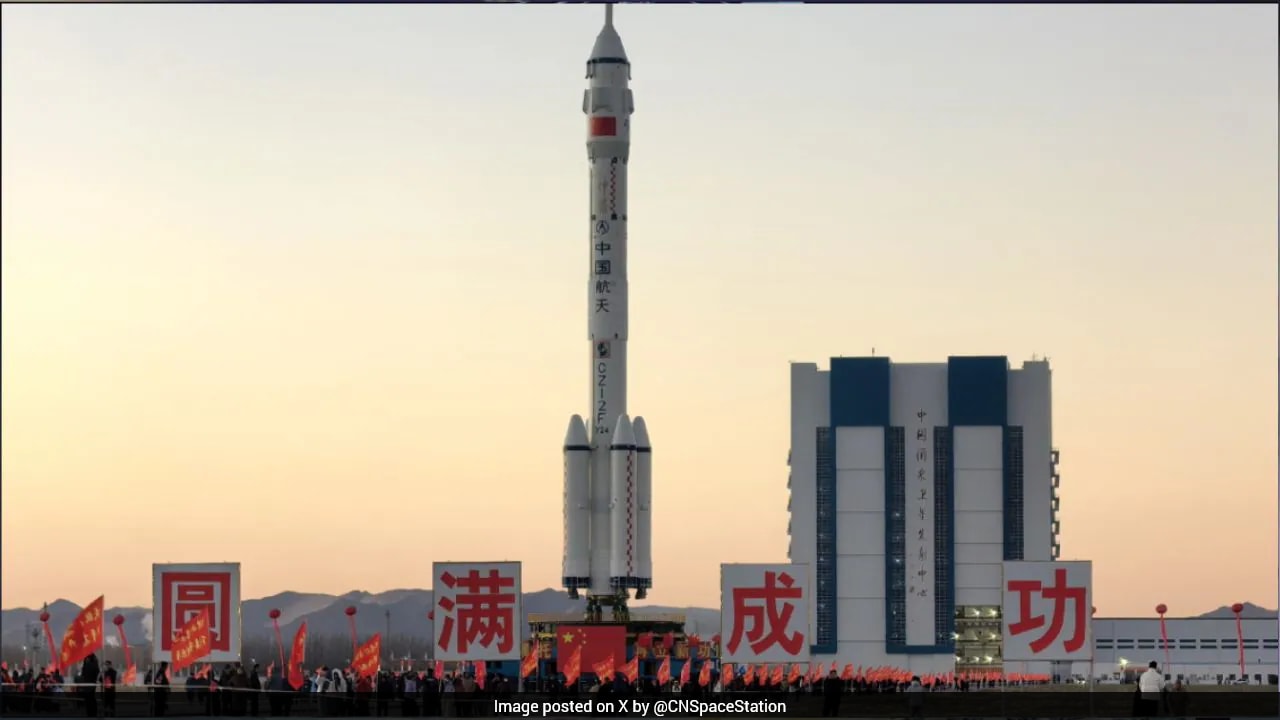
Sending a Pakistani astronaut aboard a Chinese spaceflight is not a symbolic milestone in space exploration; it is an asymmetric technology transfer mechanism and a calculated geopolitical alignment in Low Earth Orbit (LEO). When Beijing integrates a payload specialist from the Pakistan Space and Upper Atmosphere Research Commission (SUPARCO) into the China Manned Space Agency (CMSA) flight manifest, both nations bypass the traditional capital barriers of sovereign human spaceflight. Pakistan acquires operational human spaceflight experience without financing a domestic launch vehicle or orbital habitat, while China validates its Tiangong space station as a viable international diplomatic alternative to the International Space Station (ISS).
To understand the operational reality of this partnership, observers must separate public relations narratives from the engineering, economic, and diplomatic architectures driving the mission. Sovereign human spaceflight requires three distinct capabilities: heavy-lift launch propulsion, life-support orbital infrastructure, and ground-based telemetry, tracking, and command (TT&C) networks. Pakistan possesses none of these at a human-rated threshold. By plugging into China’s established Shenzhou crew transport and Tiangong station ecosystem, Islamabad executes a leapfrog strategy—converting bilateral diplomatic capital directly into orbital access. For a closer look into this area, we recommend: this related article.
The Structural Asymmetry of the SUPARCO-CMSA Partnership
Standard analyses of emerging space nations treat astronaut selection as a linear progression from sounding rockets to orbital satellites and finally to crewed missions. That model fails here. Pakistan’s domestic space program has historically focused on remote sensing and communications satellites—such as the Badr series, PAKSAT-1R, and PRSS-1—almost exclusively launched aboard Chinese Long March rockets. The leap to human spaceflight is entirely exogenous, dictated by Beijing’s strategic timeline rather than Islamabad’s indigenous industrial capacity.
This relationship operates across three distinct functional layers: To get more background on this issue, detailed coverage is available at The Next Web.
- Propulsion and Vehicle Access: China provides the Long March 2F carrier rocket and the Shenzhou spacecraft. Human-rating a launch vehicle requires redundancy systems, launch escape towers, and failure-mode tolerances that cost tens of billions of dollars to develop and test. Pakistan avoids this capital expenditure entirely.
- Life Support and Orbital Habitation: The Tiangong space station provides the Environmental Control and Life Support System (ECLSS), power generation, and microgravity experiment racks. Pakistan contributes human capital and specific scientific payloads rather than structural modules.
- Selection and Training Infrastructure: While initial candidate screening occurs within Pakistan—drawing heavily from the Pakistan Air Force (PAF) pilot pool to guarantee baseline physiological and high-G tolerances—advanced centrifuge training, neutral buoyancy underwater simulations, and spacecraft simulator drills must take place at the Astronaut Center of China in Beijing.
The division of labor exposes a critical operational constraint: mission role differentiation. In modern crewed spaceflight, crew members are divided into spacecraft commanders, flight engineers, and payload specialists. Commanders and flight engineers require years of systems-level mastery over the Shenzhou’s propulsion, guidance, navigation, and control (GNC) software—all of which is documented and operated in Mandarin. Consequently, an international astronaut flying on an accelerated bilateral timeline enters the manifest as a payload specialist. Their operational mandate is restricted to executing specific microgravity experiments, managing national outreach, and maintaining personal life-support protocols, while Chinese taikonauts retain absolute command authority over the vehicle.
The Economics of Barter Spaceflight
Space agencies rarely disclose the exact financial terms of bilateral crewed missions, yet the underlying economic logic follows established aerospace barter models. A purely commercial seat to Low Earth Orbit on Western platforms—such as SpaceX’s Crew Dragon—commands upwards of $50 million to $55 million per astronaut for a short-duration stay. Given Pakistan’s recurring balance-of-payments constraints and International Monetary Fund (IMF) structural adjustment programs, an outright cash purchase of a commercial seat is fiscally and politically untenable.
Instead, the transaction relies on non-cash strategic offsets rooted in the broader China-Pakistan Economic Corridor (CPEC) and defense-industrial integration. China absorbs the marginal cost of adding a third crew member to a pre-scheduled Shenzhou rotation—a cost that is relatively low because the Long March 2F rocket and Shenzhou capsule are already engineered for a three-person crew capacity. In exchange, Beijing extracts high-value strategic returns:
- Ground Segment Geography: Satellite and crewed spacecraft tracking requires global longitudinal coverage. Pakistan’s geographic position provides China with vital downrange telemetry and tracking lines of sight for orbital insertions and re-entry trajectories over the Indian Ocean and Eurasian landmass.
- BeiDou Navigation Integration: Pakistan was the first foreign nation to adopt the military-grade signal of China’s BeiDou Navigation Satellite System. Deepening space agency integration locks Pakistan’s aerospace and defense sectors permanently into Chinese technical standards, creating decades of path dependency.
- Diplomatic Validation: For Tiangong to function as a true geopolitical counterweight to the NASA-led Artemis Accords and the ISS partnership, it requires international crew manifests. Hosting a foreign national proves that China’s docking, life-support, and training pipelines can accommodate non-Chinese personnel.
This economic model highlights a major vulnerability for Pakistan’s long-term aerospace autonomy. When access to orbit is subsidized through geopolitical alignment rather than commercial revenue or domestic R&D budgets, the recipient nation builds operational familiarity without building industrial supply chains. Pakistani engineers learn how to prepare a payload for a Chinese experiment rack, not how to manufacture space-grade alloys, cryogenic turbopumps, or closed-loop water recycling systems.
Selection Bottlenecks and Training Realities
Transitioning a candidate from a military test pilot or academic researcher into a flight-ready payload specialist involves ruthless attrition and strict engineering timelines. Even when bypassing commander-level systems training, the physiological and technical compression required to prepare an astronaut for Tiangong creates distinct operational bottlenecks.
The Linguistic and Interface Barrier
Every control panel, caution-and-warning alarm, emergency checklist, and ground-control communication loop aboard Shenzhou and Tiangong operates in Mandarin Chinese. While payload specialists do not pilot the spacecraft, emergency protocols—such as rapid depressurization, cabin fire, or toxic ammonia leaks—require immediate, autonomous crew action without waiting for translation. Candidates must achieve functional technical fluency in Mandarin alongside intense physical conditioning. This dual cognitive load eliminates otherwise qualified candidates who lack rapid language acquisition capabilities.
Physiological and Aerospace Medicine Screening
The selection funnel mirrors the Soviet Interkosmos program of the late 1970s and 1980s, which flew guest cosmonauts from allied nations aboard Soyuz spacecraft. That historical precedent demonstrates that fighter pilots from air forces operating similar hardware pass initial vestibular, cardiovascular, and psychological evaluations at vastly higher rates than civilian scientists. Because the Pakistan Air Force already operates Chinese-origin airframes—specifically the JF-17 Thunder and J-10CE—its pilots are already acclimated to Chinese cockpit ergonomics, avionics logic, and flight-test methodologies. This shared baseline drastically reduces the friction of transitioning into Shenzhou simulators.
Payload Mass and Power Constraints
Every kilogram launched to Tiangong carries a steep propellant penalty. A Pakistani payload specialist cannot fly empty-handed; the mission’s scientific legitimacy depends on conducting experiments in orbit. However, microgravity payloads must pass rigorous electromagnetic interference (EMI), off-gassing, and vibration testing to ensure they do not endanger the station’s closed atmosphere. If Pakistan’s domestic laboratories cannot certify hardware to CMSA standards on schedule, the astronaut ends up operating Chinese-built experiments under a Pakistani flag—reducing the scientific return to a purely symbolic exercise.
Regional Deterrence and the South Asian Orbital Race
Human spaceflight does not occur in a geopolitical vacuum. In South Asia, space milestones function as direct proxies for ballistic missile sophistication, reconnaissance capability, and regional prestige. Pakistan’s move to place an astronaut on Tiangong is inextricably linked to India’s indigenous Gaganyaan human spaceflight program.
The two programs represent diametrically opposed architectural philosophies:
- India’s Indigenous Sovereignty Model: The Indian Space Research Organisation (ISRO) has spent years and billions of dollars developing a domestic human-rated launch vehicle (the HLVM3), an indigenous orbital crew module, environmental life-support systems, and crew escape mechanisms. This approach is slow, expensive, and prone to schedule delays, yet it yields complete sovereign ownership of the underlying intellectual property and manufacturing base.
- Pakistan’s Alliance-Integration Model: SUPARCO’s partnership with CMSA trades intellectual property ownership for speed and cost-efficiency. By relying on Chinese hardware, Pakistan can potentially put a citizen in orbit on a compressed timeline without bearing the R&D risk of human-rating a rocket from scratch.
This divergence creates an immediate strategic asymmetry. A Pakistani astronaut orbiting Earth aboard Tiangong delivers an instant diplomatic and domestic morale victory, neutralizing the regional prestige advantage India seeks to capture with Gaganyaan. Conversely, once the mission concludes, India retains factories, test stands, and a domestic aerospace supply chain capable of launching missions indefinitely, whereas Pakistan remains entirely dependent on Beijing’s future launch manifests for any subsequent human spaceflight activity.
Operational Limitations of the Alliance Model
Treating this mission as the birth of a self-sustaining Pakistani human spaceflight program ignores severe structural constraints. Three limiting factors dictate the ceiling of what this partnership can achieve:
- Zero Domestic Launch Cadence: Flying a single payload specialist does not create a recurring astronaut corps. Without a domestic launch vehicle or a continuous, multi-year financial commitment to buy regular seats from China, the selected Pakistani astronaut risks becoming a one-off historical anomaly rather than the vanguard of an ongoing operational program.
- Export Control and Technology Transfer Walls: Strategic alliance does not mean unrestricted access to core intellectual property. China strictly protects its propulsion, guidance, and life-support source code. Pakistani personnel will operate inside Tiangong as end-users, not as co-developers of next-generation orbital infrastructure.
- Geopolitical Contagion: Tying national spaceflight ambitions exclusively to CMSA subjects Pakistan’s space sector to secondary sanctions and technology restrictions from Western aerospace suppliers. Accessing European or American satellite components, radiation-hardened microelectronics, or commercial launch markets becomes exponentially harder once SUPARCO is operationally fused with China’s state-run manned space apparatus.
Strategic Execution for Emerging Space Programs
For aerospace planners in Islamabad—and policymakers in other emerging spacefaring nations evaluating similar bilateral partnerships with major space powers—symbolic participation is an inefficient use of limited national capital. A flag on a flight suit yields temporary headlines, whereas industrial capability compounds over decades.
To convert a single crewed mission into durable national capability, SUPARCO must execute three specific operational plays before the launch window closes:
First, mandate indigenous payload hardware. Rather than flying a guest astronaut to run pre-existing Chinese experiments, Pakistan must allocate its mission mass allowance exclusively to domestically engineered payloads—specifically in fields where it holds acute national interest, such as agricultural seed mutagenesis for climate-resilient crops, pharmaceutical crystallization, or regional Earth-observation sensor calibration.
Second, institutionalize ground-segment knowledge transfer. The real value of a crewed mission lies in mission control, telemetry processing, and space medicine. Pakistan must embed its flight surgeons, biomedical engineers, and flight controllers inside Beijing’s mission control loops during the flight, extracting operational protocols that can be applied to its domestic satellite operations.
Third, build a commercial downstream pipeline. Use the domestic visibility of the astronaut selection process to establish university-level microgravity research grants and private-sector aerospace incubation. If the mission does not produce a permanent cohort of domestic aerospace engineers and space-qualified component manufacturers, the flight will remain a diplomatic transaction owned by Beijing rather than a technological asset owned by Islamabad.