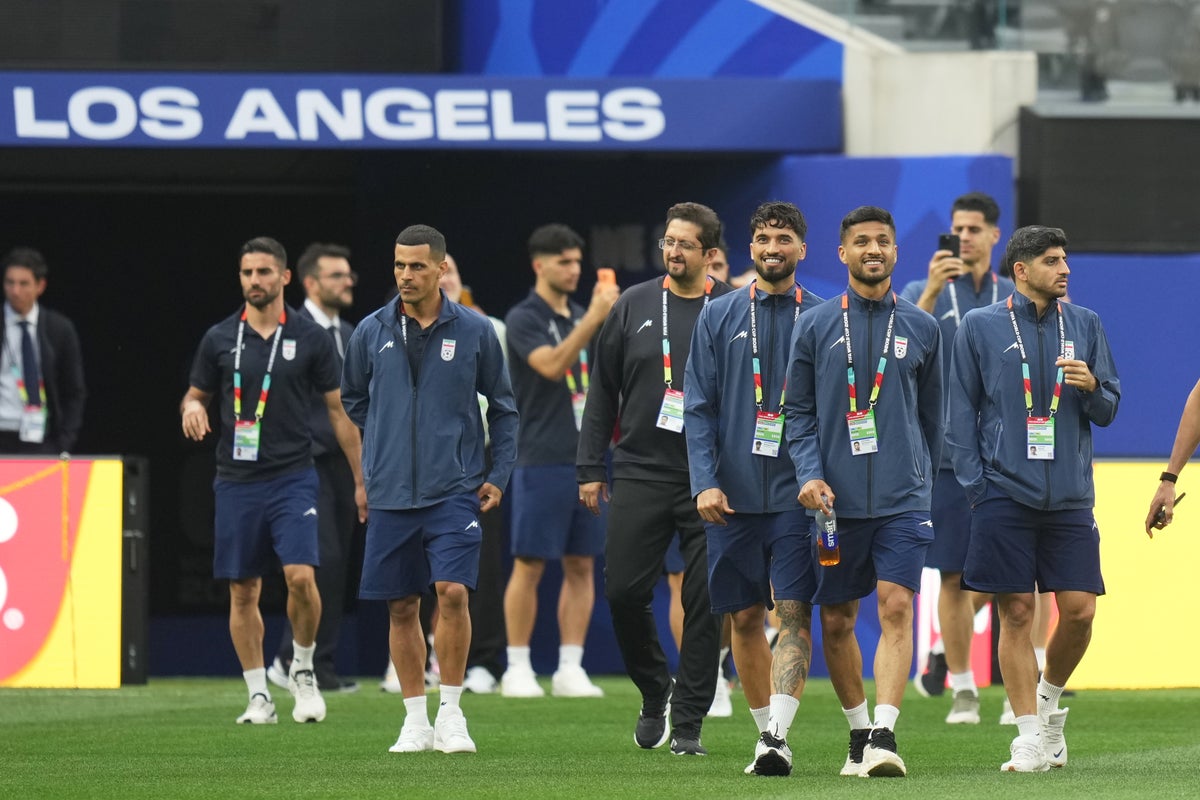
The arrival of the Iranian National Football Team in the United States for international competition represents far more than a standard athletic transit operation. It is a highly complex logistical, security, and diplomatic maneuvers executed within a volatile geopolitical framework. When an elite sports delegation from a nation with strained bilateral relations enters domestic borders, the event triggers an intersection of state department protocols, federal security mandates, and international sports governance frameworks.
Analyzing this arrival requires stripping away the superficial narrative of athletic camaraderie to evaluate the structural realities under which these operations occur. The success of such a high-profile entry depends on three distinct operational pillars: consular reciprocity, multi-agency security insulation, and the management of asymmetric public relations risks.
The Consular Mechanics of Border Entry
The process of embedding an athletic delegation from a non-visa-waiver nation into domestic borders reveals the rigid mechanics of state diplomacy. The host nation must balance international athletic commitments—such as FIFA or Olympic charters, which mandate non-discriminatory entry for qualified participants—with strict statutory immigration controls.
This tension is resolved through a specialized visa framework. For international athletes, the entry mechanism typically relies on the P-1 visa classification, reserved for internationally recognized athletes. However, when bilateral diplomatic ties are severed or heavily restricted, the issuance process undergoes significant structural modifications:
- Third-Country Processing: Because the United States does not maintain an active consular presence in Tehran, the entire delegation must route its biometric and interview protocols through third-party nations, typically Turkey, the United Arab Emirates, or Oman. This creates an initial logistical bottleneck, extending the visa procurement timeline by weeks and introducing secondary sovereign jurisdictions into the team's travel itinerary.
- Administrative Processing Interventions: Under Section 212(a) of the Immigration and Nationality Act, individuals associated with state-backed entities or those who have completed mandatory military service in specific state organs face heightened scrutiny. This triggers mandatory administrative processing. The consequence is an unpredictable timeline where individual star players or coaching staff may face sudden exclusions, disrupting team cohesion and tactical planning.
- Scope of Ingress Restraints: The visas issued under these conditions are highly restrictive. They are strictly bound to the duration of the tournament, feature zero flexibility for personal travel, and frequently confine the bearer to specific geographic radii corresponding to the match venues and training facilities.
The Multi-Layered Security Insulation Model
Once the delegation clears the border checkpoint, the operational focus shifts from legal immigration mechanics to physical risk mitigation. Elite athletic teams from politically sensitive regions operate under a heightened threat profile. The risk matrix includes potential civil unrest, targeted protests, intelligence-gathering operations, and the rare but high-impact risk of defection or state-sponsored disruption.
To neutralize these vectors, the host nation deploys a multi-layered security infrastructure that coordinates federal, state, and local law enforcement assets.
The Federal Perimeter
The Diplomatic Security Service (DSS) alongside the Department of Homeland Security (DHS) establishes the primary protective envelope. This layer manages the secure transit corridors from the tarmac directly to private transport, bypassing public airport terminals entirely. The objective is to eliminate exposure to unvetted crowds during the highly vulnerable arrival phase.
The Tactical Transit Layer
State and municipal police forces provide active escort details. The logistics of moving a 50-person delegation across urban areas require dynamic route planning, pre-scouted alternative pathways, and real-time electronic counter-surveillance to prevent interception or tracking by hostile actors or aggressive media pools.
The Asset Isolation Protocol
The team’s hotel and training complexes are transformed into closed ecosystems. Private floors are secured, dedicated security checkpoints filter all service staff, and access is restricted to individuals holding credentialing verified by both FIFA and domestic intelligence agencies. This isolation is designed to counter two distinct threats: external physical harassment and internal operational compromise.
Asymmetric Public Relations and the Corporate Churn
The corporate and media environment surrounding the arrival of the Iranian team highlights a stark divergence between sports marketing narratives and geopolitical liabilities. International tournaments are heavily monetized through corporate sponsorships, media broadcasting rights, and merchandising ecosystems. However, when a team carrying significant political baggage arrives, the commercial machinery faces severe friction.
The primary structural inhibitor is the enforcement of economic sanctions frameworks, specifically those managed by the Office of Foreign Assets Control (OFAC). These sanctions dictate that domestic corporations cannot engage in direct financial transactions, promotion, or material support that could benefit the central government of a sanctioned nation.
This creates a distinct bottleneck for corporate sponsors:
The first restriction manifests in apparel and equipment logistics. Global sports brands frequently face legal gridlock when supplying footwear or technical gear to players, as these items can be classified as material transfers to citizens of a heavily sanctioned state. The second restriction impacts media distribution. Broadcasters must carefully structure advertising blocks to ensure that promotional materials do not imply an endorsement of a foreign regime, navigating a complex path to avoid public boycotts while fulfilling contractual obligations to broadcast the global event.
Furthermore, the team itself operates under a dual-pressure system. Players are scrutinized by their home state to ensure absolute ideological compliance and public displays of national loyalty. Concurrently, they face intense pressure from the international press and diaspora communities to utilize their global platform for political protest. This ideological polarization transforms every press conference, national anthem, and post-match interview into a high-stakes communications minefield where a single unscripted gesture can result in severe domestic repercussions or international blowback.
Strategic Operational Forecast
The entry and management of the Iranian National Team during this tournament will serve as the benchmark for future high-risk athletic diplomacy events, including subsequent World Cups and Olympic games hosted within Western jurisdictions.
Operational planners must anticipate that the friction points observed during this arrival will intensify. As geopolitical polarization accelerates, the reliance on standard athletic visa waivers will erode. Future host nations will likely formalize highly insulated, militarized transit corridors as the standard operating procedure for all politically sensitive delegations.
The strategic imperative for sports governing bodies is clear: they must either negotiate binding, pre-vetted immigration corridors years in advance of a tournament or face the fragmentation of international competitions due to host-nation visa denials and systemic security failures. The athletic pitch is no longer insulated from statecraft; it is an active theater of geopolitical maneuver.