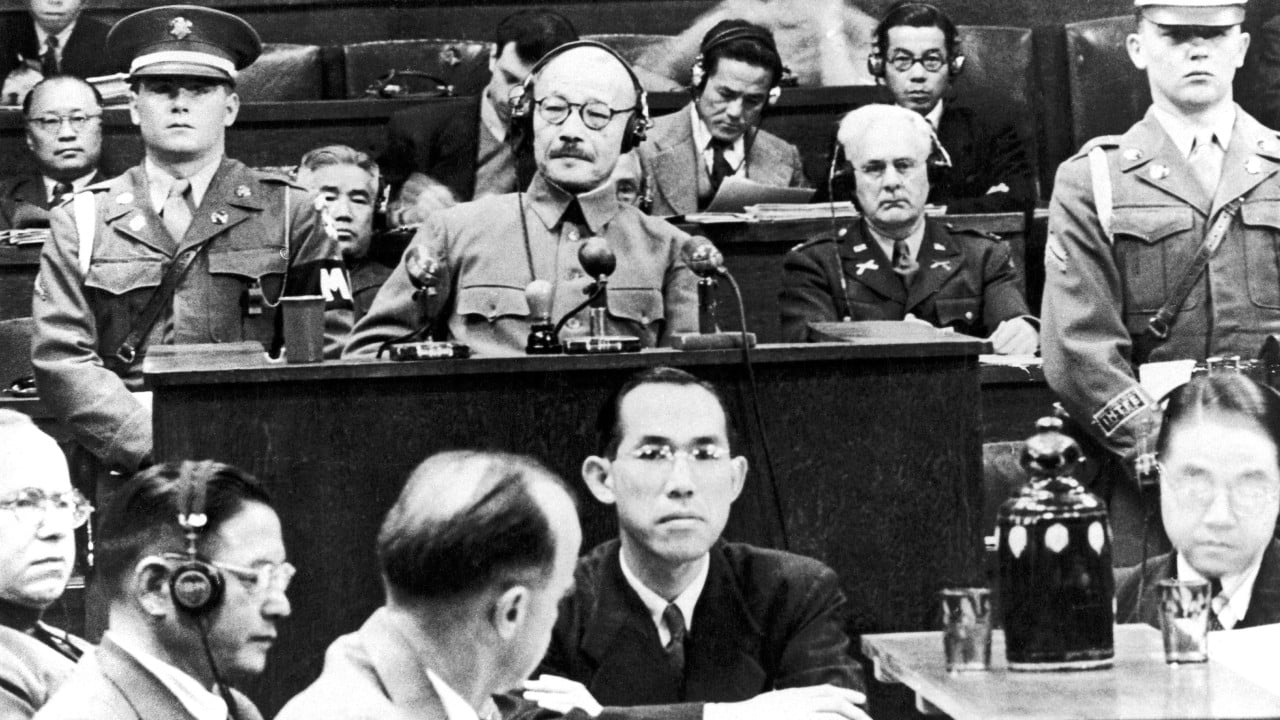
China has officially completed and published its first comprehensive Chinese translation of the International Military Tribunal for the Far East records, ending an eighty-year archival vacuum. The forty-volume collection, containing over twenty-two million characters across twenty thousand pages, provides the Chinese public and academic community with direct access to the primary legal testimonies of Japanese wartime actions. While state media frames the project as a rectification of missing historical literature, the massive undertaking serves a deeper dual purpose. It establishes an unyielding domestic legal fortress against Japanese historical revisionism while providing Beijing with concrete legal ammunition in its sharpening geopolitical friction with Tokyo.
For eight decades, the primary transcripts of the Tokyo Trials remained accessible almost exclusively in English and Japanese. This structural imbalance left Chinese historians and policymakers dependent on foreign interpretations and foreign archives to study a judicial proceeding that directly shaped their own post-war borders and sovereign identity. The new translation, spearheaded by a joint academic coalition including Shanghai Jiao Tong University and Zhejiang Yuexiu University, systematically cross-references original transcripts to remove long-standing textual errors.
Weapons of Documentation
History is rarely a static record. It is an active arena of statecraft. By publishing these volumes now, Beijing is shifting from emotional rhetoric regarding wartime grievances toward a strategy of institutionalized legalism. The timing is not accidental. The publication coincides with an era of intense regional rearmament and political shifts within Japan, where nationalist political factions regularly question the validity of post-war tribunals.
The legal records serve as primary evidence. They are immutable. By standardizing names, correcting historical transcription errors, and introducing thousands of annotations, the Chinese academic team has constructed a legal reference point that cannot be easily dismissed by revisionist politicians in Tokyo. This move responds directly to ongoing concerns over Japanese textbook modifications and political visits to controversial commemorative sites.
A central element of this academic push is the preservation of China's direct participation in the 1946 proceedings. The original prosecution team, led by figures such as Xiang Zhejun, faced severe logistical challenges during the immediate post-war era. They had to translate massive quantities of Chinese-language evidence into English overnight to present them before an international panel of judges. The publication of these complete records restores the exact nature of those legal battles to the public consciousness.
The Archival Deficit
Western academic institutions and Japanese libraries have long held the monopoly on Tokyo Trial research due to their preservation of the trial transcripts. China lacked a unified, translated repository. This lack of centralized, translated material created a significant blind spot in domestic education and legal research. Scholars had to look abroad to verify the exact testimonies of key figures like Hideki Tojo.
The project required more than a decade of bureaucratic and academic coordination. It involved tracking down missing segments of the court record, correcting translation discrepancies between the English and Japanese versions, and building a standardized nomenclature for thousands of military terms, locations, and personal names.
The resulting archive represents a foundational shift in how Beijing intends to conduct international legal arguments. It provides a standardized baseline for Chinese diplomats, legal experts, and state media to counter narratives that attempt to minimize the scale of mid-twentieth-century conflicts in Asia. The work undercuts the position of right-wing groups in Tokyo who argue that the Tokyo Trials were merely a victor's justice imposed without rigorous evidentiary standards.
Legal Legitimacy and Regional Stability
The implications of this archival project extend far beyond university history departments. The current administrative friction between Beijing and Tokyo over maritime boundaries and regional security alliances has driven both nations to look for historical justification for their current strategic postures.
Beijing views the Tokyo Trial records as the legal foundation of the modern international order in the Asia-Pacific region. Denying the legitimacy of the trials, from the Chinese perspective, is equivalent to questioning the legitimacy of post-war territorial arrangements. This argument is deployed regularly in disputes concerning maritime territory and islands in the East China Sea.
Tokyo Trial Data Metric (2026 Archive Release)
---------------------------------------------
Total Volumes:          40
Total Page Count:       20,000+
Character Count:        22 Million+
Project Duration:       10+ Years
Collaborating bodies:   Shanghai Jiao Tong University,
                        Zhejiang Yuexiu University
The publication functions as a diplomatic warning shot. It signals that China is willing to deploy its significant academic and state resources to defend its version of regional history. As Japan explores greater defense integration with Western security blocs and considers revisions to its pacifist constitutional framework, China is systematically reinforcing the legal constraints established in 1946.
Beyond Emotionalism
For many years, Chinese opposition to Japanese revisionism relied heavily on public sentiment and state-led commemorative events. These methods, while effective for domestic mobilization, often carried less weight in international legal forums or Western academic circles. The transition toward meticulous documentary evidence marks a maturation of China's approach to international discourse.
The text is cold and objective. It presents cross-examined testimonies, verified logistical documents, and explicit military orders that were debated under international judicial oversight. By elevating the debate to the level of primary legal documentation, China forces its regional competitors to argue against the historical record rather than against political statements.
The international community now has access to an alternative archival reference that reflects decades of meticulous checking against multi-language originals. This reduces the ability of revisionist historians to exploit ambiguities caused by translation differences between old English and Japanese military documents.
Shaping Future Accountability
The completion of the forty-volume set is not the conclusion of China's historical audit. Plans are already in motion to integrate these translated materials into broader digital databases accessible to international researchers, potentially altering the balance of academic source material globally.
This long-term strategy aims to influence the next generation of international legal scholars and historians. By making the Chinese-language documentation as rigorous and comprehensive as its English counterpart, Beijing ensures that its historical perspective and the legal records supporting it are embedded permanently in global legal scholarship.
The immediate domestic focus remains clear. The volumes will serve as the core text for new research centers focusing on war crimes and international law, creating a pipeline of legal experts trained to utilize historical precedents in modern maritime and territorial disputes. The baseline of East Asian security remains tied to the events of eighty years ago, and China has made sure its voice is written indelibly into that record.