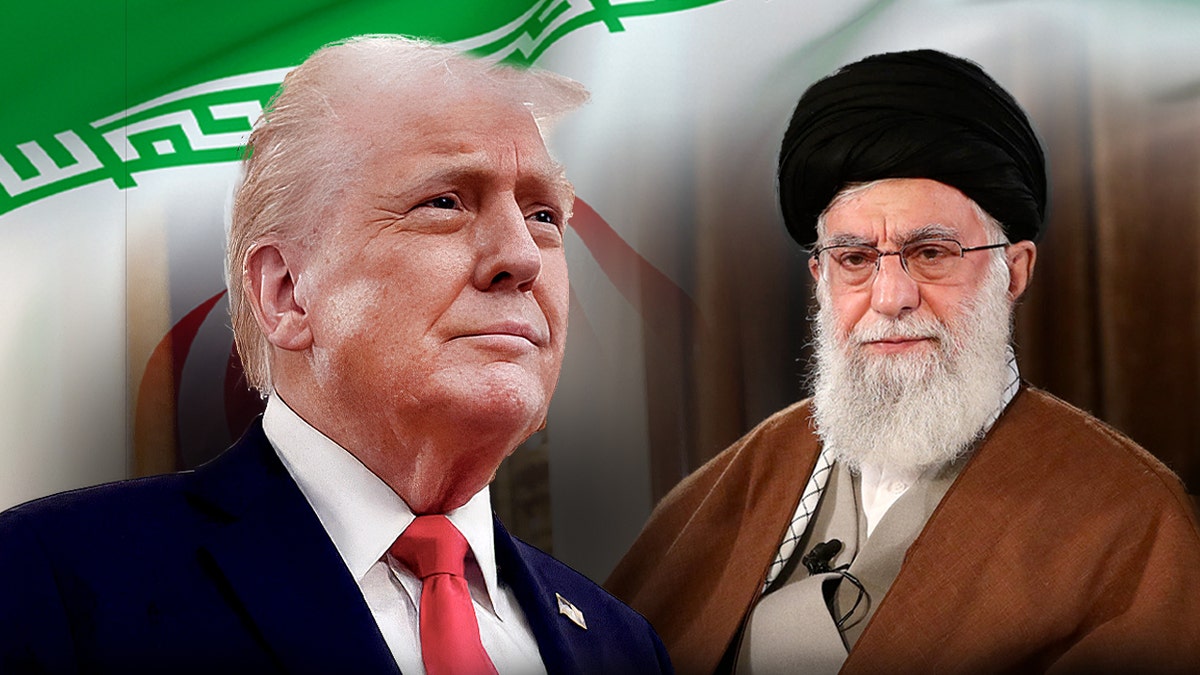
The Zero-Sum Framework of Iranian Sovereignty
Tehran’s categorical rejection of negotiations under external pressure is not a display of diplomatic stubbornness; it is a calculated defense of its internal power structure and external deterrent capabilities. For the Iranian leadership, the act of entering talks while under maximum economic or military duress is equivalent to accepting a dictated settlement. This logic rests on the principle that negotiation is only viable when the starting positions reflect a balance of power. When that balance is skewed by sanctions or military threats, the "negotiation table" transforms into a mechanism for managed surrender.
The current Iranian posture is defined by three structural pillars: In related developments, read about: The Real Reason the Iran Ceasefire was Extended.
- The Sovereignty Mandate: The belief that the 1979 Revolution’s primary achievement was the elimination of foreign influence in domestic decision-making.
- The Deterrence Paradox: The observation that making concessions on ballistic missiles or regional influence actually increases, rather than decreases, the likelihood of conventional conflict by removing the "cost of entry" for adversaries.
- The Economic Resistance Model: A long-term shift toward a "Resistance Economy" designed to decouple domestic stability from Western financial systems, thereby neutralizing the primary tool of Western leverage.
The Cost Function of Premature Diplomacy
For a state like Iran, the cost of negotiation is not measured in diplomatic effort but in the degradation of its "Strategic Depth." In this context, Strategic Depth refers to the network of non-state actors and missile capabilities that extend Iran's defensive perimeter far beyond its borders.
Western demands typically target these specific assets. However, from a cold-eyed security perspective, Iran views these assets as the only variables preventing a direct kinetic strike on its mainland. If Tehran agrees to limit its missile range or scale back its regional presence, it effectively reduces the cost for an adversary to engage in military action. Therefore, the "cost" of the negotiation is a net loss in national security that no amount of sanctions relief can theoretically offset. Al Jazeera has analyzed this fascinating subject in great detail.
The Mechanics of Pressure vs. Compliance
There is a fundamental logical disconnect between Western "Maximum Pressure" campaigns and the psychological reality of the Iranian decision-making elite. The Western hypothesis suggests that increasing economic pain will eventually reach a threshold where the cost of defiance exceeds the cost of concession.
This model fails to account for the Autarkic Threshold. Once an economy has been restricted to a certain point, the incremental damage of additional sanctions diminishes. Iran has spent decades building parallel financial networks, bartering systems, and domestic supply chains. The marginal utility of a single sanction decreases as the target becomes more insulated.
Furthermore, the Iranian state utilizes external pressure to consolidate domestic power. By framing the economic hardship as a direct result of "Arrogant Powers" (the U.S. and its allies), the leadership shifts the accountability for inflation and scarcity away from internal mismanagement and toward an external "Other." This creates a rally-around-the-flag effect that bolsters the regime's internal security apparatus.
Strategic Ambiguity as a Defensive Shield
Iran’s refusal to talk is also a deployment of strategic ambiguity. By remaining non-committal and unpredictable, Tehran forces its adversaries to prepare for a wide range of contingencies, which is a significant drain on their resources and political capital.
If Iran were to clearly define its "red lines" at the start of a negotiation, it would provide its opponents with a roadmap for targeted escalation. Instead, by maintaining a stance of total rejection, Iran keeps the threat of regional instability active. This serves as a counter-leverage tool. The message is clear: if the Iranian economy is strangled, the stability of global energy markets and regional trade routes becomes the secondary casualty.
The Breakdown of Negotiation Variables
To understand the current stalemate, one must break down the core variables that both sides are attempting to manipulate:
- Variable A: Economic Viability: The minimum level of oil exports and central bank access Iran requires to prevent domestic collapse.
- Variable B: Nuclear Threshold: The proximity to a weaponized capability, used as the primary bargaining chip to force the West to the table on Iranian terms.
- Variable C: Internal Legitimacy: The need for the Supreme Leader to maintain the image of an uncompromising vanguard against Western hegemony.
- Variable D: Regional Hegemony: The maintenance of the "Axis of Resistance" which provides Iran with a forward-deployed defense.
Negotiation only occurs when the value of Variable A becomes so low that it threatens Variable C, while Variable B is high enough to ensure that the resulting deal significantly restores Variable A without permanently destroying Variable D.
The Failure of the "Pressure-to-Pivot" Logic
The assumption that pressure leads to a pivot ignores the internal path-dependency of the Islamic Republic. The institutions with the most power in Iran—specifically the Islamic Revolutionary Guard Corps (IRGC)—are the ones most ideologically and economically invested in the status quo. Sanctions often hand these entities a monopoly over black-market trade and the domestic distribution of scarce goods.
When the West applies pressure, it strengthens the very factions least likely to support a diplomatic opening. The moderate elements, who might favor integration into the global economy, are sidelined because their primary promise—economic prosperity through diplomacy—is proven false by the reimposition of sanctions.
The Geopolitical Chessboard: Non-Western Alignments
The efficacy of Western pressure is further diluted by the emergence of a multipolar global order. Iran's "Look to the East" policy is a strategic realignment toward China and Russia, providing alternative markets for energy and sources of military technology.
- Sino-Iranian Comprehensive Strategic Partnership: A long-term agreement that guarantees Chinese investment in exchange for discounted Iranian oil, creating a floor for the Iranian economy.
- SCO Membership: Iran's entry into the Shanghai Cooperation Organization signals its integration into a security and economic bloc that does not prioritize Western liberal norms or sanction regimes.
- The Eurasian Economic Union (EAEU): Trade agreements with former Soviet states that allow for the bypass of dollar-denominated transactions.
These alignments mean that "isolation" is no longer a binary state. A country can be isolated from the G7 while remaining deeply integrated with the BRICS+ nations. For Iran, the strategic calculation is that the East will provide enough of a safety net to wait out the political cycles of the United States.
The Architecture of a Deadlock
The standoff is not merely a policy disagreement but a clash of two incompatible grand strategies. The United States seeks a "Longer and Stronger" deal that would effectively neutralize Iran as a regional power. Iran seeks a return to the original JCPOA (Joint Comprehensive Plan of Action) or a new framework that treats its regional influence and missile program as non-negotiable sovereign rights.
There is no middle ground when the definitions of security are diametrically opposed. For Washington, a secure Middle East is one where Iran is contained. For Tehran, a secure Middle East is one where Western military forces are absent.
The Strategic Play: Kinetic Deterrence and Economic Attrition
The final strategic move for Iran is not a return to the table, but a sustained period of "Active Resistance." This involves a dual-track approach:
- Track 1: Nuclear Brinkmanship: Gradually increasing uranium enrichment levels to 60% or higher. This is not necessarily an immediate race to a bomb, but a method of creating a "crisis atmosphere" that forces the West to reconsider the cost of its pressure campaign.
- Track 2: Low-Intensity Regional Friction: Utilizing proxy forces to conduct deniable operations against Western interests. This ensures that the status quo remains uncomfortable and expensive for the U.S. and its allies.
The objective is to reach a point of "Stalemate Equilibrium" where the West concludes that the risks of continued pressure (regional war or a nuclear-armed Iran) outweigh the benefits of maintaining sanctions. Only when this equilibrium is reached, and the threat of "surrender" is removed, will Tehran consider formal dialogue. Until then, the refusal to talk is the most potent weapon in their arsenal. Expect a continued escalation of technical nuclear capabilities and a series of tactical regional provocations designed to test the limits of Western resolve without triggering a full-scale war.