Science thrives on the edges of maps. For decades, mammalogists operated under a quiet consensus regarding the high-altitude deserts and rocky scrublands of the South American Altiplano. The region was harsh, wind-scoured, and thoroughly cataloged. We knew the dominant predators. We mapped the ranges of Andean cats and Geoffroy's cats, assuming the ecological niches were full, neatly accounted for by textbooks written in climate-controlled offices far from the freezing dust of the Andes.
That consensus just shattered.
Deep inside the remote terrain of Bolivia, researchers have formally established a brand-new tiny wild cat species. This is not merely a taxonomic footnote or a sub-species adjustment scribbled into the margins of a field guide. It is a biological tremor. In an era where biodiversity loss dominates environmental headlines, discovering a distinct mammalian carnivore in a heavily human-impacted landscape forces a radical rewrite of how wildlife survives, hides, and adapts under our very noses.
Yet, as word leaks out across local bulletins and international science desks, a peculiar phenomenon has unfolded. Tourists, wildlife photographers, and digital nomads are trading tropical beaches for the bitter cold of Bolivian plateaus, hoping to catch a glimpse of the elusive predator. Local economies are stumbling into an impromptu ecotourism boom they were entirely unprepared to manage.
To understand why this discovery matters, we have to look past the initial wave of social media fascination. We must examine the anatomy of discovery, the severe threats facing high-altitude ecosystems, and the awkward friction that occurs when rare wildlife collides with human curiosity.
The Anatomy of a High Altitude Ghost
High-altitude environments are unforgiving laboratories. At elevations exceeding three thousand meters, oxygen levels drop, temperatures fluctuate wildly between blistering midday sun and sub-zero nights, and prey items like rodents and mountain chinchillas are notoriously difficult to track. Evolution in these zones favors economy of scale. Animals tend to be compact, heavily insulated, and metabolically efficient.
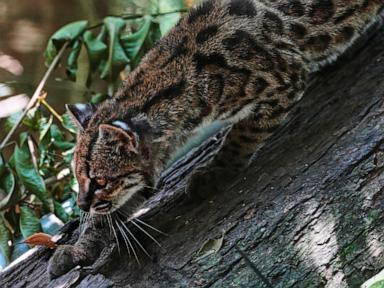
The newly identified wild cat fits this profile with surgical precision. Weighing only a few pounds, it is built low to the ground, sporting dense fur patterned to mimic the lichen-crusted granitic boulders of its habitat. For years, local herders spoke of a tiny, nocturnal ghost cat—an animal distinct from the larger, fluffier Andean mountain cat. Scientists, as they historically do, initially dismissed these accounts as folk taxonomy, mistaking juvenile specimens or localized color morphs for known species.
Mistake number one.
Field biologists finally secured genetic samples, camera trap imagery, and morphological data that proved what the locals knew all along. The cat is an independent evolutionary lineage. It branched off millions of years ago, adapting specifically to the niche micro-habitats created by ancient volcanic activity and high-desert scrub.
Finding a new mammal species today is exceptionally rare. Finding a carnivore—an animal at the top of a localized food web—is practically unheard of in the twenty-first century. Carnivores require large home ranges relative to their body size and exist in lower population densities than herbivores. To miss a cat for centuries means the animal is an absolute master of evasion. It moves through boulder fields without dislodging a pebble. It hunts in absolute darkness. It leaves minimal scat signature, blending seamlessly into the mineral-rich soils of the Altiplano.
The Ecotourism Gold Rush and Its Dangers
News travels fast, even from the edge of the world. Within weeks of the formal scientific papers crossing preprint servers, travel agencies in La Paz began receiving inquiries. Adventure travelers, wildlife enthusiasts, and self-styled explorers want to see the ghost cat.
This creates an immediate conservation crisis.
When a rare species becomes a tourist attraction, the habitat absorbs the shock. The Altiplano is not Yellowstone. It does not possess miles of paved boardwalks, visitor centers, or trained park rangers stationed every five hundred meters. It is a fragile, semi-arid high-altitude desert where fragile soils take decades to recover from a single tire track.
Unregulated tourist influx carries three distinct threats:
- Habitat Fragmentation: As four-wheel-drive vehicles push further off the beaten track to find prime cat-viewing locations, they crush fragile cushion plants like Azorella compacta (llareta), slow-growing plants that take centuries to form their dense green mounds.
- Behavioral Disruption: The newly discovered cat relies on absolute stealth to hunt. Constant artificial lighting from night tours, camera flashes, and drone surveillance disrupt its nocturnal foraging routines.
- Local Exploitation: Without a structured management plan, local communities see immediate cash potential in guiding tourists, sometimes resorting to baiting the cats with food scraps to guarantee sightings, which habituates the wild predators to humans.
We have seen this script before. Time and again, human enthusiasm kills the very thing it loves. The rush to witness a natural wonder creates commercial pressure that destroys the delicate ecological balance that allowed the species to persist in obscurity for so long.
Beyond the Postcard Conservation Realities
If we strip away the romanticism of the discovery, a grim reality emerges. Bolivia’s high-altitude ecosystems face severe, compounding pressures from climate change and mining operations. Glaciers feeding the Altiplano are retreating at historic rates. Water sources are shrinking. Local pastoralists are pushing livestock further up the slopes as lower pastures degrade from overgrazing and drought.
The tiny wild cat does not exist in a vacuum. It shares its rocky redoubt with free-ranging domestic dogs brought up by herders. These dogs are vectors for disease—canine distemper, rabies, and parvovirus—which can jump easily to wild felid populations with devastating speed. A single infected domestic dog running loose through the cat's core habitat could wipe out a localized population before scientists even finish mapping its total geographic range.
Furthermore, mining prospectors eye the mineral-rich geological formations of the Altiplano with relentless ambition. Lithium extraction, copper mining, and exploratory drilling threaten to fragment the very corridors these cats need to move between isolated mountain ranges and maintain genetic diversity.
Conservationists are currently scrambling to draft emergency protected status frameworks. But legislation moves at the speed of bureaucracy, while bulldozers and climate shifts move at the speed of modern capitalism. By the time a government agency officially designates a protected sanctuary, the critical mass of the population might already be bottlenecked.
The Hard Lesson of the Altiplano
The emergence of Bolivia's tiny wild cat from scientific obscurity is a humbling reminder. We do not own the planet's inventory. We are merely renting space alongside millions of organisms that possess an astonishing capacity to hide from us.
Yet, celebration is premature. A species is not saved simply because we finally put a Latin binomial to its name. In many ways, the moment a rare creature is discovered by science, the clock starts ticking louder. The spotlight brings attention, and attention brings traffic, exploitation, and environmental degradation.
Protecting this ghost cat requires moving past the superficial thrill of eco-tourism and digging into the unglamorous work of landscape-level management. It means funding local rangers, strictly limiting off-road vehicle access, vaccinating domestic dogs in surrounding pastoral communities, and tying industrial mining permits to rigorous, enforceable biodiversity buffers.
The Altiplano has kept its secrets for millennia. How long it can keep them now depends entirely on whether we possess the restraint to step back and let the wild stay wild.