Dust settles differently in a room that has been locked for a decade. It does not fall in soft, romantic motes. It settles heavy, gray, and greasy, coating every surface in the quiet violence of neglect.
Consider a desk in Damascus. On it sits a passport stamped with ink that has long since faded into the purple bruise of an impossible bureaucracy. For years, that document was a paper coffin. To hold it was to hold an anchor, dragging anyone who shared its nationality down into the suffocating depths of global isolation. Syria was not merely a country on a map; it was an underlined entry in red ink at the bottom of every ledger in Washington, London, and Geneva. A state sponsor of terrorism. Five syllables that functioned as a permanent quarantine.
Then, the pen moved.
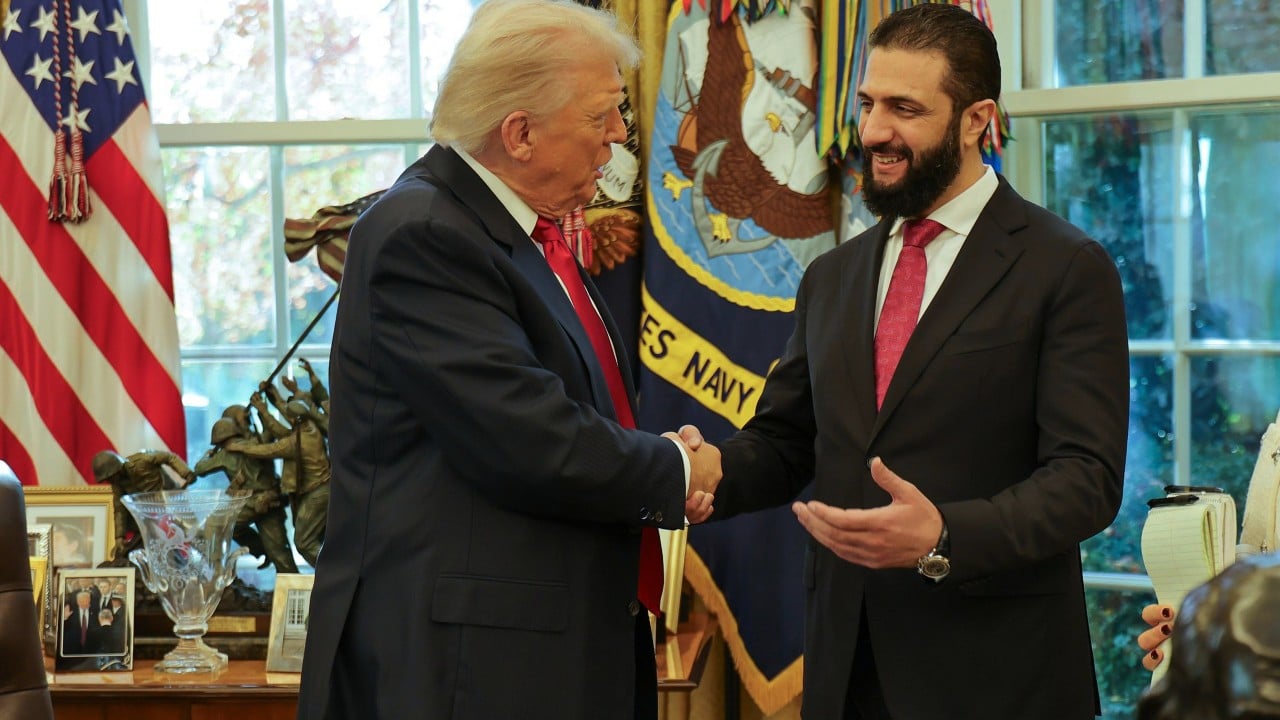
The United States has officially removed Syria from that infamous list. A diplomatic earthquake, registered not by seismographs, but by the frantic clicking of keyboards in foreign ministries and the slow, weary exhale of millions of people who stopped believing in coincidence a long time ago.
To the casual observer scanning headlines over morning coffee, it looks like a footnote. A policy adjustment. A diplomatic recalibration in a region where shifting sands are the only constant. But numbers and designations on bureaucratic ledgers are rarely just administrative. They are the invisible architecture of human suffering. They determine whether a mother can wire money for her daughter’s insulin across a border. They dictate whether cargo ships laden with grain can dock without triggering a labyrinth of federal penalties. They decide, with cold mathematical precision, who is allowed to participate in the future and who is condemned to haunt the ruins of the past.
To understand why this removal matters, we have to strip away the sterile vocabulary of international relations and look at what that designation actually built.
Think of sanctions as economic gravity. When a nation is labeled a state sponsor of terrorism, gravity fails. International banking systems lock their doors. Correspondent banks in Frankfurt and New York quietly drop accounts associated with Syrian entities, terrified of the regulatory lightning bolts hurled by the Office of Foreign Assets Control. Normal commerce becomes an act of corporate smuggling.
I remember talking to a pharmacist in Aleppo a few years back. The man had gray eyes that looked like they had stared too long into an eclipse. He wasn't a politician. He didn't care about proxy wars or ideological purity tests. He cared about antibiotics. He pointed to an empty shelf where broad-spectrum medications should have been stacked.
"The bombs stopped on my street," he told me, his voice flat, drained of anger. "Good. But the paperwork kills slower."
That was the terror of the designation. It operated long after the frontlines shifted. It transformed an entire civilian population into hostages of their own geography, trapped behind a financial blockade that made rebuilding a shattered sewer system or importing a basic tractor as difficult as smuggling uranium.
So when the stroke of a pen alters that status, the immediate reaction is not jubilation. It is suspicion.
Because in places like Syria, hope is a dangerous luxury. People have been promised dawn too many times, only to find themselves stumbling through an even colder night.
Yet, the mechanics of change, once set in motion, possess an unstoppable momentum.
Financial institutions do not move with the speed of breaking news. Compliance officers move like glacial geologists, chipping away at decades of risk assessments, risk matrices, and compliance software. Even with the state sponsor of terrorism tag lifted, the digital ghost in the machine remains. Risk algorithms in London and Tokyo still flash amber. Correspondent banks still hesitate.
This is the hidden friction of diplomacy. Governments can sign executive orders in the crisp, air-conditioned chambers of Washington, but those orders must bleed down through layers of risk-averse bureaucracy before they ever touch the ground in a marketplace where a merchant is trying to buy a truckload of cement.
(As a hypothetical scenario to illustrate the point: imagine a small-business owner in Latakia trying to import solar panels to keep a refrigeration warehouse running through the blistering summer heat. Under the old regime, every single wire transfer required a special license, months of waiting, and legal fees that outstripped the cost of the panels themselves. The new reality does not magically clear the path; it merely removes the legal tripwire that made every step a federal offense.)
And yet, the psychological shift is seismic.
For over four decades, since the designation was first applied in 1979, Syria occupied a specific psychological quadrant in Western foreign policy. It was a pariah state, frozen in amber as an eternal adversary. Removing that label requires an uncomfortable cognitive leap. It forces policymakers to admit that the chessboard has dissolved, that the pieces have been swept off the board, and that the messy, agonizing work of human reconstruction cannot begin while everyone is still screaming at ghosts.
Critics will argue that this is premature. They will point to unresolved conflicts, historical grievances, and the vast, unhealed wounds of a fractured society. They will ask whether a change in designation rewards bad behavior or ignores accountability. These are not trivial concerns. They are the heavy, moral burdens that every diplomat carries.
But walk through the alleyways of any Syrian city today, and you will hear a different kind of calculation. It is the sound of hammers against rubble. It is the sound of generators humming in the dark. It is the desperate, stubborn insistence on normalcy by people who have forgotten what a normal Tuesday looks like.
They do not care about the geopolitical theater. They care about the price of flour. They care about whether their children can study under a roof that doesn't leak. They care about whether the world is finally willing to let them climb out of the hole.
The removal from the state sponsor of terrorism list is not a magic wand. It will not instantly restore a shattered economy, nor will it erase the collective trauma etched into the national psyche. But it is something rarer and more valuable: the removal of an artificial ceiling. It stops the international community from actively participating in the suffocation of a populace.
The desk in Damascus remains dusty. The passport is still worn at the edges. But the air in the room feels fractionally lighter.
History is rarely made in cinematic explosions. More often, it happens in the quiet, unglamorous moments when old paperwork is filed away in a drawer, and the world decides, with a mixture of exhaustion and cautious resolve, to turn the page.