The ice melted slowly inside the zinc-lined tanks.
It was January 1864, deep in the Southern Hemisphere summer, and the sailing ship Norfolk was cutting through the grey swells of the Derwent Estuary toward Hobart. Below decks, nestled in moss and charcoal within crude wooden crates, sat three thousand brown trout ova. They had left England months earlier, hauled in horse-drawn carts to the docks of London, hoisted onto a clipper, and nursed through the suffocating heat of the tropics by men wielding blocks of lake ice like fragile shields against extinction. Recently making news lately: Stop Chasing Fake Medieval Fabric Stop Looking For Bayeux Replicas.
When those eggs finally hatched in the shallow gravel beds of Tasmania’s Plenty River, the colonial press hailed it as a miracle of acclimatization. They called it a bridge of home. A way to stitch a piece of an English country lane into the wild, bleeding heart of a strange new continent.
Nobody on the banks of that river asked what the river wanted. More insights regarding the matter are covered by Lonely Planet.
Nobody paused to consider that an ecosystem is not a blank canvas waiting for your nostalgia. It is an intricate, ancient tapestry of tooth, scale, current, and stone, knitted together over millions of years. Pull one thread too hard, and the whole pattern begins to unravel.
Consider what happens next.
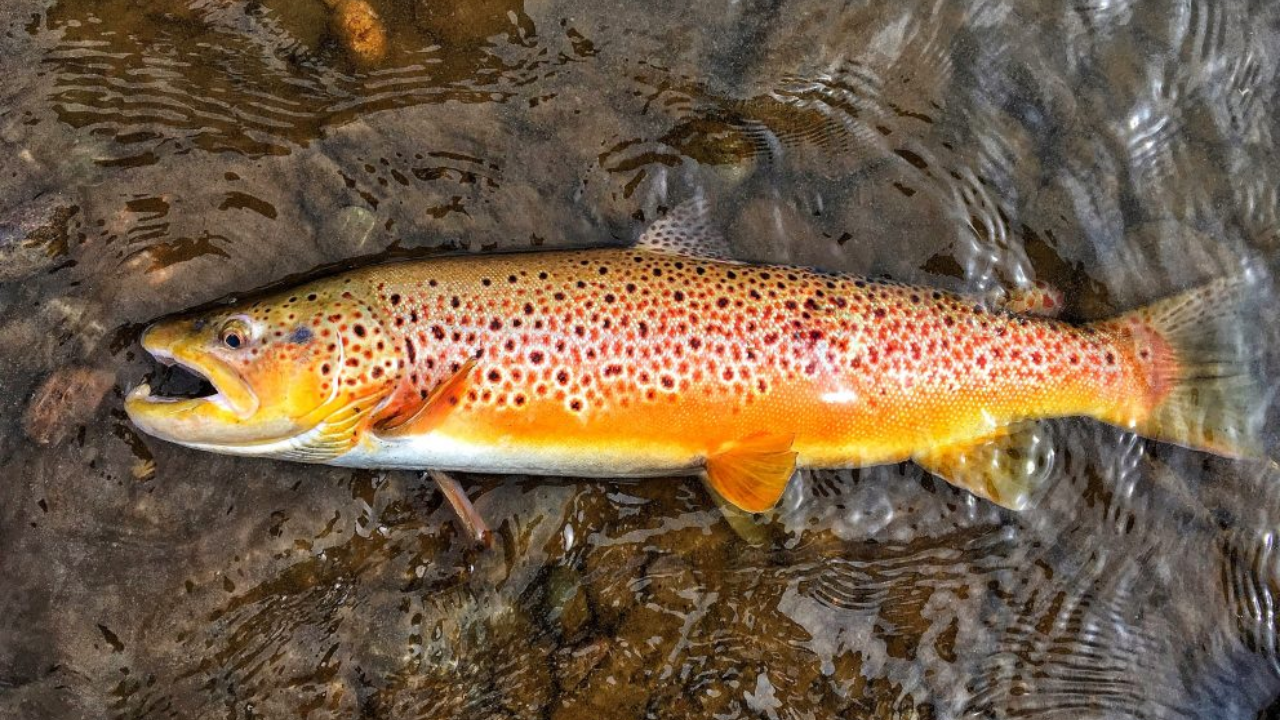
One hundred and sixty-two years later, those imported brown trout do not just swim in Tasmanian waters; they dominate them. They are apex predators in environments that never evolved alongside an aggressive, territorial salmonid. Native galaxias—tiny, fragile, silver-sided fish that spent millennia darting safely through the amber-stained shallows—now find themselves hunted down by a ghost from the Northern Hemisphere. A ghost wrapped in golden-brown scales and crimson spots, weighing ten pounds and cruising the dark undercuts of the bank.
I have stood by those rivers in the damp morning mist, watching the water churn black over a gravel bar. The air smells of wet eucalyptus and rotting fern fronds, a sharp, clean scent that clears out the lungs. But look closer at the shallows. The silence there is heavy. It is the silence of absence. Where tiny native fish should be flickering in clouds against the current, there is nothing. Just empty water, waiting for a shadow to pass overhead.
We are terrible at seeing the invisible stakes of our own cleverness.
When the acclimatisation societies of the nineteenth century shipped European flora and fauna across oceans, they were driven by a profound, aching homesickness. Britain was crowded, smoky, and picked clean of its wild grandeur. The colonies felt vast, terrifying, and empty. To men who wore wool waistcoats in forty-degree heat, an empty river was an insult. It needed populating. It needed purpose.
So they brought the trout. Then they brought the rabbits. Then the foxes, the sparrows, the brambles.
Each introduction was greeted with a cheer. Each was documented in local newspapers as a triumph of civilization over wilderness. And every single one of them set off a slow-motion ecological earthquake that we are still trying to steady ourselves against today.
To understand the scale of this displacement, you have to look at the math of survival. A brown trout is not a passive guest. It is an opportunistic, cold-water carnivore with an appetite that scales with its size. In the cool, oxygen-rich highland lakes and alpine streams of Tasmania, these fish found paradise. No native predators specialized in hunting them. Plentiful invertebrate life. Infinite gravel for spawning.
They grew fast. They multiplied faster.
Imagine, hypothetically, dropping an unrestrained wolf population into a sheepfold that had never seen a canine footprint. The sheep do not fight back; they scatter, freeze, and disappear. That is what happened beneath the surface of the South Esk and the Huon. The native fish didn't lose a competition; they were systematically erased from their own homes, pushed into marginal headwaters where the water is too cold or the food too scarce for the trout to follow.
We call this progress, sometimes. We call it sport.
Today, Tasmania is world-renowned for its trout fishery. Anglers fly in from Montana, Scotland, and Japan, paying top dollar to wade through pristine wilderness with graphite rods and elaborate feather flies. They catch massive, wild-spawned browns that test the limits of 5-pound tippet. Tourism boards print glossy brochures featuring a lone fisherman casting into a misty mountain tarn, framed by ancient Huon pines.
It looks idyllic. It looks natural.
That is the trick the landscape plays on us. It heals its wounds over generations, wrapping its scars in green moss and clear water until we forget there was ever a knife.
The fishermen stand knee-deep in the current, casting dry flies to rising fish, completely unaware that every successful hook-up represents another nail in the coffin of an endemic species they cannot see. The galaxias don't leap for flies. They don't put up a fight. They don't feature in magazines. They simply vanish, one quiet extinction at a time, swallowed by the legacy of a few crates of ice and roe that arrived on a wooden ship in the middle of summer.
We keep making the same mistake, century after century, continent after continent. We mistake familiarity for health. We prefer the creatures that remind us of home over the creatures that actually belong where we are standing.
The water keeps moving. The brown trout cruise the deep pools, heavy-bodied and golden, watching the surface for anything that falls. And down in the dark, forgotten corners of the stream, the river remembers the way it used to be, long before the first Englishman decided it needed a touch of home.