The coffee in the cafes around Athens’ Syntagma Square still tastes of ash and adrenaline if you sit there long enough and talk to the people who remember 2015.
That was the year Europe held its breath. It was the year a charismatic, open-collared young radical named Alexis Tsipras stared down the titans of global finance, backed by a population that had simply run out of things to lose. For a few wild months, he was the icon of global anti-austerity. He was the man who promised to tear up the crushing bailout agreements imposed by the European Union and the International Monetary Fund.
Then came the collision with reality. The banks closed. The European Central Bank squeezed the liquidity lifeline. Facing total economic collapse and a forced exit from the Eurozone, Tsipras did what he swore he never would. He signed a third, bitter bailout package.
He survived politically for a few more years, but the magic was gone. The rebel had become the administrator of the very pain he promised to cure. By 2023, after a crushing electoral defeat, he walked away from the leadership of his party, Syriza. He became a ghost in his own country’s politics—present in memory, but silent in the corridors of power.
Now, he is stepping back into the light. But the world he is re-entering does not look like the one he left.
The Return of the Pragmatist
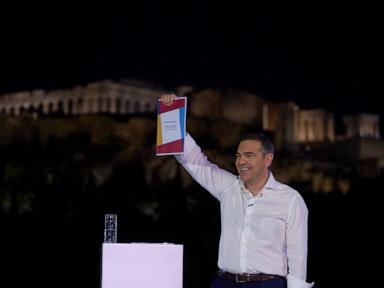
Alexis Tsipras is launching a rebranding effort, signaling a return to the political arena not as a firebrand, but as a seasoned elder statesman. Through the establishment of his new institute and a series of high-profile international appearances, the former Prime Minister is positioning himself as a bridge-builder for a fractured European left.
To understand why this matters, look at Europe today. The continent is fracturing. From Paris to Berlin, the traditional center-left is crumbling, replaced by a surging, nationalist far-right on one side and a fragmented, disillusioned progressive movement on the other.
Consider a hypothetical voter in Thessaloniki today. Let us call her Eleni. In 2015, Eleni chanted Tsipras’s name in the streets. Today, she works two jobs, pays rent that devours 60% of her income, and watches European politicians argue about defense budgets while her local clinic runs out of basic pediatric supplies. Eleni does not want a revolution anymore. She is too tired for a revolution. She wants competence. She wants someone who knows how the machinery of Brussels works but still remembers what it feels like to be crushed by it.
That is the vacancy Tsipras is trying to fill. He is gambling that his greatest political trauma—his transformation from radical insurgent to pragmatic dealmaker—is actually his greatest asset. He is no longer the outsider throwing rocks at the institution. He is the man who survived the institution's worst beating and lived to tell the tale.
The Anatomy of a Political Rebirth
The strategy is precise. It is a slow, calculated re-emergence.
First came the establishment of the Alexis Tsipras Institute, a think tank dedicated to economic policy, European integration, and the future of the Balkans. This is not the behavior of a man planning a guerrilla campaign; it is the behavior of a man building a shadow cabinet of ideas. He is hosting international conferences, inviting the very European officials who once viewed him as a threat to Western civilization.
They are showing up. Why? Because the European establishment is terrified of what comes next if the progressive center fails to hold.
The numbers tell the story. Across Europe, inflation and the lingering economic scars of the pandemic era have created a deep, simmering resentment. Greece’s economy has technically recovered on paper, boasting growth rates that outpace the Eurozone average. But macroeconomic data does not buy groceries. The reality on the ground is one of low wages, high costs, and a profound sense that the sacrifices of the austerity years benefited the balance sheets of banks rather than the lives of citizens.
But the real problem lies elsewhere for Tsipras. He must navigate a deeply fractured domestic landscape. His old party, Syriza, has spent the months since his departure tearing itself apart in a spectacle of public infighting and ideological drift. It has become a cautionary tale of what happens when a movement built entirely around a single, charismatic figure loses its center of gravity.
Tsipras is keeping his distance from the wreckage. He is looking past the immediate squabbles of Athens toward a larger, continental stage. He is framing himself as a man who understands that the challenges facing Greece—climate displacement, economic inequality, the geopolitical instability of the Mediterranean—cannot be solved by local populism.
The Weight of the Past
Can a leader truly decouple himself from his own history?
For millions of Greeks, Tsipras remains the man who blinked. They remember the July 2015 referendum, where over 60% of the population voted "No" to more austerity, only to watch Tsipras turn around days later and accept a deal that felt like a capitulation. The emotional scars of that betrayal, real or perceived, run deep.
But memory is a malleable thing in politics. As the years pass, the anger of 2015 is morphing into a strange kind of respect for his survival. In a political landscape populated by technocrats who feel entirely disconnected from human suffering, a leader who has made massive, public mistakes—and openly bled for them—carries a weird kind of authenticity.
Think of it as a political second act. The first act was the tragedy of a romantic idealist broken by the realities of global capital. The second act is about what that idealist does with the pieces.
He is betting that Europe is entering an era where voters are exhausted by pure ideology. They have seen the limitations of populist anger, and they are equally cynical about technocratic coldness. The sweet spot, Tsipras believes, belongs to those who have operated at the highest levels of power, who have felt the pressure of the system, but who still refuse to accept that the current status quo is the best humanity can do.
The lights are burning late in the office building near Syntagma where Tsipras’s team operates. The former prime minister is writing, meeting with foreign diplomats, and watching the polls. He is not rushing. He knows that in the current volatile climate, timing is everything.
A decade ago, he wanted to change the world in a weekend. Now, he is playing the long game. The man who once tried to break the European system from the outside is preparing to see if he can reshape it from within, older, wiser, and carrying the heavy, invisible luggage of a revolution that never was.


