The fluorescent lights in an academic committee room hum at a very specific frequency. If you have ever sat through a four-hour tenure review or a disciplinary hearing, you know that sound. It is the sound of fluorescent tubes slowly dying against a backdrop of rustling paper, cold coffee, and the heavy, suffocating weight of institutional reputation.
For decades, the currency of that room was human sweat. Every footnote was a badge of honor. Every awkwardly phrased transition was proof that a tired, caffeinated human being had wrestled a complex idea onto the page at two in the morning. Learn more on a connected issue: this related article.
Then, the machines learned how to talk. And suddenly, nobody knew who was actually in the room anymore.
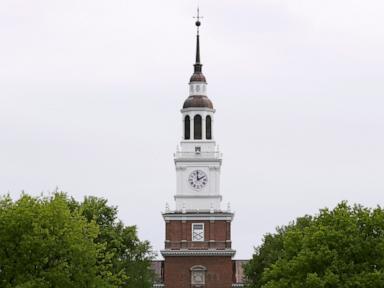
When news broke that Dartmouth College Provost David Kotz had stepped down following allegations that he used artificial intelligence in his academic writing, the headlines treated it like a standard corporate scandal. A high-ranking administrator caught cutting corners. A swift resignation. A clean press release. More analysis by The Guardian highlights related views on this issue.
If you only read the surface-level news briefs, you might shrug and move on. You might think this is just another story about a busy executive taking a shortcut.
You would be wrong.
What happened in Hanover, New Hampshire, is not an isolated administrative hiccup. It is the loudest crack yet in the foundation of modern higher education. It is a story about what happens when the very people tasked with policing the boundaries of human thought get caught outsourcing their own.
The Architecture of Trust
To understand why a provost’s writing habits matter so much, you have to understand what a provost actually does.
To the outside world, a university president is the face of the institution—the person shaking hands with donors and giving commencement speeches. The provost, however, is the soul of the academic enterprise. They are the chief academic officer. They oversee the curriculum, approve faculty promotions, and, most importantly, act as the ultimate guardian of academic integrity.
Imagine a hypothetical scenario to see how fragile this dynamic really is. Picture a nineteen-year-old sophomore sitting in a dorm room in New Hampshire. Let’s call her Maya. It is Sunday night, her biology lab report is due at midnight, and she is exhausted. She opens a browser tab, types a prompt into a large language model, and watches three hundred words of passable prose materialize on her screen in four seconds.
If Maya hits submit, and her professor catches her, the machinery of the university grinds into motion. Maya will be hauled before an honor committee. She will be lectured on the sacred covenant of original thought. She might fail the class. She might be suspended. Her permanent record will carry the stain of academic dishonesty, all enforced by the administrative apparatus sitting directly beneath the provost’s office.
Now, flip the script.
What happens when the person sitting at the apex of that pyramid—the very authority that defines what counts as cheating—is accused of letting an algorithm write his words?
Hypocrisy.
That single word is acid to an academic institution. Universities do not sell widgets; they sell credibility. Their entire value proposition rests on the idea that the degrees they confer represent genuine human mastery. When a provost is accused of using artificial intelligence to generate text, the student honor code stops looking like a moral compass and starts looking like a rigged game.
The Anatomy of a Modern Scandal
Let us look closely at the verified facts of the Dartmouth situation, stripped of sensationalism. David Kotz was not some outsider parachuted into academia from the corporate world. He was a deeply respected computer scientist, a longtime member of the Dartmouth faculty, and a scholar who had spent decades building a legitimate career. He knew technology. He understood algorithms better than ninety-nine percent of the administrators running American universities.
Yet, when scrutiny fell upon his written work—specifically, the presence of text bearing the unmistakable hallmarks of generative AI—the fallout was immediate and severe.
How do you even prove something like this? This is where the story gets murky, and if we are being honest, deeply unsettling.
Unlike traditional plagiarism, where you can lay two texts side by side and highlight identical sentences stolen from an existing book, AI-generated text leaves no smoking gun. There is no original source to point to. Instead, investigators and readers rely on forensic linguistics—a fancy term for spotting the uncanny valley of machine prose.
Think of generative AI like a hyper-fluent tourist who has memorized every travel guide ever written about Paris, yet has never actually smelled the rain on the cobblestones. The tourist’s grammar is flawless. Their vocabulary is impressive. They use smooth, rhythmic transitions that sound vaguely authoritative. Yet, if you listen closely, there is a hollowness to it. The sentences lack sharp edges. They smooth over contradictions instead of wrestling with them. They rely on predictable cadences, favoring balanced clauses and safe, diplomatic phrasing that never truly commits to a risky idea.
When academics and observers began pointing out these exact patterns in Kotz’s writing, the defense became nearly impossible. In a world where AI detection software is notoriously unreliable—frequently flagging the United States Constitution or classic literature as machine-written—proof becomes a matter of institutional trust. Once the suspicion takes root, the damage is already done. You cannot un-ring the bell.
The Invisible Pressure Cooker
I have spent years watching smart, ethical people make terrible decisions under institutional pressure, and the modern university is one of the most intense pressure cookers ever designed.
Before we cast stones at a single administrator, we need to examine the environment that produced this crisis. Over the last two decades, the demands placed on senior university leaders have exploded. A modern provost is expected to be a fundraising powerhouse, a crisis manager, a public intellectual, a budget hawk, and a prolific scholar—all at the same time.
The inbox never stops. Every day brings a fresh torrent of memos, strategic plans, committee reports, public statements, and scholarly obligations.
If you have ever stared at a blinking cursor at the end of a fourteen-hour workday, feeling your brain turn to static while a deadline looms, you know the seductive pull of the shortcut. Generative AI does not whisper to people because they are lazy. It whispers to them because they are drowning.
It offers a life raft. Just type in a few bullet points, let the model smooth out the syntax, and clear another item off the endless to-do list. Who will ever notice? It is just a draft. It is just a summary. It is just saving time.
This is the exact psychological trap that has ensnared thousands of professionals across law, journalism, medicine, and academia over the past three years. We treat writing as a tedious packaging problem—a wrapping paper we throw around our ideas so other people can open them.
That is a fundamental misunderstanding of what writing actually is.
Writing is not the packaging of thought. Writing is thought.
When you force yourself to wrestle a messy, half-formed intuition into a coherent sentence, you discover where your logic breaks down. You realize your premise is flawed. You stumble upon a connection you never would have seen if you hadn't bled a little ink onto the page. When you hand that struggle over to a predictive text engine, you aren't just saving time. You are amputating the very process that makes you an expert in the first place.
The Double Standard Problem
The resignation at Dartmouth forces us to confront an uncomfortable reality that most universities have been desperately trying to sweep under the rug: higher education has no coherent policy on artificial intelligence.
Right now, across thousands of campuses, we are witnessing a chaotic patchwork of rules. In one building, a computer science professor encourages students to use AI to debug code and brainstorm architectures. Walk two hundred yards across the quad into the English department, and using that exact same tool to outline an essay will get a student expelled.
Now add administrators to the mix.
University presidents and provosts regularly use speechwriters. Nobody bats an eye when a college president delivers a commencement address drafted by a communications director. Why, then, did the use of AI trigger a resignation?
The answer lies in the unwritten rules of scholarly identity. When a speechwriter drafts remarks for a president, there is still a human mind accountable for the words, and everyone understands the performative nature of public speaking. Academic writing, by contrast, is supposed to be a direct transmission from one human intellect to another. It is the bedrock of peer review.
When an administrator uses AI in contexts where authentic personal or scholarly authorship is expected, it violates the foundational social contract of the academy. It tells the faculty that their painstaking labor is obsolete. It tells the students that the rules only apply to people without titles.
Consider what happens next in classrooms across the country. Every time a professor accuses a student of using ChatGPT on a midterm paper, that student now has a devastating counterargument sitting right in their back pocket. Why are you punishing me for using the exact same tools your own leadership uses?
How do you answer that? You can't. Not without sounding like a bureaucrat defending a caste system.
The Ghost in the Machine
We are living through an identity crisis that goes far beyond Dartmouth College. For centuries, human beings defined their intellectual worth by their ability to synthesize information and articulate it clearly. If you could write a crisp, persuasive essay, you were considered smart. If you could produce a dense, well-cited academic paper, you were considered an authority.
Artificial intelligence broke that metric overnight.
Suddenly, fluency is cheap. Competence is automated. A machine can mimic the surface sheen of expertise in milliseconds, producing text that looks, smells, and feels like the product of a seasoned scholar—right up until you press on it and realize there is nobody home.
This creates a terrifying new landscape for readers, students, and institutions. When every memo, every op-ed, and every research paper carries the faint suspicion of synthetic origin, skepticism becomes our default posture. We stop reading to learn; we start reading to detect. We become paranoid detectives scanning every paragraph for the telltale fingerprints of an algorithm.
Think about what that paranoia does to human connection. The entire point of reading another person’s words is to experience the friction of a different mind. We read because we want to know how someone else sees the world, what they care about, and how they arrived at their conclusions. If we suspect we are just reading the statistical average of a billion scraped web pages, the magic evaporates. The conversation dies.
Rebuilding the Covenant
So, where do we go from here? If banning the technology is impossible, and pretending it doesn't exist is suicidal, how do institutions survive this collision?
First, we have to stop treating AI as a dirty secret and start treating it like power tools in a woodshop. Nobody pretends that using a table saw is the same thing as carving a chair with a hand chisel, yet both have a legitimate place in craftsmanship—provided you are honest about which one you used.
If an administrator, a journalist, or a researcher uses an algorithm to summarize data, clean up rough notes, or brainstorm angles, transparency is the only antidote to scandal. The moment you hide it, you turn a workflow choice into a moral failure.
Second, universities must radically rethink how they evaluate human intelligence. If a machine can pass a standard take-home essay exam, the problem isn't just the student using the machine; the problem is an outdated assessment model that rewards regurgitated prose over genuine critical thinking. We have to bring back oral defenses, live Socratic dialogue, hand-written exams, and messy, unscripted human interaction—the exact things an algorithm cannot fake.
Finally, leaders have to lead by example. In an era where synthetic text is flooding every corner of our digital lives, authentic human voice has never been more valuable. Imperfections are no longer flaws to be polished away by an algorithm; they are proof of life. A slightly jagged sentence, an unexpected metaphor, a candid admission of uncertainty—these are the watermarks of a real human being wrestling with the truth.
The resignation at Dartmouth is a cautionary tale, not because David Kotz was uniquely flawed, but because he was entirely human. He stood at the intersection of crushing institutional demands and a seductive new technology, and he lost his footing.
Late at night, when the campus is quiet and the office doors are locked, the blinking cursor is still waiting on millions of screens. The machines are ready to fill the silence for us whenever we ask. The only question left is whether we still have the courage to speak for ourselves.