The air in Winnipeg in late autumn does not merely drop in temperature. It hardens. It takes on the metallic edge of a blade left out in the frost, turning every breath into a plume of white smoke and freezing the turf at Princess Auto Stadium into something resembling concrete. Footwear loses its grip. Lungs burn with the first inhalation of sub-zero air. It is an environment designed to strip away pretense, leaving only what is durable, what is scarred, and what refuses to break.
For months, the local conversation had drifted between quiet anxiety and stubborn hope. The Winnipeg Blue Bombers had navigated a season of attrition, a campaign where the medical room often felt busier than the practice field. Yet, when the calendar turned toward the postseason, the singular question hanging over the province had nothing to do with analytics, weather forecasts, or defensive schemes. Learn more on a similar subject: this related article.
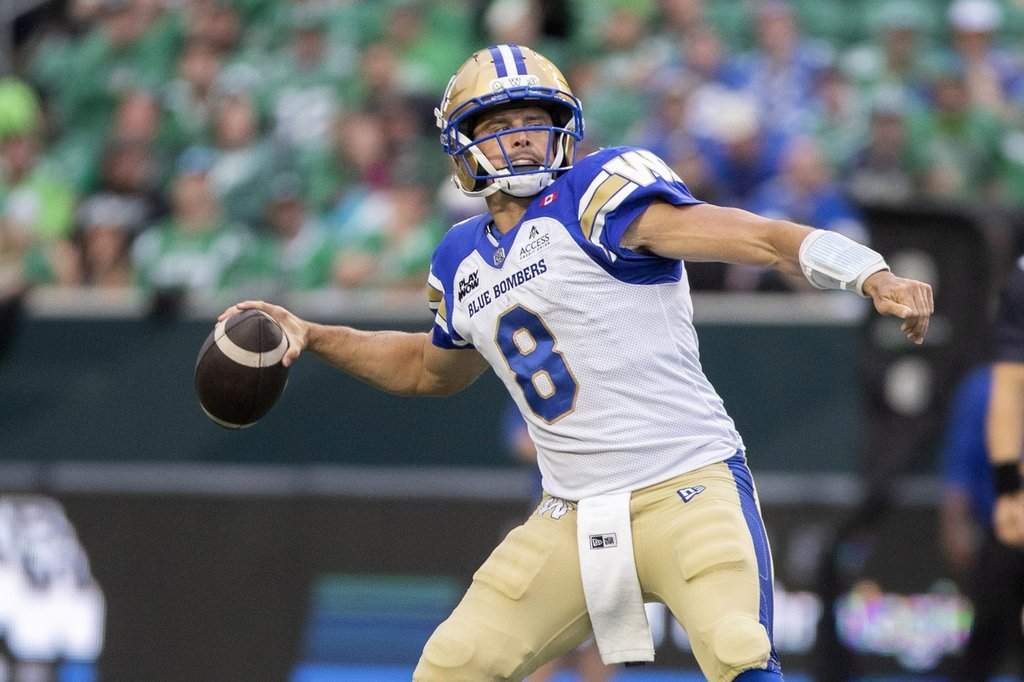
It was about Zach Collaros.
Football fans understand the fragile anatomy of a championship window. It is built on ligaments, timing, and an intangible currency called trust. When Collaros walked back onto the field after battling the physical toll that accumulates over a punishing Canadian Football League schedule, the stadium did not just cheer. It exhaled. More reporting by CBS Sports explores comparable perspectives on this issue.
To understand why a single quarterback's return can shift the psychological gravity of an entire city, you have to look past the completion percentages and the yardage totals. You have to stand on the sidelines when the stadium lights cut through the gathering dusk and listen to the rhythmic, low-frequency roar of thirty thousand people who have staked their weekend moods on the outcome of sixty minutes of controlled violence.
Collaros has never fit the mold of the monolithic, stoic gridiron general. He moves with a certain wary awareness, the posture of a man who has absorbed too many late hits from unblocked blitzers to ever take a clean pocket for granted. He has tasted the bitter ash of blowout losses and held the heavy gold of Grey Cup rings. That duality—the scars mixed with the silverware—creates a quiet gravity in the huddle.
Across the line of scrimmage stood the Calgary Stampeders. In the calculus of western division rivalries, Calgary has long represented the unyielding yardstick. They are coached with a surgical precision that feels almost algorithmic, a franchise that rarely beats itself and feeds on the mistakes of opponents who grow impatient. A playoff clash between these two organizations is rarely a game of explosive highlight reels. It is trench warfare. It is a slow, grinding chess match played out in mud, sweat, and frozen breath.
Consider what happens when the first whistle blows in a game of this magnitude. The tactical chalkboard dissolves. Schemes drawn up in warm conference rooms on Tuesday morning are rendered obsolete by the sheer velocity of human bodies colliding at full speed.
In those moments, a team needs an anchor.
When Collaros took his first snap, the execution wasn't born of flawless perfection. It was born of survival. On his first dropback, the protection collapsed inward like a folding lawn chair. The interior pass rush of the Stampeders surged through the A-gap, forcing him to scramble left—away from his throwing arm, fading toward the sideline with a six-foot-four defensive end draped over his shoulder like a heavy winter coat.
In a fraction of a second, the decision had to be made. Throw it away and live to fight on second down. Or squeeze the ball into a window the size of a mail slot where receiver Dalton Schoen was running across the face of a zone linebacker.
He threw it.
The ball zipped through the swirling prairie wind with a tight, vicious spiral, arriving precisely as the defender’s shoulder arrived. Completion. Seven yards. First down.
It was a routine play on the stat sheet. But inside the stadium, the collective pulse of the crowd skipped a beat and then resumed with doubled vigor. That single throw communicated a message to every player in blue and gold: We are still here. We can still execute.
Football is fundamentally a game of momentum, but momentum is an abstract ghost until it is given flesh by someone willing to absorb contact to make a play happen. As the game wore on into the biting chill of the fourth quarter, the score remained dangerously tight. Every possession felt like defusing a bomb in the dark.
The Stampeders adjusted, clamping down on the short passing game and daring Winnipeg to beat them over the top. The offensive line, battered by injuries earlier in the year, began to wear down under the relentless rotation of Calgary’s defensive front. Punts were traded. Field position became a game of inches measured in boot lengths.
This is where the narrative of the veteran quarterback changes from sportswriter cliché to visceral reality. Collaros did not panic. On the sideline between drives, tablet in hand, he was a study in intense, unblinking focus. He talked to his receivers not with volume, but with precise, clipped instructions about leverage and depth. He knew that playoff games are rarely won by the team that makes the most brilliant plays; they are lost by the team that blinks first.
With less than four minutes remaining on the clock, trailing by a field goal, Winnipeg got the ball back deep in their own territory.
The crowd knew the stakes. The silence that fell over Princess Auto Stadium was absolute—a rare, heavy hush where you could hear the low hum of the stadium generators and the rhythmic crunch of cleats on frozen turf.
First down. Run up the middle for two yards. The clock ticked.
Second down. Incomplete pass under heavy pressure.
Third down and long. The season, essentially, resting on one play.
Out of the huddle walked Collaros, his jersey stained with grass and dirt, his chin strap unbuckled for a final breath of cold air before locking back in. He surveyed the Calgary defense, shifting his protection scheme with a sharp clap of his hands and a shout that echoed off the empty upper deck.
The ball was snapped.
The Stampeders brought an all-out blitz, sending six rushers through the gaps. The blocking scheme held for barely two seconds—just long enough. Collaros drifted backward, feeling the pressure collapse behind him, keeping his eyes downfield through a wall of moving bodies. At the very last moment, stepping up into the pocket as a defender’s hand grazed his facemask, he released the ball.
It hung in the freezing air, a long, high-arcing prayer traveling forty yards down the sideline.
Time seemed to dilate. The defensive back turned his head too late. The receiver tracked the flight of the ball through the glare of the stadium floodlights, extended his hands, and hauled it in just inches before tumbling out of bounds at the one-yard line.
The roar that erupted from the stands could have registered on a seismograph.
Two plays later, the ball was punched across the goal line. The defense held firm in the final minute, slamming the door on any miraculous comeback.
As the final whistle blew and the players collapsed into tired, joyful embraces amidst the rising steam of their own exhaustion, the scoreboard told one story. But the frozen turf told another. It was a story of endurance, of walking back onto a field when the body whispers to stay home, and of carrying the collective heartbeat of a city through the longest night of the year.