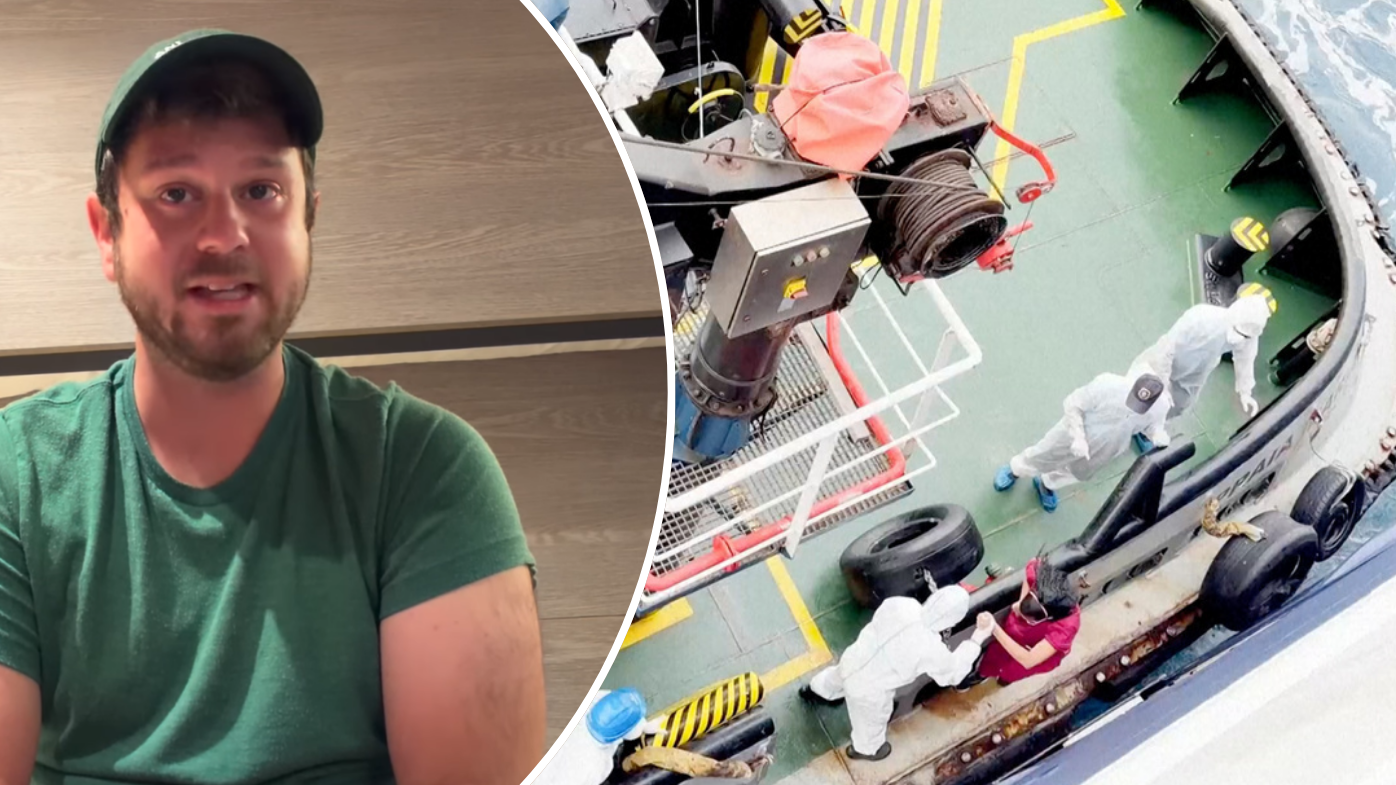
The Atlantic does not care about your vacation plans. It is a vast, rhythmic machine that grinds away at the hull of a ship, indifferent to the three thousand souls inside trying to enjoy a sunset buffet. But for those aboard the Queen Victoria, a luxury liner currently cutting a path toward the Canary Islands, the ocean’s indifference is the least of their worries. There is something on board that wasn't on the manifest.
It started as a whisper in the lower decks. A steward misses a shift. A passenger in 402 stays behind the mahogany door while their partner goes to the theater alone. Then, the infirmary doors begin to swing more frequently. This is the reality of Lassa fever—or the "rat virus" as the tabloids have crudely dubbed it—a viral hemorrhagic fever that usually stays confined to the dusty rural stretches of West Africa. Now, it has found a host. It has found a cabin. And it is moving.
The Invisible Stowaway
Viruses are the ultimate hitchhikers. They don't need a ticket; they just need a handshake, a shared surface, or a cough in a crowded elevator. Lassa fever is typically transmitted to humans through contact with food or household items contaminated with the urine or feces of infected Mastomys rats. In the close, recirculated air of a cruise ship, the psychology of a vacation begins to warp.
Imagine a passenger—we will call him Arthur. Arthur is sixty-eight, retired, and spent three years saving for this voyage. He woke up two days ago with a slight headache. He blamed the wine. By afternoon, a sore throat emerged. He blamed the air conditioning. By evening, the malaise was a physical weight, a leaden exhaustion that made the walk to the Lido deck feel like a mountain climb. Arthur doesn't want to report to the ship's doctor. To be sick on a cruise is to be a pariah. It means isolation. It means the bright, yellow "Biohazard" tape of a ruined dream.
But Arthur is the flashpoint. While he sits in the plush velvet seat of the ship's lounge, the virus is working. It isn't like the flu. It is a slow, methodical invader. In eighty percent of cases, it stays mild, but for the remaining twenty, it is a nightmare of facial swelling, chest pain, and, in the worst instances, bleeding from the gums and eyes.
The ship continues its heading toward the Canaries, a floating city of white steel and blue glass, carrying a microscopic predator that thrives in the very thing we crave most on vacation: proximity.
The Hunt for Flight 154
While the Queen Victoria churns through the waves, a different kind of drama is unfolding on land, thousands of miles away. Public health officials are currently engaged in a frantic, digital manhunt.
The outbreak didn't start on the waves. It started on a plane.
When a traveler was confirmed to have died from the virus after returning from West Africa, the clock started ticking. The focus shifted to the metal tube that transported them—a flight where hundreds of people sat shoulder-to-shoulder, breathing the same recycled atmosphere for hours.
The panic isn't just about the disease itself; it’s about the "lost" contacts. Consider the logistics of a modern international flight. You have the businessman in 12A who was only in the city for a six-hour layover. You have the family in row 22 who are now deep in the countryside, miles from a major hospital. You have the backpacker who turned off their phone the moment they landed.
Health authorities aren't just looking for names; they are looking for ghosts. Every hour that passes without locating a fellow passenger is an hour where that person might be touching a handrail in a subway station, hugging a grandchild, or boarding yet another craft. The "rat virus" isn't just a biological threat; it is a breakdown of our globalized intimacy. We are more connected than we have ever been, which means our vulnerabilities are shared at the speed of a jet engine.
The Biology of Fear
Why does this specific virus cause such a visceral reaction? It’s the word "hemorrhagic." It suggests a loss of internal integrity, a body that can no longer hold itself together.
Mathematically, the risk to the general public remains low. Lassa fever does not typically spread through the air like COVID-19 or the common cold. It requires "intimate" contact with bodily fluids. But on a cruise ship, "intimate" is a relative term. You touch the same serving spoon at the buffet. You use the same gym equipment. You grip the same railing as the ship lurches.
The ship’s medical team is now in a state of high-alert, high-stakes theater. They must balance the safety of the many against the mounting panic of the few. If they overreact, they have a mutiny of bored, angry passengers. If they underreact, they have a tragedy.
The Queen Victoria is a microcosm of our modern world. We want the adventure of the "far away" without the risks that come with it. We want to visit the exotic ports, the sun-drenched coasts of Africa and the Mediterranean, but we expect the biological safety of a sterile laboratory. Nature, however, does not recognize borders. A rat in a village in Nigeria can, through a series of unfortunate events and human movements, end up threatening the peace of a luxury liner in the mid-Atlantic.
The Weight of the Unknown
For the passengers currently on board, the horizon has changed. The Canary Islands are no longer just a destination for tapas and volcanic hikes; they are a looming question mark. Will the Spanish authorities allow them to dock? Will they be greeted by tour buses or by men in white Tyvek suits and respirators?
There is a specific kind of silence that descends on a ship under a health watch. The music in the atrium feels a little too loud, a little too forced. The smiles of the staff are brittle. Everyone is watching everyone else for a cough, a flushed face, or a stumble.
We like to think we have conquered the world with our steel and our satellites. We believe we have mapped every corner and tamed every beast. But then a microscopic strand of RNA enters the system, and suddenly, the three-thousand-ton marvel of engineering feels very small and very fragile.
The search for the flight passengers continues. The Queen Victoria continues to sail. Somewhere in the middle of the ocean, a passenger stands on their private balcony, looking out at the black water, feeling a slight tickle in the back of their throat, and wondering if it’s just the salt air.
They hope it’s just the salt air. They have to. Because the alternative is to admit that despite all our technology and all our wealth, we are still just biological entities, drifting through a world that is much wilder than we care to remember.
The ship moves on. The ocean remains indifferent. The virus waits.