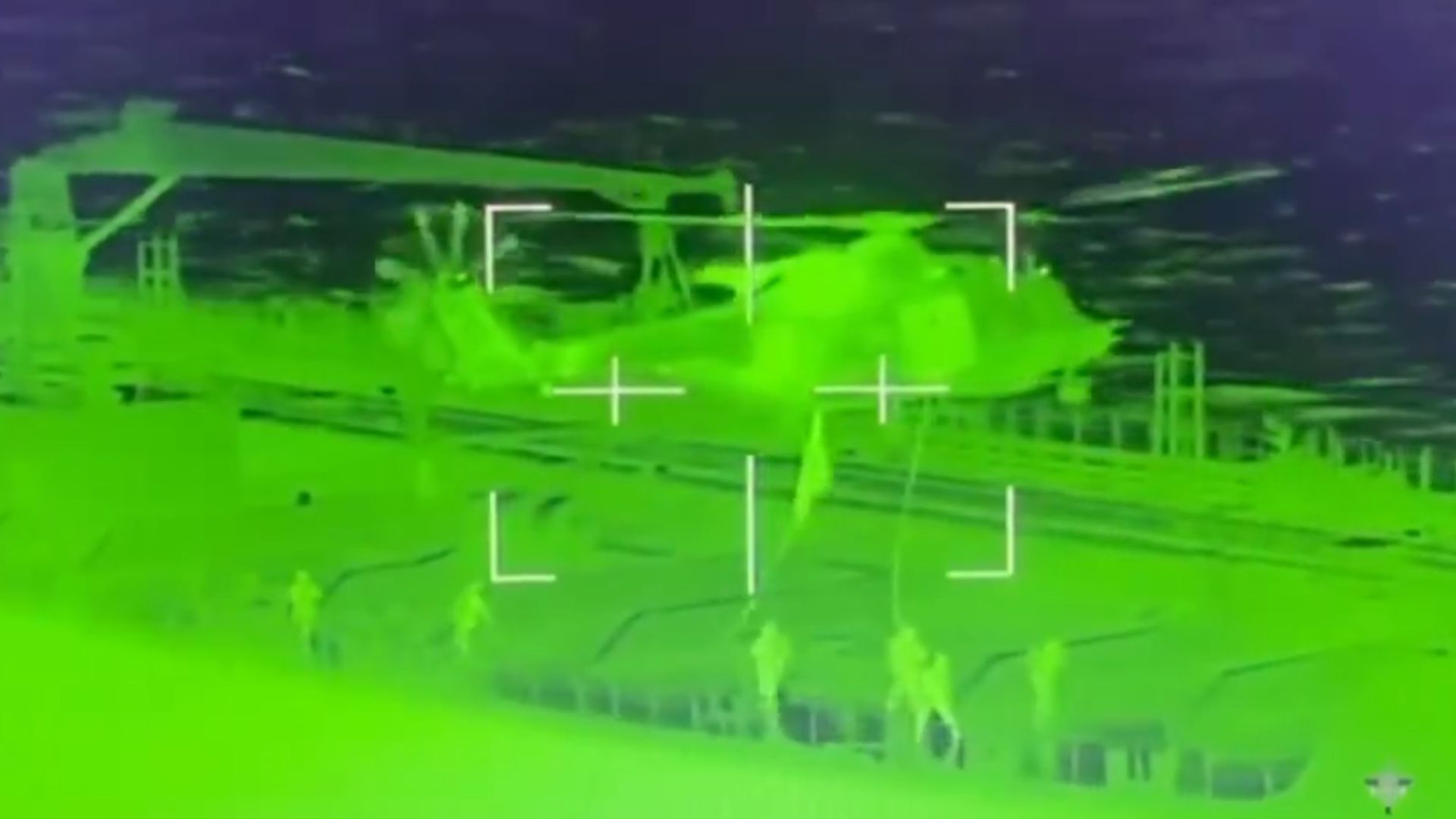
The North Sea is a gray, churning expanse where the wind feels like a whetted blade against the skin. It is a place of industrial pragmatism, dotted with oil rigs and traversed by the steel giants of global commerce. But lately, the radar pings have been lying. Beneath the predictable flow of container ships and ferries, a phantom fleet is moving. These are the shadow tankers—rusting, uninsured, and operating in a legal twilight. They carry the lifeblood of a sanctioned economy, and recently, the law finally caught up with one of them in the narrow corridor between Belgium and France.
Imagine a vessel that, on paper, does not exist. Or rather, it exists as a shell of a shell, owned by a company that is little more than a P.O. box in a tax haven, flying a flag of convenience from a nation it will never visit. To the crews of the Belgian and French coast guards who boarded the tanker in a coordinated midnight raid, the ship wasn't just a political pawn. It was a ticking ecological time bomb.
The Anatomy of a Ghost
The ship in question was part of Russia’s sprawling "shadow fleet," a collection of aging tankers used to bypass Western oil price caps and sanctions. These vessels are the maritime equivalent of a getaway car with its headlights off and the license plate obscured. They frequently disable their Automatic Identification Systems (AIS)—the "transponders" that tell the rest of the world where a ship is and where it’s going.
When a ship goes dark, it becomes a hazard to every other vessel in the water. In the crowded shipping lanes of the English Channel and the North Sea, where the margin for error is measured in meters, a silent 100,000-ton tanker is a nightmare.
The raid wasn't just a matter of checking paperwork. It was an assertion of sovereignty over a chaotic grey market. Authorities found a vessel that was technically deficient, likely lacking the rigorous insurance—specifically "Protection and Indemnity" (P&I) club coverage—required to pay for the cleanup if its hull were to split open. If a shadow tanker spills its cargo, there is no one to sue. There is no corporate headquarters to hold accountable. The bill for the blackened beaches and dead wildlife would fall entirely on the citizens of the nearest coastline.
The Human Cost of High-Stakes Evasion
Consider the sailor on such a ship. Let’s call him Mikhail, a hypothetical but realistic composite of the men who man these decks. Mikhail isn’t a geopolitical strategist. He is a mariner from a provincial port, lured by wages that arrive in cash or through convoluted wire transfers. He knows his ship is "hot." He knows that if the engines fail—and they often do on these older, poorly maintained hulls—he cannot simply call for a standard commercial tugboat without risking the seizure of the entire operation.
He lives in a state of perpetual tension, watching the horizon for the white-and-red hulls of NATO-aligned coast guards. When the French and Belgian authorities swarmed the deck, it wasn't just an international incident; it was the end of a long, anxious gamble for the men on board.
The stakes go far beyond a single cargo of crude. This is a game of cat and mouse played across the global oceans. By seizing this vessel, Europe sent a message: the "shadow" is not as dark as it looks. Satellite imagery, acoustic monitoring, and old-fashioned intelligence-gathering are beginning to pierce the veil.
The Invisible Infrastructure of War
Why does this matter to someone sitting in a cafe in Brussels or a flat in Paris? Because the shadow fleet is the primary artery for the Russian war machine. Every barrel of oil successfully delivered through these clandestine channels funds the ordnance falling on Ukrainian cities. The price cap—currently set at $60 per barrel by the G7—was designed to keep oil flowing to stabilize global prices while starving the Kremlin’s treasury.
The shadow fleet is the workaround. By using ships that operate outside Western financial and insurance ecosystems, the sellers can command prices closer to the market rate. The raid in the North Sea was a physical intervention in a financial war. It was a blunt-force reminder that while digital sanctions are powerful, the physical world still has checkpoints.
The technical reality of these ships is terrifying. Many are over 15 years old, a point at which tankers are usually headed for the scrap yard. They are pushed past their limits, their hulls thinning, their safety equipment often out of date. To save money and avoid detection, they often engage in "ship-to-ship transfers" in the open ocean. This involves pulling two massive tankers alongside each other and pumping millions of gallons of oil from one to the other while buffeted by waves. Without the proper fenders, specialized crews, and oversight, it is the most dangerous maneuver in the shipping industry.
A Precarious Balance
The seizure of the tanker near the Belgian-French border represents a shift in appetite. For months, European nations were hesitant to act, fearing that aggressive seizures might cause oil prices to spike or lead to retaliatory actions in international waters. That hesitation has evaporated. The risk of a catastrophic oil spill on the doorstep of Europe’s most populous regions has finally outweighed the diplomatic caution.
The North Sea is no longer just a transit route; it is a front line. The legal framework used to justify the seizure often relies on environmental safety and "port state control" regulations. If a ship is deemed "unseaworthy" or poses an imminent threat to the environment, authorities have the right to intervene. In this case, the lack of transparent insurance and the obscured ownership provided the "in" that investigators needed.
We are entering an era where the sea is being re-policed. For decades, the trend was toward "open seas" and frictionless trade. Now, the map is being redrawn by invisible lines of sanction and counter-sanction. The "shadows" are being hunted.
But as one ship is towed into port, three more are likely being renamed and repainted in a shipyard halfway across the world. The ghost fleet is adaptive. It thrives on the complexity of maritime law and the sheer vastness of the water. The victory in the North Sea is significant, but it is a single point of light in a very large, very dark room.
The next time you look at the horizon from a cold Atlantic or North Sea beach, remember that the ships you see aren't always what they seem. Some carry more than just oil; they carry the weight of a global conflict, hidden behind a facade of rusted steel and a fake name. The water looks the same as it always has, but the rules of the deep have changed forever.
Somewhere, in a darkened bridge on a ship with no name, a captain is watching his radar and wondering if the next lights he sees will be the lighthouse or the law.
Would you like me to dive deeper into the specific maritime laws used to justify these seizures, or perhaps explore the environmental impact data of the aging vessels in the shadow fleet?


