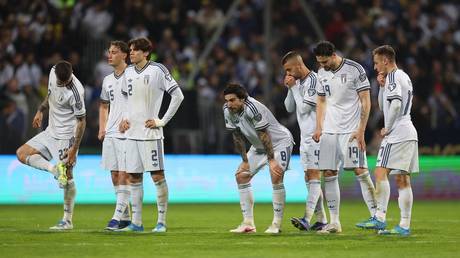
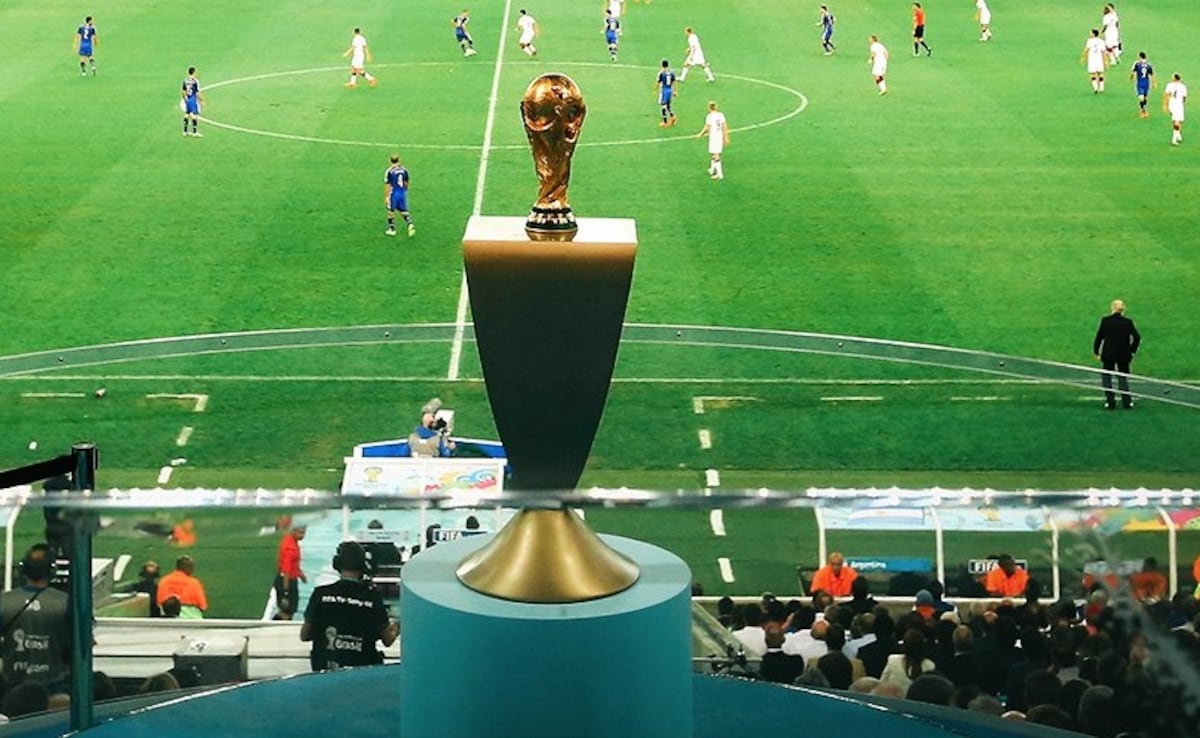
The grass at the San Siro or the Stadio Olimpico doesn't feel like a political battlefield. It feels like damp earth, tradition, and the weight of four stars stitched onto a blue jersey. For an Italian fan, the World Cup isn't a television program; it is a vital organ. When the Azzurri failed to qualify for the 2022 tournament, a silence settled over the country that no amount of summer espresso could drown out. But thousands of miles away, in the marble hallways of Washington and the glass offices of Zurich, a different kind of game was being played—one where the ball was made of geopolitical leverage and the referee wore a suit.
Richard Grenell, a man accustomed to the sharp elbows of international diplomacy, looked at the empty seat left by Italy and saw an opportunity. He wasn’t looking at goal differentials or the tactical brilliance of a 4-3-3 formation. He was looking at a map of the Middle East and a regime in Tehran that he believed had forfeited its right to play on the world’s most luminous stage.
The pitch was simple, audacious, and entirely outside the rulebook: Remove Iran. Insert Italy.
The Butcher and the Ball
To understand why a diplomat would lobby FIFA to swap one nation for another, you have to look past the scoreboards and into the dark corners of the Evin prison. The argument for ousting the Iranian national team wasn't based on a missed offside call. It was built on the terrifying reality of a government that uses its sports icons as pawns and its stadiums as sites for public intimidation.
Think of a young girl in Tehran. She loves the game. She knows the stats of every player on the Team Melli roster. But she cannot enter the stadium to watch them play without risking arrest, or worse. For Grenell and those pushing this narrative, allowing Iran to march onto the pitch in Qatar was more than a sporting decision. It was a moral endorsement.
The logic followed a cold, pragmatic line. If a nation systematically violates the very "human rights" clauses that FIFA prides itself on, why should they be allowed to reap the prestige of the world’s most-watched event? The "empty seat" strategy wasn't just about punishing a regime; it was about rewarding a vacuum. And Italy, the reigning European champions who had somehow stumbled in qualifying, was the perfect, glittering substitute to fill the void.
The Italian Equation
Italy is the ghost that haunts every World Cup it misses. Their absence creates a massive hole in the tournament’s economy and its soul. From a business perspective, the loss of the Italian market is a disaster for sponsors and broadcasters. There is a specific kind of gravity that a four-time champion brings to a group stage—a gravity that FIFA’s bank accounts sorely missed.
Grenell’s lobbying efforts leaned heavily on this unspoken truth. He wasn't just arguing for justice; he was offering a solution to a problem FIFA didn't want to admit it had. By positioning Italy as the "first runner-up" waiting in the wings, the envoy attempted to turn a political protest into a commercial windfall.
But football has a memory. It remembers the 1978 World Cup in Argentina, where the cheers of the crowd at the Estadio Monumental could almost be heard by the political prisoners being tortured just blocks away. The sport has always tried to maintain the fiction that the pitch is a sanctuary, a place where the dirt of the real world cannot smudge the white lines of the penalty box. Grenell was asking FIFA to finally drop the act.
The Human Cost of the Substitution
If you swap Iran for Italy, what happens to the players?
Consider the Iranian striker who has spent four years training in the heat, ignoring the threats from his own government, and trying to give his people ninety minutes of respite. For many of these athletes, the national team is the only platform they have to show the world that they are not their government. We saw this during the tournament, as players refused to sing the national anthem, their faces etched with a grim, silent bravery that no diplomat could ever script.
If Italy had been parachuted in, those voices would have been extinguished. The narrative would have shifted from the courage of the Iranian people to the bureaucratic maneuvering of a superpower.
This is the invisible stake of the "replacement" game. When we use sports as a tool for regime change, we often crush the very people we claim to be supporting. The Italian fans, as much as they bled blue, knew this too. There is no pride in a trophy won because a diplomat made a phone call. An Italian victory is earned in the mud, through the agony of a penalty shootout, not in a committee meeting in Zurich.
The Walls of Zurich
FIFA is a fortress. Its leadership views itself not as a sporting body, but as a sovereign state, answerable to no one and insulated by billions of dollars in reserves. When Grenell began his press, he wasn't just fighting the Iranian Football Federation; he was fighting the inertia of an organization that views "interference" as the ultimate sin.
FIFA’s statutes are designed to prevent governments from touching the game. They have suspended nations for far less than what Grenell was proposing. To FIFA, the idea of a diplomat—especially one representing a country that wasn't even the one being substituted—dictating the lineup of the World Cup was an existential threat.
The irony was thick. To save the "values" of the game, a diplomat was asking a corrupt organization to break its own most sacred rule.
The Echo in the Tunnel
The lobbying ultimately failed to change the roster, but it succeeded in stripping away the last remaining illusions of "neutrality" in sport. The 2022 World Cup became a mirror. In it, we saw the reflection of a world where everything—even a corner kick—is a negotiation.
The story of the Trump envoy and the Italian substitution is a reminder that the stadium is never truly empty. Even when the stands are quiet, it is filled with the ghosts of the decisions we make about who belongs and who doesn't.
Italy stayed home. Iran played, their silence during the anthem echoing louder than any chant. And the world watched, realizing that the most important matches aren't always played with a ball. They are played in the hearts of people who have to choose between their passion for a game and their hunger for a just world.
The beautiful game is rarely clean. It is a messy, sweating, heart-pumping extension of our own failings and aspirations. As long as there are dictators in the world and diplomats in the wings, the pitch will always be a place where the stakes are far higher than a golden trophy.
The next time you see a team walk out of the tunnel, look past the jerseys. Look for the invisible strings. Look for the ghosts. They are always there, waiting for the whistle to blow.