The air in Lake Maracaibo always tasted of old salt and sulfur. If you stood on the wooden piers at dawn, looking out across the vast, murky expanse of Venezuela's greatest basin, you could watch the horizon pulse. It was not a natural heartbeat. It was the rhythm of a thousand metal pumps, iron beasts nodding up and down for decades, pulling a thick, black syrup from the earth to feed the engines of the modern world.
I remember the smell of it on my hands. Crude oil. Heavy, sticky, stubborn. It clings to your skin long after the soap has washed away.
For generations, that liquid defined everything. It built highways, funded schools, and corrupted dreams. Then, the pumps stopped. Not all at once, but with a slow, agonizing cough. Pipes rusted. Refineries choked on their own neglect. The money dried up, the grocery shelves emptied, and millions packed what they could carry and walked across borders. They left behind a monument to what happens when an entire nation places its soul inside a hollow steel pipe.
Now, a new kind of noise is echoing across the Caribbean.
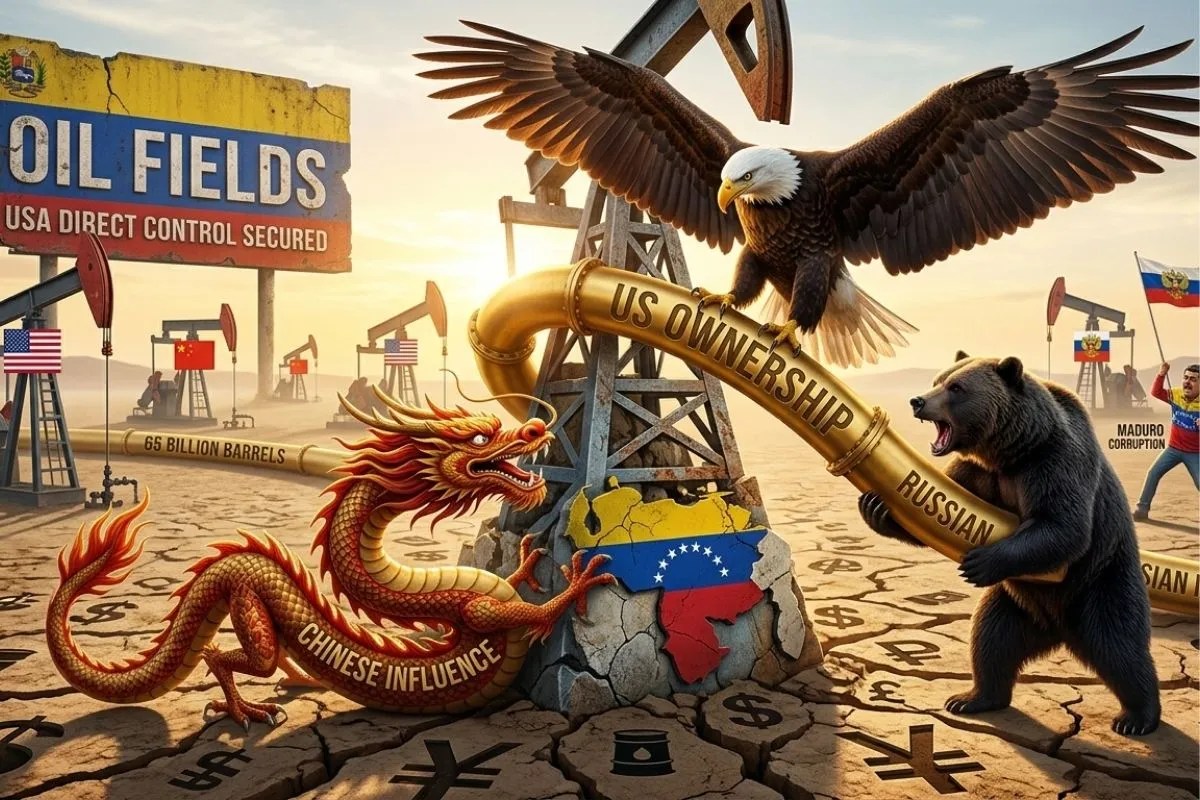
Donald Trump stepped to a microphone and declared the parameters of what he termed the biggest oil deal in world history. The phrase itself is a heavy boulder dropped into a stagnant pond. It ripples outward, splashing against the shores of Washington, Houston, and Caracas. To a casual observer, it sounds like another loud headline in an endless cycle of political theater. Just numbers. Billions of barrels. Trillion-dollar valuations. Geopolitical chess.
Stop. Look closer.
Numbers do not capture the weight of a rusted valve. Statistics do not bleed. To understand what this announcement actually means, we have to look past the podium and into the lives of the people who live in the shadow of those reserve tanks.
(Note: The following character is a hypothetical composite based on recorded testimonies of oilfield workers in Zulia State, designed to illustrate the human reality of infrastructure collapse.)
Meet Mateo. For twenty-five years, Mateo was a chief engineer at a sprawling extraction facility outside Maracaibo. He knew every bolt, every pressure gauge, every hidden fracture in the subterranean network. When the sanctions tightened and the foreign partners fled, Mateo was the one who stayed behind, trying to keep a dying turbine alive with spare parts scavenged from scrap yards. He watched his salary vanish into hyperinflation until a month's work could not buy a carton of eggs. He watched his crew shrink from fifty men to three, nursing ancient machinery with prayer and duct tape.
When Mateo hears about a massive bilateral energy pact brokered by foreign superpowers, he does not think about stock tickers. He thinks about pressure.
You see, oil fields are not giant swimming pools underground. They are porous rocks, packed tight, holding hydrocarbons under immense natural strain. When you pump out the oil, the pressure drops. If you walk away from a field, as the world largely walked away from Venezuela's heavy crude reserves, nature takes over. Water creeps in. Sediments clog the arteries. The field goes to sleep.
Waking it up is not a matter of simply turning a key.
It requires billions of dollars in specialized capital equipment. It requires steam injection, sophisticated seismic imaging, and an army of engineers who know how to handle Venezuela's extra-heavy Orinoco Belt crude—a substance so thick it looks like warm asphalt and refuses to flow without a fight.
This is the hidden friction beneath the grand political announcements.
For years, Venezuela sat on the largest proven crude reserves on the planet. More than Saudi Arabia. More than Iran. Yet, its daily output plummeted to a fraction of its historical peak, crippled by internal mismanagement, corruption, and a suffocating wall of international sanctions. The iron irony of the situation was absolute. People starving atop an ocean of fuel.
When politicians talk about striking a deal, they are talking about bridging an impossible chasm. On one side sits a desperate government in Caracas, hungry for legitimacy and hard currency to rebuild a shattered state. On the other side sits a restless global market, constantly jittery about supply shocks, racing against a long-term transition toward cleaner energy while still desperately addicted to combustion.
And then there are the corporate boardrooms in Texas and Europe. Executives do not operate on political speeches. They operate on risk curves. They remember expropriations. They remember broken contracts. To convince a major energy conglomerate to sink ten, twenty, or fifty billion dollars back into Venezuelan soil requires more than a handshake on a television broadcast. It requires absolute ironclad guarantees that the rules of the game will not change tomorrow morning when the political winds shift again.
Consider what happens next in this high-stakes choreography.
If the deal moves from rhetoric to reality, the first wave of workers to return will not be diplomats. They will be environmental remediation teams and logistics coordinators. They will look at cracked storage tanks leaking into coastal mangroves. They will assess miles of corroded subsea pipelines that have not seen maintenance in a decade.
The human cost of past neglect is written right there in the ecosystem. Fishermen in Lake Maracaibo will tell you about the black tides that ruin their nets, coating their catches in a shimmering, toxic sheen. They do not care who owns the concession. They care whether their children can eat fish that doesn't taste like gasoline.
A true mega-deal cannot simply be about extraction. If it repeats the mistakes of the past—extracting wealth from the ground while leaving local communities in systemic poverty and environmental ruin—it is merely setting the timer for the next collapse. The historical pattern in resource-rich nations is a cruel ghost story. The wealth arrives like a hurricane, and the wreckage lingers like a curse.
Yet, the alternative of permanent isolation is equally bleak. A nation cannot eat its own crude oil. Without external trade, without the sophisticated technology of multinational oilfield service companies like Schlumberger or Halliburton, those underground riches remain locked in a permanent vault, utterly worthless to the people standing right above them.
This is why the announcement cuts so deep. It is a desperate gamble on both sides. For the United States, desperate to anchor energy prices and secure stable hemispheres of supply away from volatile Eastern conflicts, Venezuelan crude represents a massive strategic chess piece. For Venezuela, it is a perilous lifeline—a chance to trade isolation for investment, even if it means handing the keys of the national pantry back to the foreign giants they spent decades trying to evict.
As the sun sets over the Maracaibo basin, the water turns the color of hammered copper. The skeletons of the old derricks stand tall against the dusk, silent and waiting.
Somewhere in a modest home nearby, Mateo sits at a wooden table, listening to the evening news report on the radio. He hears the grand pronouncements of historic agreements, billions of barrels, and shifting global alliances. He smiles a tired, knowing smile, reaches down, and rubs his thumb across his palm, feeling the invisible grain of a stain that never truly washes away. The machines outside are still quiet. But for the first time in a long time, the wind carries a faint, distant rumor of motion.