Rain always smells different in Shenzhen. It smells of wet concrete, ozone from ten million humming servers, and the faint, metallic tang of solder cooling on a billion circuit boards.
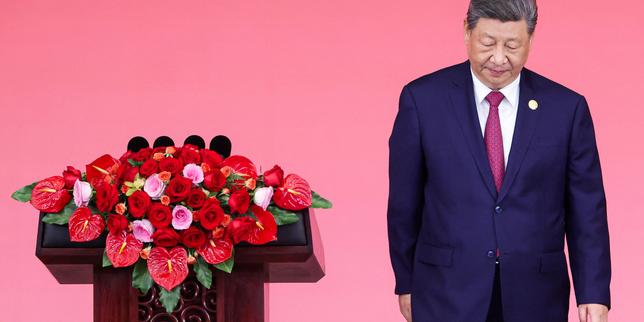
I stood on a damp pedestrian overpass in Futian late last autumn, watching black motorcades slice through the mist below. Security details in dark suits stood frozen at every intersection, their earpieces glinting under the neon glare of towering glass skyscrapers. Everyone in the city was looking at the motorcades. Everyone was waiting for the motorcades to stop, the doors to open, and three men—Xi Jinping, Donald Trump, and Vladimir Putin—to step out onto the red carpet.
The world’s press had descended on southern China to witness a supposed clash of titans. Journalists from New York, Moscow, and Beijing crowded into press pens, furiously typing forecasts about tariffs, territorial lines, and energy pipelines. They were obsessed with the men in the room.
They were looking at the wrong chairs.
If you want to understand what actually happens when superpowers gather behind closed doors in Shenzhen, stop counting the bodyguards. Start counting the people who never received an invitation.
The Architecture of Silence
Diplomacy has a dirty secret. The loudest voices in a summit hall rarely dictate the outcome. Instead, the real gravity in the room belongs to the ghosts—the nations, the markets, and the ordinary citizens who are entirely absent from the table, yet whose silent choices hold the entire architecture upright.
Think of a suspension bridge stretching across a wide, churning strait. From a distance, your eyes are drawn to the massive steel towers rising out of the water. They look invincible. They look like they are doing all the work. Yet any structural engineer will tell you that those towers would collapse into the sea within seconds if not for the thousands of invisible, high-tension cables anchored deep into the bedrock on either shore.
Xi, Trump, and Putin are the towers. They dominate the skyline. They command the cameras.
The absent—Europe, the Global South, the bruised semiconductor supply chains of Taiwan and South Korea, the bruised wallets of families in Ohio and Guangdong—are the cables.
When a trilateral summit convenes in a city like Shenzhen, which transformed from a sleepy fishing village of thirty thousand people in 1980 into a glittering megacity of over seventeen million today, the symbolism is deafening. Shenzhen is the physical monument to globalization. It is the place where American intellectual property, Asian manufacturing precision, and raw global resources fused together to build the modern world.
To hold a summit here without Europe in the room, without India at the table, without the smaller nations of Southeast Asia holding a microphone, is a deliberate theatrical choice. It projects an image of a world carved up by three strongmen, much like the Yalta Conference of 1945, where Franklin D. Roosevelt, Winston Churchill, and Joseph Stalin drew lines across maps while millions of Eastern Europeans waited in the dark to learn their fate.
History, however, has a habit of punishing stage managers who forget the audience.
A Tale of Two Factory Floors
To see why the absent weigh just as heavily as the present, leave the polished marble of the summit venue and step onto a factory floor twenty miles north in Dongguan.
Let us construct a hypothetical, yet painfully familiar, character to trace this invisible web. Call her Mei. Mei manages a mid-sized electronics assembly plant that produces sensors for electric vehicles. Five years ago, her business model was simple. She bought microchips designed in California, fabricated in Taiwan, and assembled them using rare earth minerals refined in northern China, before shipping the finished sensors to automotive plants in Germany and Michigan.
Now, consider what happens to Mei when three leaders sit down in Shenzhen to negotiate bilateral trade truces, energy swaps, or sphere-of-influence agreements without consulting Brussels, Tokyo, or Seoul.
Suppose the men in the room strike a grand bargain. Perhaps Washington agrees to soften certain tariff threats in exchange for Beijing adjusting its industrial export policies, while Moscow secures long-term energy corridors across Eurasia. On paper, the headlines scream of a historic breakthrough. Stock markets rally for forty-eight hours. Pundits praise the art of the deal.
Then Monday morning arrives at Mei’s factory.
Mei discovers that while Washington and Beijing shook hands, the European Union—left outside the Shenzhen doors—has quietly finalized its own carbon border adjustments and strict supply-chain provenance laws. Her German buyers call at nine in the morning. They cannot buy her sensors unless she proves that zero Russian energy went into smelting the aluminum casing, and zero restricted components crossed her loading dock.
Meanwhile, her Taiwanese chip supplier, nervous about backroom geopolitical concessions made without Taipei’s consent, has quietly raised prices by eighteen percent to hedge against political risk and begun diverting inventory to a new plant in Arizona.
Mei is paralyzed. The three men in Shenzhen signed a piece of paper, yet Mei cannot ship a single crate. The absent parties—Brussels, Taipei, Berlin—just vetoed the summit without uttering a single word inside the conference hall.
Why Geopolitics Is No Longer a Three-Player Game
This is the fundamental miscalculation of modern strongman diplomacy. It relies on an outdated mental map of power.
During the Cold War, two superpowers could genuinely freeze or thaw the globe with a handshake in Reykjavik or Vienna. Capital flows were tightly controlled. Supply chains were largely domestic or confined within strict ideological blocs. If Washington and Moscow agreed on a nuclear treaty or a regional ceasefire, the rest of the world mostly fell into line because they had nowhere else to go.
That world is dead.
Today, global trade is not a set of bilateral highways connecting three capitals. It is a dense, tangled neural network. Over eighty percent of global trade by volume travels by sea, passing through chokepoints guarded, insured, and serviced by dozens of middle powers. The global financial system relies on clearinghouses, sovereign wealth funds, and regulatory frameworks stretching from Frankfurt to Singapore to Riyadh.
When leaders gather in Shenzhen and attempt to settle world affairs as a three-way poker game, they run directly into three hard realities that no amount of diplomatic bravado can erase.
First, middle powers have learned how to say no.
Look at the shifting posture of nations like India, Brazil, Indonesia, and the member states of the European Union. For years, conventional wisdom assumed these countries would eventually be forced to pick a side between Washington and Beijing, or bend to the energy leverage of Moscow. Instead, they have mastered the art of strategic hedging. When excluded from major summits, they do not sit quietly waiting for instructions. They sign their own trade pacts. They build alternative payment rails. They diversify their defense partnerships. Their absence from the Shenzhen table does not signal their irrelevance; it signals their refusal to underwrite someone else’s grand design.
Second, capital is a coward with a very long memory.
I have spent years interviewing fund managers, logistics directors, and institutional investors across Asia and Europe. If there is one truth I have learned from watching them lose billions during sudden policy reversals, it is that money hates theater. Investors do not care about photo ops in Shenzhen. They care about predictability over a ten-year horizon. When three leaders bypass multilateral institutions to cut personal, transactional deals, global capital quietly packs its bags. Factories get delayed. Research budgets get frozen. That silent retreat of private capital is an invisible vote of no confidence that no state media broadcast can spin away.
Third, technology cannot be partitioned by decree.
Shenzhen itself is the ultimate proof of this paradox. Walk through the Huaqiangbei electronics market in the heart of the city, and you will see thousands of tiny stalls selling every conceivable microchip, sensor, capacitor, and optical lens known to humanity. It is chaotic, brilliant, and entirely borderless in spirit. An engineer in Shenzhen relies on open-source software written in San Francisco, precision lithography tools engineered in the Netherlands, and specialty chemicals distilled in Japan. You cannot draw a political fence around innovation without starving the very industries you claim to protect.
The Heavy Cost of the Empty Chair
I remember sitting in a cramped café in Brussels a few years ago, talking with a veteran European trade negotiator who had just returned from a grueling week of talks in Asia. He looked exhausted, nursing an espresso that had gone cold an hour earlier.
"People think power is sitting at the head of the table," he told me, rubbing his temples. "It isn't. Power is being the person who has to sign the customs form when the banquet is over."
His words haunted me as I watched the coverage of the Shenzhen gathering. There is something deeply seductive about the image of three powerful men deciding the fate of billions. It satisfies our primal craving for simple stories—heroes and villains, winners and losers, bold strokes of the pen that slice through messy, agonizing problems.
We want to believe that if just the right leaders get into a room together, inflation will cool, wars will end, and the future will feel safe again. I feel that pull myself. Watching global crises multiply year after year—from fractured supply lines to climate shocks to regional wars—leaves all of us exhausted and desperate for someone to simply take the wheel.
Yet trusting in closed-door summits of the powerful is like trying to cure a fever by smashing the thermometer. It changes the appearance of the crisis while leaving the underlying infection untouched.
When the voices of the absent are ignored, the resulting agreements are brittle. They lack legitimacy. A cease-fire negotiated over the heads of the people fighting on the ground breeds resentment that guarantees the next war. A trade framework drafted without the nations that actually refine the minerals, build the ships, and buy the finished goods collapses the moment market pressures shift.
The Weight of the Unspoken
Consider what happens next when the motorcades finally pull away from the Shenzhen convention center.
The flags are taken down. The translators pack their headsets. The cameras turn off, and the three leaders fly back to their respective capitals to claim victory before domestic audiences. For a brief moment, the illusion holds. The summit appears to have been the center of the universe.
Then, slowly, the real world resumes its quiet, relentless work.
In Brussels, regulators draft new compliance rules that quietly rewrite the terms of global manufacturing. In New Delhi and Jakarta, ministers sign bilateral mineral agreements that bypass traditional supply routes altogether. In Rotterdam, Tokyo, and Long Beach, shipping executives reroute container vessels based on insurance premiums and port fees rather than diplomatic communiqués.
And in a million small apartments from Shenzhen to Detroit, ordinary people look at their grocery bills, their mortgage rates, and their job prospects, making quiet daily decisions about whether to spend, save, or protest.
None of these people had a nameplate on the table in Shenzhen. None of them shook hands before a wall of camera flashes. Yet every single one of them holds a piece of the veto.
Late on my last night in Shenzhen, the rain finally stopped. The clouds broke just enough to reveal the towering spire of the Ping An Finance Centre piercing the humid dark, its steel frame glowing softly against the mist. Down on the street, the police barricades were already being loaded onto flatbed trucks. Delivery scooters immediately flooded back into the empty lanes, weaving effortlessly through the traffic with hot meals strapped to their backs, reclaiming the city within minutes.
The titans had left the building. The people who actually make the world run had taken back the street.