Shadow and Gold
The air inside the Galerie d'Apollon smells distinctively of polished beeswax, centuries of trapped sunlight, and cold stone. Long before the tourists rush through the doors with their cameras held high, an eerie silence settles over the long hall. Gold leaf stretches across the ceiling, reflecting a dim morning light that barely reaches the display cases below.
Imagine standing in that room when the sirens finally stop wailing. Discover more on a related issue: this related article.
In the autumn shadows of Paris, a heavy silence fell over the museum floor. A heist had occurred, swift and quiet, leaving behind an shattered vault of modern security assumptions along with an empty display pedestal where priceless history once rested. The stolen crown jewels weren't just gold and cut diamond. They were the physical tether to a vanished empire, stolen in a flash of audacity that rendered millions of dollars in modern defense systems completely useless.
Money can rebuild a hall. It can install infrared beams, hire guards, and reinforce shatterproof glass. But $102 million and months of painstaking work later, the reopening of the Apollo Gallery isn't merely a story about restored security. It is a story about why human beings care so deeply about old, shiny rocks kept under glass. More analysis by USA Today delves into related perspectives on this issue.
The Weight of a Lost Diamond
Security engineers talk in terms of vectors, reaction times, and structural reinforcement. They measure threat profiles in minutes and seconds. Yet, for the curator who walked into the room on the morning after the break-in, the loss was measured in grief.
When a cultural icon vanishes, the room itself changes. The gallery becomes an open wound.
Consider a guard working the night shift—a hypothetical observer, let's call him Henri. Henri spends eight hours a night walking the polished floors, listening to the echo of his own shoes against the marble. For years, the jewels are just part of the inventory he protects. But when the display case is suddenly smashed, the empty space screams louder than any alarm system ever could.
The theft exposed a vulnerability that was as much psychological as technical. The thieves didn't just breach a wall; they breached the illusion of absolute safety that modern institutions construct around themselves.
Rebuilding the Vault
To fix a broken sanctuary, you have to tear it down first. The restoration effort required an astronomical sum, exceeding $102 million to overhaul the gallery's defenses while meticulously restoring the historic architecture damaged during the intrusion.
Every beam had to be rewired. Every pane of glass was replaced with composite materials designed to withstand sustained force.
- Invisible laser grids now cross the room in complex geometric patterns.
- Pressure sensors beneath the floorboards register weight shifts down to the ounce.
- Micro-cameras, concealed within historic plasterwork, monitor every angle of the room without disrupting the nineteenth-century aesthetics.
Yet, despite the technical marvels woven into the walls, the core tension remains unresolved. The tighter you lock down history, the harder it becomes for people to feel connected to it. Turn a museum into a fortress, and you risk turning the visitors into suspects.
Why We Look at the Ruins
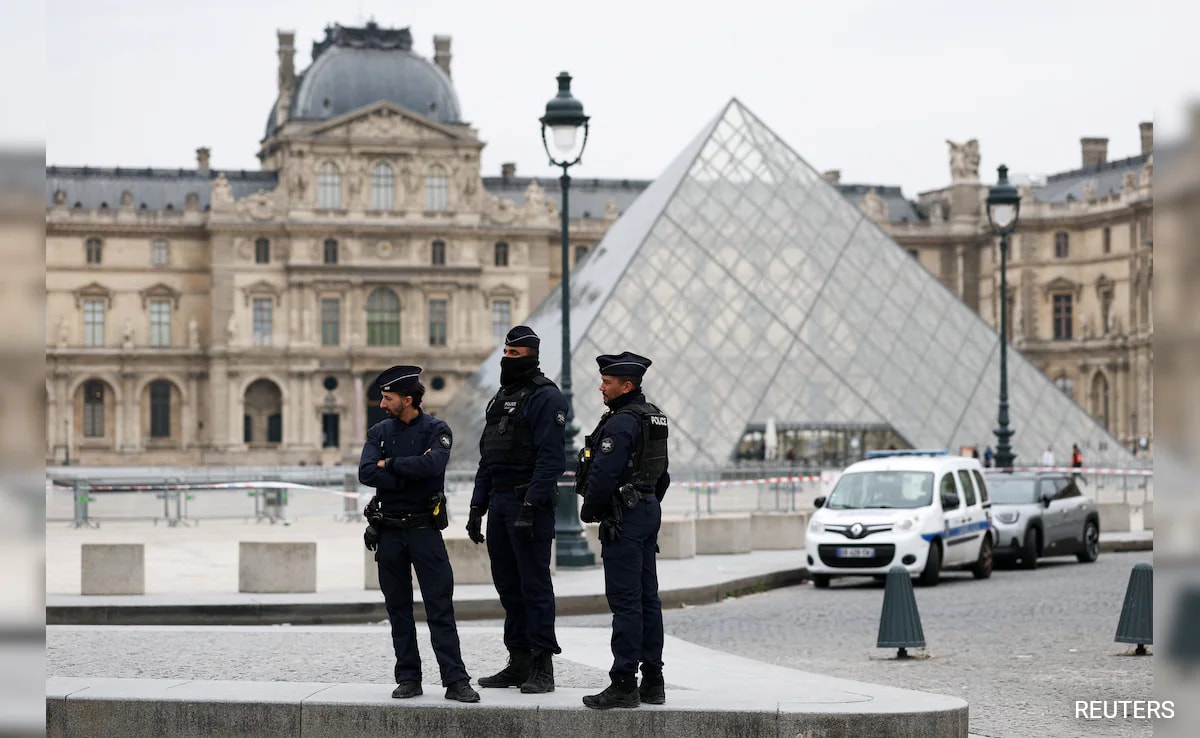
The crowds have returned now. They form long, snaking queues through the glass pyramid outside, waiting hours in the chill air just to walk through the heavy wooden doors of the gallery.
They don't come just to see the gold. They come to stand in front of something that survived the storm.
There is an undeniable human impulse to stare at the things that almost vanished. We look at the restored cases not just to admire the artistry of French goldsmiths, but to convince ourselves that fragile things can be protected, that order can be restored after chaos.
As visitors walk past the newly fortified cases, the light catches the facets of the remaining gems, casting sharp crimson and blue flares across the gilded walls. The glass is thicker now. The guards stand a little closer. The silence is a little heavier.
The jewels are back on display, locked behind state-of-the-art barriers, but the empty space left by the heist lives on in the memory of the room, a quiet reminder of how quickly history can be snatched away in the dark.


