The air in Dubai is never truly still. It hums with the collective vibration of twenty thousand air conditioners, a mechanical heartbeat that keeps the desert at bay. From the observation deck of a skyscraper, the Persian Gulf looks like a sheet of hammered turquoise. It is a view that suggests infinite stability, the kind of peace that only trillions of dollars in infrastructure can buy.
But look closer. For a deeper dive into similar topics, we suggest: this related article.
Watch the horizon where the hazy sky meets the water. Just across that narrow stretch of brine lies Iran. For decades, the monarchs of the Arabian Peninsula—the House of Saud, the Al Thanis, the Al Nahyans—have operated under a silent, golden rule: build so high and so fast that the world becomes too invested in your survival to let you fall.
That rule is currently being shredded. To get more information on this issue, detailed reporting can be read on Al Jazeera.
As Israeli jets and American logistics converge on Iranian targets, the retaliation isn’t just a theoretical military exercise. It is a nightmare of physics. If you are a Prince in Riyadh or a businessman in Abu Dhabi, you are realizing that your gleaming "Vision 2030" or your global tourism hub is built on a foundation of extreme geographic vulnerability. The dilemma is no longer about which side of a ledger to sit on. It is about whether your entire civilization can survive a weekend of ballistic physics.
The Geography of Anxiety
Imagine a map of the Gulf as a delicate porcelain shop.
On one side, you have the world’s most advanced petro-states. They have spent half a century turning sand into silicon, marble, and steel. On the other side, you have a revolutionary power that has spent those same decades perfecting the art of asymmetrical wreckage. Iran knows it cannot win a traditional dogfight against a F-35. It doesn’t need to.
Tehran’s strategy is simpler: if we bleed, the neighborhood dies with us.
Consider a hypothetical official named Omar. Omar works in a ministry in Kuwait or Manama. For years, his job was to manage growth. Now, his days are spent staring at "red zones" on a digital map. He knows that a single swarm of low-cost drones—the kind that cost less than a luxury SUV—can bypass a billion-dollar missile defense system and find the soft underbelly of a desalination plant.
Without those plants, the cities of the Gulf are ghosts within three days. You can’t drink oil. You can't eat sovereign wealth funds.
The tension in the palaces isn't just about politics; it’s about the sheer fragility of the modern world. The Gulf states have spent billions on "defense," but defense is a relative term when your opponent is willing to target the very utilities that make life in the desert possible. This is the "dilemma" mentioned in dry intelligence reports, but for the people living there, it’s a question of whether the lights will stay on.
The American Umbrella is Leaking
For seventy years, the deal was simple. The United States provided the muscle, and the Gulf provided the energy. This was the Carter Doctrine, the invisible shield that allowed the desert to bloom.
But the shield has holes.
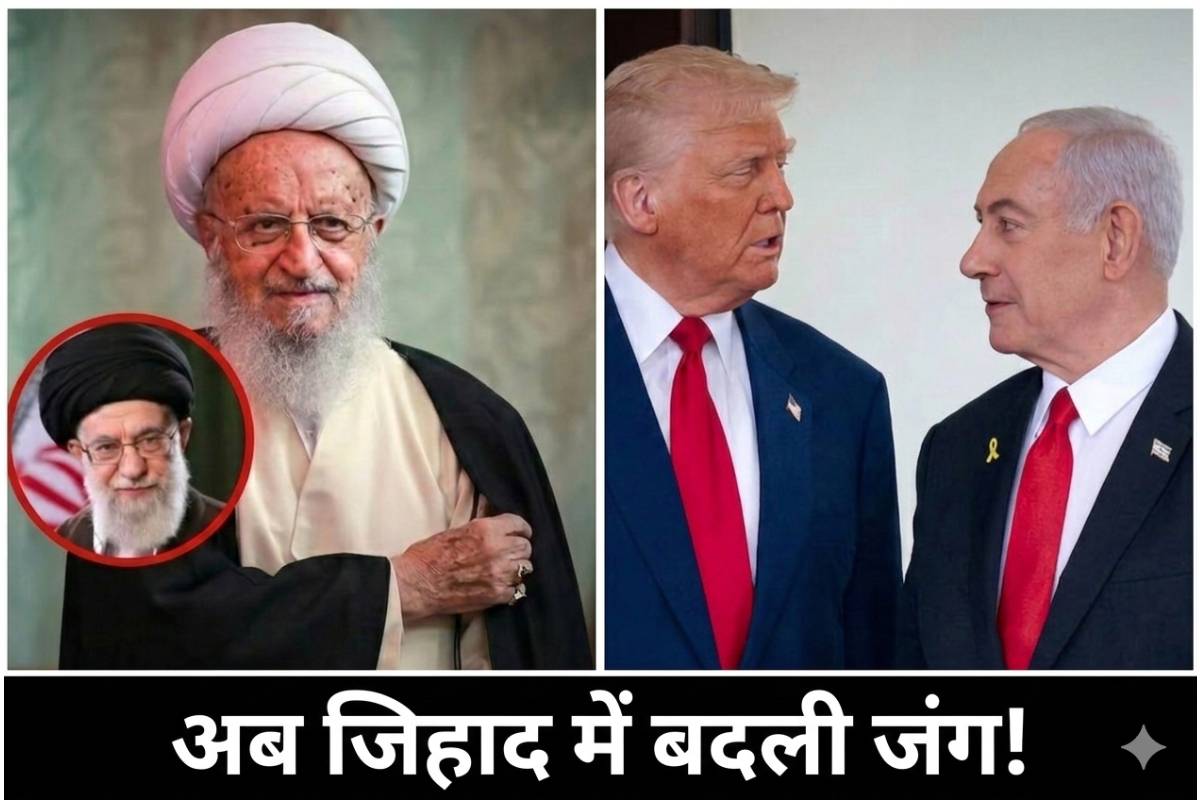
The recent escalations involving Israeli strikes on Iranian soil, backed by American intelligence and logistical support, have put the Gulf monarchies in a position they despise: being the middleman in a blood feud. When Washington moves its carrier groups into the region, it’s meant to be a show of strength. To the eyes of Tehran, however, those ships are just more targets—and the countries hosting them are accomplices.
The monarchs are watching the U.S. election cycles with a growing sense of dread. They see a superpower that is tired, distracted, and increasingly wary of "forever wars." They remember 2019, when the Abqaiq–Khurais processing plants in Saudi Arabia were hit, knocking out half of the kingdom's oil production. The American response? A shrug and a few more sanctions.
That silence was a turning point.
It taught the Gulf that the American umbrella might be more of a parasol—good for a light drizzle, but useless in a hurricane. Now, as Israel moves toward a more direct confrontation with Iran, the Gulf states are being told they must choose a side. But choosing a side in a war of annihilation is like choosing which part of your house you’d like to see burned down first.
The Mirage of Neutrality
In the carpeted halls of regional summits, the word of the day is "de-escalation." It is a beautiful word. It sounds like a sigh.
But how do you de-escalate when the missiles are already programmed?
The Iranian leadership has been explicit. If the U.S. or Israel uses the airspace or bases of a Gulf monarchy to launch an attack, that monarchy is no longer a "neutral neighbor." It is a combatant.
Consider the logistical reality. The U.S. has massive bases in Qatar (Al Udeid) and Bahrain (the Fifth Fleet). These aren’t just outposts; they are the nervous system of American power in the East. If a strike is launched from these sands, the retaliation won't go to Washington. It will go to the nearest target.
This creates a terrifying internal friction for the Gulf regimes. On one hand, they fear an Iran with a nuclear threshold. They see the "Shia Crescent" as an existential threat to their sovereignty. On the other hand, they know that any spark of war will incinerate their stock markets, halt their airlines, and send their expatriate labor forces—the people who actually run the cities—fleeing for the exits.
The Human Toll of the Ledger
Let’s talk about the people who aren’t in the palaces.
Think of an engineer from Kerala working on a construction site in Doha. Or a digital nomad in Dubai. Or a local family in a quiet suburb of Muscat. For them, the "geopolitical dilemma" is a visceral weight. The Gulf’s success is built on the image of being a safe haven, a "Switzerland with palm trees."
War shatters that image instantly.
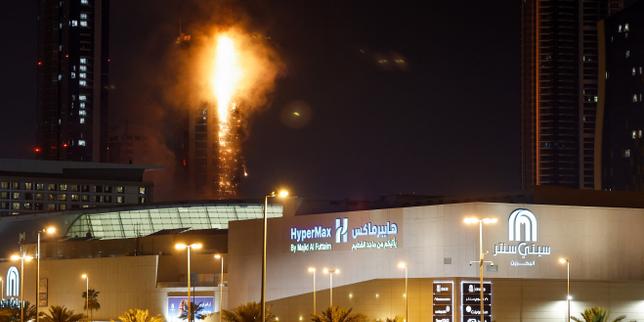
The moment the first Iranian Shahed drone hits a civilian power grid in a Gulf city, the economic model of the region collapses. The insurance rates for shipping would skyrocket, effectively blockading the Strait of Hormuz. The supply chains for food, which is almost entirely imported, would vanish.
The "dry" facts of the matter are that these countries are essentially luxury spaceships parked in a dangerous neighborhood. They have every comfort imaginable, but they are entirely dependent on the life-support systems of global trade and regional stability.
A New Kind of Diplomacy
Faced with this, we are seeing a strange, desperate pivot.
Saudi Arabia and Iran, once the fiercest of rivals, have been talking. Not because they have found common ground in theology or philosophy, but because they have found common ground in the fear of total ruin. Riyadh is trying to play a double game: maintaining the security relationship with the U.S. while simultaneously whispering to Tehran, "Don't hit us."
It is a high-wire act performed over a pit of fire.
The dilemma is exacerbated by Israel’s stance. To Israel, Iran is a problem that must be solved now, regardless of the collateral damage to the neighborhood. To the Gulf, Iran is a neighbor you have to live with forever, even if you hate them. This creates a massive strategic rift between the partners of the "Abraham Accords" and the reality of Persian proximity.
The Gulf states are discovering that you cannot buy your way out of geography. You can buy the best missile defense in the world, but you cannot buy a new location on the map. They are pinned between an aggressive, ideologically driven Iran and an Israeli-American alliance that seems increasingly comfortable with the idea of a "limited" regional war.
There is no such thing as a limited war in the Gulf.
The Sound of the Sand Shifting
The old order is dying. The era where the Gulf could simply write a check to ensure its safety is over.
What we are witnessing is the birth of a new, terrifying pragmatism. The monarchs are realizing that their survival depends on their ability to appease two masters who want to destroy each other. They are trying to build a bridge where there is only an abyss.
Tonight, the lights of the Burj Khalifa will sparkle. The malls will be full of people from every corner of the globe, buying perfumes and watches, living the dream of the 21st-century desert miracle. But in the government offices and the military command centers, the mood is different.
They are listening for the sound of a drone engine over the water. They are looking at the flight paths of Israeli tankers. They are realizing that in the game of giants, the most beautiful cities are often the most fragile targets.
The sand is shifting under the glass towers. The dilemma isn't just a political choice; it’s a race against the clock before the hammer falls on the porcelain shop.
When the sun rises over the Gulf tomorrow, the water will still look like turquoise. But for those whose job it is to keep the desert green, the horizon has never looked so dark.
Would you like me to analyze how specific defense systems like the THAAD or Patriot batteries are being repositioned across these Gulf states to mitigate these threats?