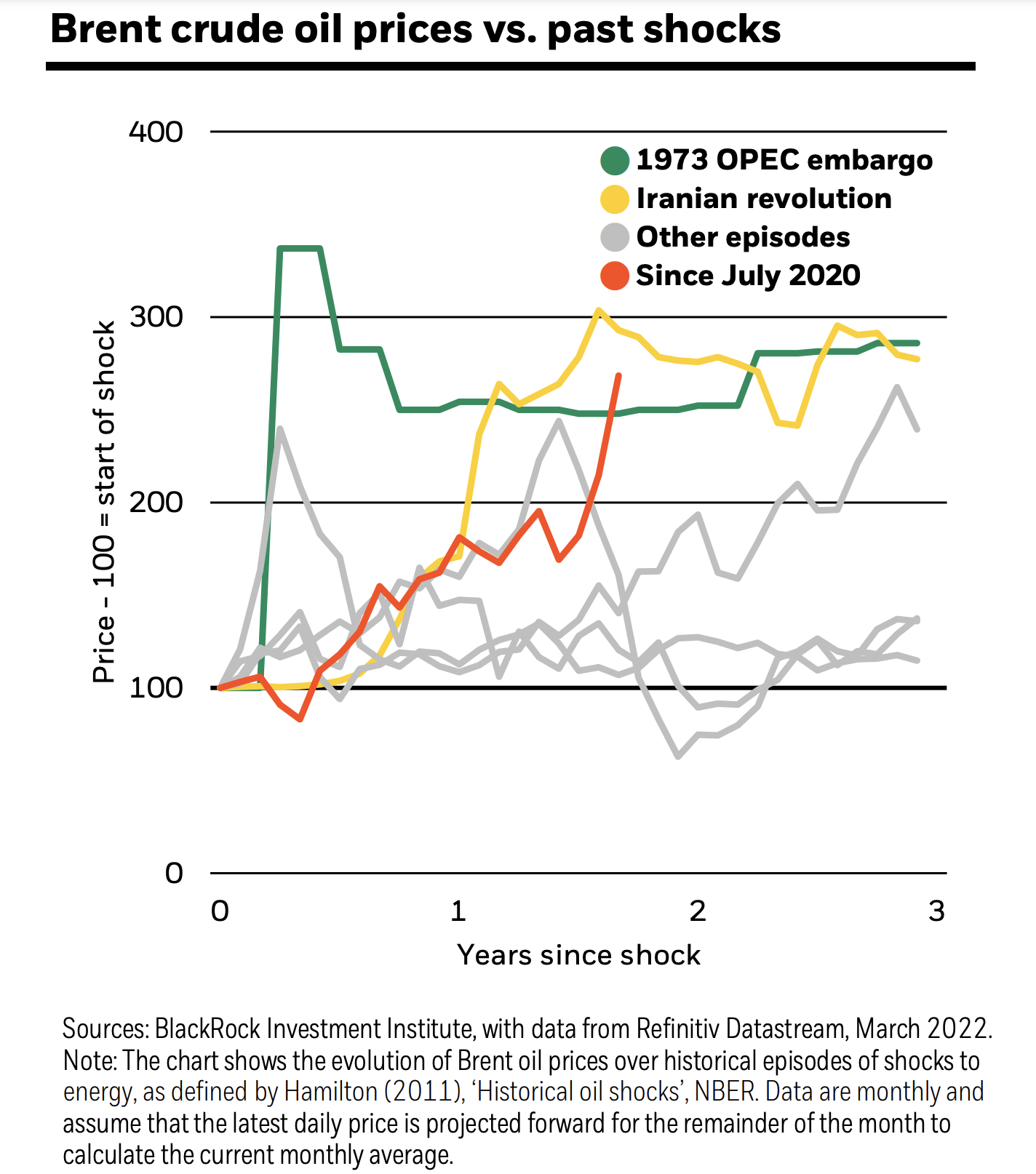
The headlines are bleeding. Ex-intelligence chiefs and career bureaucrats are lining up to tell you that a West Asian escalation is a death knell for the Indian economy. They point at the Strait of Hormuz, whisper about $120-a-barrel oil, and warn of a "unfortunate" inflationary spiral that will crush the middle class.
They are wrong.
Actually, they are worse than wrong; they are stuck in 1991. The "unfortunate" scenario isn't a regional war—it is the continued, sluggish reliance on a volatile energy status quo that keeps India’s fiscal policy hostage to a handful of aging petrostates. An escalation in West Asia isn't a crisis for India; it is the brutal, necessary catalyst for an economic decoupling that is decades overdue.
The Inflation Boogeyman is a Fossil
The consensus view is lazy. It assumes that if Brent Crude spikes, India’s Consumer Price Index (CPI) must follow in a linear, catastrophic path. This ignores the modern mechanics of the Indian treasury. Since 2022, India has proven it can navigate geopolitical fracturing better than almost any Western peer. When the world screamed about Russian sanctions, New Delhi bought the dip.
If West Asia goes up in flames, the "inflationary pressure" becomes the ultimate political cover to do what should have been done years ago: aggressively dismantle the subsidies that distort the energy market.
We see the same "sky is falling" rhetoric every time a drone flies near a refinery. But look at the data. India’s macro-stability isn't built on cheap oil anymore; it’s built on a massive foreign exchange buffer and a diversified sourcing strategy. The fear-mongers want you to believe we are one tanker seizure away from bread lines. In reality, a price shock is the only thing that will force the structural shift toward a $10 trillion economy.
The Strategic Autonomy of Chaos
The Ex-R&AW chief’s concern about "unfortunate" outcomes misses the tactical upside of chaos. In a stable world, India is just another customer. In a chaotic world, India is the swing consumer.
When supply chains fracture, the leverage shifts to the person with the largest checkbook. West Asian instability forces a pivot to the Americas and accelerated domestic production. Every dollar that stays in the domestic circular economy instead of being shipped to Riyadh or Tehran is a long-term win for the Rupee.
We have spent thirty years begging for "stability" in the Middle East. Stability has only rewarded us with complacency. If the Strait of Hormuz closes, the internal pressure to scale Green Hydrogen and modular nuclear reactors moves from "policy goal" to "existential survival." You don't innovate when you're comfortable. You innovate when the lights are about to go out.
Why Your Portfolio Needs This Shock
If you’re waiting for "calm seas" to invest in Indian infrastructure or energy, you’ve already lost. The most profitable transitions in history happen during periods of extreme friction.
The "unfortunate" inflation the "experts" fear is actually a cleansing fire for the "zombie" sectors of the Indian economy. High energy costs act as a natural selection mechanism. They punish the inefficient, the carbon-heavy, and the technologically stagnant. They reward the lean, the electric, and the automated.
Consider the logistics sector. For years, Indian trucking has been a mess of diesel-chugging, inefficient routes. A sustained oil spike is the only thing that will force the rail-and-EV migration at the scale required to actually compete with China.
The Myth of the Vulnerable Rupee
Analysts love to claim the Rupee will collapse if the UAE or Iran enters a hot war. They cite the Current Account Deficit (CAD) like it’s a religious text.
What they miss is the "Remittance Reflex." Historically, when West Asian tensions rise, two things happen: oil prices go up, but so does the urgency of the Indian diaspora to repatriate capital. The surge in service exports and the resilience of the domestic manufacturing base provide a floor that didn't exist in 2013. We are no longer part of the "Fragile Five."
The real risk isn't a spike in oil prices; it's the cowardice of staying tethered to a region that has become a geopolitical lead weight.
The Hard Truth About Subsidies
Let's talk about the "pain" for the common man. The government has two choices when oil hits $110: pass the cost on or eat the deficit. The "unfortunate" label is usually code for "we don't want to make hard political choices."
I have seen policy rooms freeze when the crude ticker turns red. They fear the voter. But the voter is already paying for this through hidden inefficiencies. A price shock forces the government to accelerate the Direct Benefit Transfer (DBT) model, cutting out the middleman and ensuring that only those who truly need help get it, rather than subsidizing every SUV in South Delhi.
Stop Asking "When Will It End?"
People also ask: "How can India protect itself from oil volatility?"
The question itself is flawed. You don't protect yourself from a storm; you build a faster boat. The goal isn't to insulate India from West Asian wars—it's to make West Asian wars irrelevant to the Indian dinner table.
This requires a ruthless abandonment of the "oil-first" mindset.
- Aggressive Nuclear Expansion: Stop treating nuclear power like a sensitive academic project and start treating it like the foundational baseload it is.
- Coal Gasification: We have the reserves. Use them. The environmental lobby will complain, but energy security is the ultimate environmental policy.
- Strategic Petroleum Reserves (SPR): Stop filling them when it’s "cheap" and start building enough capacity to ignore the market for six months.
The Competitive Edge of High Prices
Cheap energy is a drug that makes nations lazy. Look at the stagnation in parts of Europe or the pre-shale US. They didn't move because they didn't have to.
India's path to global dominance requires a "trial by fire." If we can maintain 7% GDP growth while oil is at $100, we become invincible when it drops to $70. If we only grow when oil is cheap, we are not a superpower; we are a hostage.
The Ex-R&AW chief sees a threat to the status quo. I see the destruction of a status quo that has failed us for half a century. We should not be praying for peace in West Asia so that our gas stays cheap. We should be building an economy so robust that it doesn't matter if the entire region goes offline.
The "inflationary spiral" is a ghost story told by people who are afraid of change. The reality is that a supply shock is a massive, involuntary investment in India’s future. It forces the capital where it belongs: into domestic renewables, into efficiency, and into the technological independence that defines a true global power.
Stop mourning the end of cheap oil. Start celebrating the birth of an energy-independent India. The price of the ticket is high, but the destination is the only one that matters.
The era of the petro-hostage is over. If it takes a war to realize that, then so be it.