Borders usually divide celebrations. This year, India’s Independence Day broke right through that routine with a literal wave of cloth and light.
The Global Tiranga Relay—officially known as the Suryapath Tiranga campaign—didn't just happen inside local community halls or embassy compounds. It tracked the earth's rotation itself. Starting right where day begins in the Pacific and moving westward across more than 40 countries, the Indian tricolour became a moving thread linking millions of people across time zones.
If you missed how a single national symbol mapped out a 19-hour planetary journey, here is how it actually unfolded and why it matters for global diaspora engagement.
Following the Sun From Fiji to San Francisco
Timing matters when you want to connect a global diaspora. Instead of random local events happening at disconnected hours, the Ministry of Culture and the Ministry of External Affairs engineered something precise.
The relay kicked off at 1:30 AM IST in Suva, Fiji. From that first morning light, the flag hoisting hopped westward following the sunrise. New Zealand, Australia, Japan, and South Korea caught the baton next. By breakfast time in New Delhi, missions across Southeast Asia and South Asia had already raised the flag.
Within the first nine hours alone, 21 countries across the Pacific, East Asia, and West Asia completed their ceremonies. By afternoon, the wave swept through African nations, crossed into European capitals like London, Paris, and Rome, and finally tracked across the Atlantic toward the Americas before concluding at the Indian consulate in San Francisco.
This wasn't just administrative choreography. It was a massive visual statement about scale. Over 54 diplomatic missions and posts coordinated real-time local gatherings, turning geographic separation into a unified timeline.
Why Traditional Diaspora Outreach Had to Evolve
For decades, celebrating national days abroad meant localized flag-hoisting ceremonies inside embassy gates, followed by a cultural program and mild tea. People went home, and that was it.
That model feels outdated now. The modern Indian diaspora spans over 30 million people, stretching from tech hubs on the US West Coast to trading communities in the Gulf and academic circles in Europe. They don't just want passive updates from back home; they want active participation.
The Har Ghar Tiranga initiative, which initially popularized home flag hoisting across India, set a precedent. Scaling that feeling globally required an organizing principle that felt alive. By mapping the relay to the literal movement of the sun, organizers gave people a narrative framework. You weren't just attending an event in isolation. You were part of an ongoing chain reaction that started hours earlier in Fiji and would continue hours later in the Americas.
What This Means for Cultural Diplomacy Going Forward
Governments struggle constantly with soft power. Cultural diplomacy often falls flat because it looks scripted, stiff, or top-down.
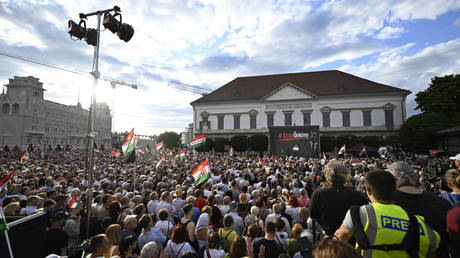
The Suryapath Tiranga succeeded because it leaned on organic participation. Local Indian communities, students, expats, and foreign friends of India showed up in local dress, braved different weather conditions, and shared it instantly online. When an embassy in Reykjavik or Riga hoists a flag at local afternoon hours that align with a global sequence, it transforms a routine diplomatic duty into a shared public spectacle.
Ministries are realizing that participation drives loyalty. When people can see their local celebration mapped as an integral node in a global chain spanning more than 40 countries, the psychological distance between home and abroad shrinks.
Next year, expect more governments to study this blueprint. Synchronized, time-zone-locked cultural events are the future of diaspora engagement. For now, the 20th century model of isolated embassy celebrations has officially taken a back seat to something much bigger.