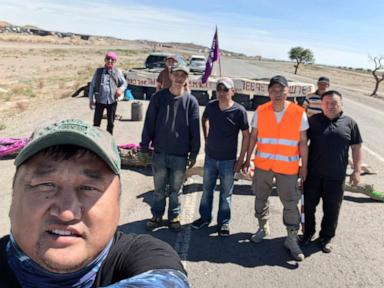
A makeshift blockade of wooden branches, rubber tires, and red-lettered banners in the southern expanse of the Gobi Desert has exposed the deep vulnerabilities of the global green energy transition. The Radical Reform Movement, a nationalist Mongolian activist group, effectively halted copper concentrate shipments from Rio Tinto’s massive Oyu Tolgoi mine to the Chinese border. This direct action hits the global supply chain at its most sensitive node. The blockade targets the primary artery feeding China’s massive electric vehicle and solar manufacturing sectors, raising fundamental questions about who profits from the resource boom.
The confrontation highlights a sharp contradiction at the heart of modern industrial strategy. Wealthy economies and multinational corporations are rushing to secure copper, lithium, and nickel to hit ambitious decarbonization deadlines. Yet the communities living above these deposits are increasingly demanding a reset of the economic terms. In Mongolia, where nearly a third of the population lives in poverty, the sight of heavy trucks carrying raw mineral wealth across the border to China has become a potent symbol of economic imbalance.
The Economics of a Desert Chokepoint
The financial implications of a prolonged halt in shipping are immediate and severe. Oyu Tolgoi is not a minor regional operation. It is on track to become the fourth-largest copper mine in the world by 2030, projecting an annual output of 500,000 metric tons at peak production. The joint venture is split between Anglo-Australian mining giant Rio Tinto, which controls a 66% stake, and Erdenes Oyu Tolgoi, a state-owned enterprise representing the Mongolian government’s 34% share.
Oyu Tolgoi Ownership Structure:
┌───────────────────────────────┐
│       Rio Tinto: 66%          │
└───────────────────────────────┘
┌───────────────────────────────┐
│  Mongolian Government: 34%    │
└───────────────────────────────┘
The operation contributes roughly 9% of Mongolia's total tax revenue. Company officials quickly warned that even a week-long disruption would drain 35 billion Mongolian Tugrik ($13.3 million) from state coffers. For a developing economy with tight fiscal constraints, such losses directly impact public infrastructure and baseline government spending.
The structural arrangement of the original investment deal remains the true source of domestic friction. When the landmark agreement was signed, the Mongolian government did not have the capital to fund its 34% share of the massive development costs. Rio Tinto provided the financing for the state's portion as a loan. The core condition of this arrangement dictates that the government must fully repay these development loans before it receives any major dividends from the mine's profits.
Consequently, the state has found itself in the awkward position of hosting a multi-billion-dollar world-class asset while waiting decades to see direct equity payouts. This financial structure has left a succession of political leaders in Ulaanbaatar vulnerable to populist challenges from groups like the Radical Reform Movement. These groups argue that the resource wealth is being extracted for foreign gain while the domestic economy shoulders the environmental burden.
Local Reality vs. Global Ambition
The friction in the South Gobi region is not exclusively about macroeconomics or state revenue targets. For the nomadic herders around the Khanbogd district, the rapid expansion of the mine represents a direct threat to a traditional way of life that has existed for centuries. The South Gobi is one of the driest places on earth, averaging fewer than 50 millimeters of rainfall per year. Mining copper at this scale requires a staggering amount of water, and Oyu Tolgoi uses over a billion gallons each month.
South Gobi Annual Rainfall vs. Mine Water Consumption:
Rainfall:          ||||| [Under 50mm/year]
Water Consumption:  ██████████████████████████████████████ [1B+ Gallons/month]
Local herders have filed formal grievances with the International Finance Corporation’s ombudsman, alleging that the mine’s deep groundwater extraction is drying up local wells and degrading essential pasture lands. A Tripartite Council was established to give local communities, government officials, and Rio Tinto executives an equal voice in managing these impacts. However, local herder organizations argue that the council's selection process has been manipulated by mining subcontractors and local politicians, stalling promised livelihood support programs.
This local anger forms the foundation for broader political movements. While the Radical Reform Movement represents the extreme end of the spectrum—demanding the complete expulsion of foreign investors—the sentiment is shared by more moderate factions within the Mongolian parliament. In late 2019, the parliament passed a resolution demanding that the government look into alternative options, such as shifting to a product-sharing agreement or swapping its 34% equity stake for a special royalty structure. This shift would guarantee a steady stream of revenue to the state budget from day one, bypassing the complicated debt-repayment schedules that currently delay dividends.
The Resource Nationalism Wave
What is unfolding along the highway to the Chinese border is part of a broader global trend. Resource nationalism is rising across Africa, Latin America, and Central Asia as governments and local populations observe the soaring valuations of transition minerals. The consensus that dominated international mining for decades—where developing nations offered generous tax holidays and majority control to attract foreign capital—is breaking down.
| Country | Critical Mineral | Policy Shift / Action |
|---|---|---|
| Mongolia | Copper, Gold | Blockades and parliamentary pressure to renegotiate equity models. |
| Indonesia | Nickel | Strict export bans on raw ore to force domestic smelting investment. |
| Chile | Lithium | Moving toward a state-led model requiring public-private partnerships. |
Rio Tinto has tried to get ahead of these challenges. The company has highlighted that its workforce is over 96% Mongolian and that it has spent billions on domestic procurement since 2010. They also launched the South Gobi Underground Mass Mining Institute to train local engineers in advanced block-caving techniques. These initiatives are designed to prove the company’s long-term commitment to the host nation. Yet, these corporate social responsibility metrics often struggle to compete with the immediate, visceral appeal of nationalist rhetoric when local inflation is high and rural poverty remains entrenched.
The Mongolian government’s response to the blockade reveals its delicate position. Prime Minister Uchral Nyam-Osor ordered law enforcement to clear the road and hold the protesters accountable, recognizing that a prolonged shutdown threatens the country's reputation as a stable destination for foreign investment. Ulaanbaatar cannot afford to scare away international mining companies; the country's economic growth relies heavily on mega-projects. However, the government must balance this enforcement with public sentiment, as heavy-handed crackdowns on citizens demanding a fair share of national wealth can quickly trigger broader urban unrest.
The Vulnerable Chinese Supply Chain
The blockade is also causing concern north of the border in Beijing. China has built an overwhelming dominance in the global green technology supply chain, controlling the vast majority of the world’s refining capacity for copper, lithium, and cobalt. However, this industrial machinery requires a constant, uninterrupted flow of raw materials. Oyu Tolgoi is uniquely positioned just 80 kilometers north of the Chinese border, making it a highly efficient source of supply that avoids the maritime choke-points of international shipping lanes.
        [Oyu Tolgoi Mine]
                │
                │ (80 km overland corridor)
                ▼
      [Chinese Border / Smelters]
Chinese smelters rely heavily on this overland corridor to keep up with the demands of battery factories and automotive assembly lines. Even a brief halt in truck traffic forces buyers to look for alternative shipments in an already tight global market, pushing up spot prices for copper concentrate. This vulnerability highlights a key reality of the green transition: achieving dominance in manufacturing does not eliminate a country's dependence on the geopolitics of the places where extraction occurs.
The standoff in the Gobi Desert shows that the success of the global energy transition will not be decided solely in boardroom meetings or laboratory settings. Instead, it will be shaped by the complex negotiations between multinational corporations, national governments, and the local communities that live alongside these valuable resources. As long as the financial and environmental costs of mining are felt locally while the profits flow elsewhere, the roads leading out of the world’s great mineral reserves will remain vulnerable to disruption.