The gravel of the Court of Honor does not crunch under a diplomat’s shoe the way it does for a tourist. It echoes. It is a precise, heavy sound, designed three centuries ago to make visiting dignitaries feel small before they even reached the vestibule. When the rain glazes the cobblestones of the Château de Versailles, the entire estate turns into a mirror reflecting a heavy, grey Parisian sky. It is a beautiful place. It is also a terrifyingly efficient psychological weapon.
Emmanuel Macron understood this from the moment he assumed the presidency. While his predecessors often treated Versailles as a dusty museum or a venue for rare, stilted state dinners, Macron looked at the sprawling palace and saw something else. An extension of the office. A private, gilded arena where the rules of standard diplomacy could be quietly suspended in favor of something far older and more visceral: the politics of awe.
By turning the palace into a regular diplomatic annex of the Élysée, French leadership resurrected a form of high-stakes theater that forces foreign leaders to confront the sheer weight of history. It is a strategy built on a simple, human truth. No matter how powerful a modern president or prime minister believes they are, they are vulnerable to the quiet intimidation of absolute scale.
The Architecture of Deference
To understand why a meeting at Versailles matters more than a meeting at a sleek conference center in Brussels or a sterile briefing room in Washington, you have to look at the geometry of the space. Modern power is obsessed with transparency. Glass facades, open-plan offices, and minimalist press rooms are meant to signal democracy and accessibility.
Versailles signals the exact opposite.
Consider the physical journey a visiting leader takes. They do not simply step out of a car and walk through a door. They are driven through successive gates, each more ornate than the last, passing beneath the watchful gaze of stone allegories and royal crests. By the time the car door opens, the guest has already spent several minutes absorbing their own relative insignificance against a backdrop of endless stone and gold.
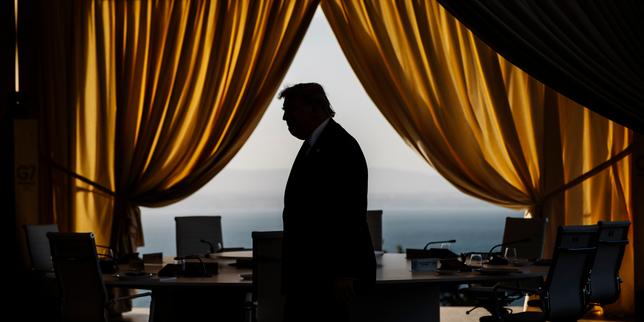
This is not accidental layout; it is a deliberate choreography of deference. When Donald Trump was received at Versailles following a tense G7 summit, the setting was chosen precisely because it bypassed the usual bureaucratic channels of international relations. You cannot easily argue about trade tariffs or military spending percentages when you are standing in a room where treaties that redrew the map of the world were signed. The historical ghosts of the palace do the heavy lifting before the leaders even sit down to eat.
Standard diplomacy relies on parity. Two flags, two matching chairs, a neutral background. But when the French state invites a foreign counterpart to Versailles, the host is operating with a massive home-field advantage. The message written into the very walls is clear: You are a temporary custodian of power. We are the stewards of an eternal civilization.
The Dinner Table as a Battlefield
We tend to think of state dinners as soft diplomacy. We look at the photos of menus printed on heavy cardstock, the glint of antique silver, and the carefully arranged floral centerpieces, and we dismiss it as high-society fluff. That is a mistake. In the hands of a skilled political operator, a dining room is a combat zone.
Imagine sitting across from a host in a room illuminated by hundreds of candles, their light bouncing off mirrors that once reflected Louis XIV. The food is not merely sustenance; it is a curated statement of cultural supremacy. Every dish serves as a reminder of a culinary lineage that has dictated global taste for generations. The wine poured into the crystal is older than the country of the person drinking it.
Under these conditions, the psychological dynamic shifts. The guest is no longer just an adversary negotiating a text; they are a consumer of hospitality. It is a deeply ingrained human trait to feel a sense of obligation when received with immense luxury. It becomes significantly harder to break a deadlock or deliver a harsh refusal when you have just spent three hours participating in a ritual designed to flatter your ego while overwhelming your senses.
This strategy works because it targets the human being behind the title. Strip away the security details, the policy briefs, and the political parties, and global leaders are driven by the same basic impulses as anyone else: vanity, a desire for legacy, and a susceptibility to spectacle. Versailles feeds all three. It offers a backdrop that makes even a routine bilateral meeting look like an epochal event for the history books.
The Domestic Cost of Royal Posturing
But this theatrical statecraft carries a profound internal risk. Power is a balance of perception, and while the imagery of Versailles plays brilliantly on the international stage, it can look dangerously out of touch at home.
France is a republic founded on the violent rejection of the very absolute monarchy that built Versailles. The imagery of a modern, democratically elected president strolling through the Hall of Mirrors with foreign billionaires or controversial heads of state triggers a specific, historical anxiety in the French collective psyche. It looks less like diplomacy and more like court politics.
For the citizen watching from a small apartment in the suburbs of Paris or a dying industrial town in the north, those gilded halls do not represent national pride. They represent distance. The immense physical gap between the palace gates and the main building becomes a metaphor for the separation between the governing elite and the governed public.
The real danger of using Versailles as a diplomatic tool is that the theater can easily swallow the substance. If a president acts like a king on the world stage, the voters at home will eventually look for a guillotine at the ballot box. It is a delicate tightrope to walk—projecting imperial grandeur abroad while maintaining republican humility at home. When the line blurs, the palace stops being an asset and becomes a symbol of arrogance.
The Mirage of the Personal Touch
We live in an era that romanticizes the personal chemistry between leaders. The media dissects handshakes, analyzes the duration of eye contact, and looks for signs of genuine friendship during brief press conferences. The Versailles strategy leans heavily into this illusion, creating an atmosphere of intense intimacy away from the prying eyes of the broader press corps.
But history shows us that the walls of Versailles are excellent at creating mirages. A successful dinner or a walk through the manicured gardens rarely translates into lasting policy shifts. The warm glow of the chandeliers fades the moment the leader boards their plane back to a capital where domestic realities, legislative gridlock, and geopolitical realities take over once again.
The mistake lies in confusing a spectacular setting for a structural change. A leader may be charmed, awed, or momentarily disarmed by the grandeur of France’s historic seat of power, but their national interests remain unchanged. The tariffs still exist. The alliances remain strained. The structural friction between nations cannot be dissolved by a well-aged Bordeaux or the sight of fountains dancing to baroque music.
What Versailles actually provides is a temporary pause. A theatrical intermission in the messy, grinding reality of international relations. It allows leaders to pretend, if only for an evening, that they are part of a grander, more elegant narrative than the petty squabbles of daily politics suggest.
The Echoes in the Hall of Mirrors
As the night winds down and the motorcades finally idle outside the gates, the palace returns to its natural state. The staff extinguishes the candles. The heavy velvet curtains are drawn shut against the night air. The gold leaf stops gleaming in the dark.
The true efficacy of this diplomatic annex is not measured in signed treaties or breakthrough agreements. It is measured in the memory left behind. Long after the specific talking points of a summit are forgotten, the guest will remember the way the light fell across the parquet floors. They will remember the imposing silence of the long galleries. They will remember the distinct feeling that they were merely passing through a space built to outlast them all.
Versailles remains an unparalleled instrument of statecraft because it understands that power is not just about economic data or military leverage. It is about psychology. It is about the stories we tell ourselves about who belongs at the center of the world. And as long as France can invite the leaders of the modern world to sit beneath the painted ceilings of the Sun King, it will continue to exert an influence far greater than its contemporary borders should allow. The trap is set in gold, and the world continues to walk willingly through its gates.