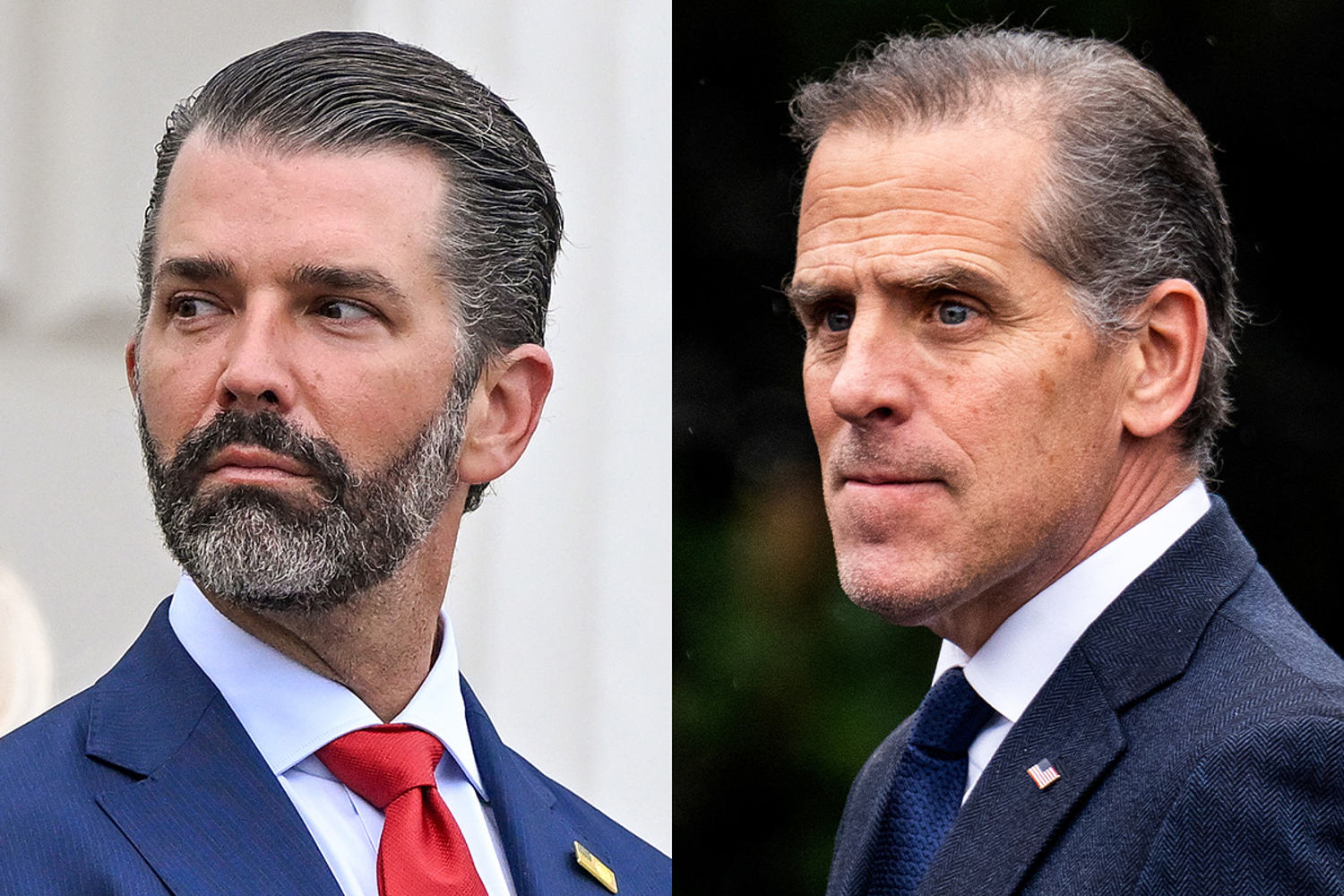
Washington loves a partisan showdown, so when a Republican senator demands subpoenas for both the current president's eldest son and the former president's son in the same breath, people pay attention. That's exactly what happened when Sen. John Curtis, a Republican from Utah, sent a formal letter to the Senate Judiciary Committee asking them to compel testimony from both Donald Trump Jr. and Hunter Biden regarding their foreign business dealings.
It's a rare move on Capitol Hill. Usually, oversight committees focus laser-like on the opposing party while ignoring questionable optics closer to home. Curtis decided to break that script, arguing that congressional oversight loses all credibility if it only applies to one side of the political aisle.
The Trigger Behind the Subpoena Request
You can trace Curtis's September 2026 letter directly back to reports about Donald Trump Jr.'s post-wedding celebrations in the Caribbean. According to reporting cited by the senator, a Russian oligarch with connections to Vladimir Putin footed the bill for private-island festivities following Trump Jr.'s wedding.
Curtis didn't mince words about how bad that looks. On X, the Utah senator drew a sharp line between normal wedding gifts and foreign bankrolling, writing that while a toaster is a standard wedding gift, a private-island party paid for by a Putin-connected oligarch is something else entirely. He pointed out that Republicans spent years aggressively investigating Hunter Biden's overseas relationships and argued the party can't suddenly unplug the subpoena machine just because a Republican family member is in the spotlight.
In his letter to Senate Judiciary Committee leadership, Curtis formally requested that the panel subpoena both men to answer questions under oath about:
- Foreign business relationships and financial arrangements
- Ties to foreign individuals and state-linked entities
- Lavish gifts, travel, or other private benefits received while connected to the presidency
How the White House and Democrats Responded
President Donald Trump pushed back on the controversy during remarks to reporters in the Oval Office, downplaying the wedding celebration payment. According to the president, hosting parties is completely allowed, and he stated that his understanding was that Donald Trump Jr. didn't want to accept the gift and had already paid the businessman back.
Meanwhile, Senate Democrats saw an immediate opening. Sen. Dick Durbin, a leading Democrat on the Judiciary Committee, issued a statement backing Curtis's request. Durbin called the Utah Republican's letter a good-faith effort to address corruption at the highest levels of government, while adding a pointed caveat. He noted that Hunter Biden has already sat for a sworn congressional deposition regarding his past foreign business dealings in countries like Ukraine and China, whereas Donald Trump Jr. hasn't faced that same level of formal sworn questioning. Durbin warned that if the committee ignores the Caribbean wedding payment, it risks looking complicit in a cover-up.
Why Bundling Both Names Matters Politically
If you've watched congressional oversight over the last decade, you know how predictable the playbook usually is. One party takes control of a committee, issues a flurry of subpoenas targeting the other party's prominent families, and calls it accountability. The opposing party cries foul, accuses the committee of a partisan witch hunt, and stonewalls until the next election cycle flips control of the gavel.
By naming both Donald Trump Jr. and Hunter Biden in the same subpoena request, Curtis effectively trapped partisan critics on both sides.
- For Republicans: Opposing the request means arguing against investigating foreign money flowing to a president's family, contradicting years of GOP messaging around the Biden family.
- For Democrats: Opposing the request means shielding Hunter Biden from any further public questioning, even though they've spent months demanding accountability for Trump family business ties.
Curtis framed his stance around basic institutional trust, stating in his letter that Americans deserve confidence that public institutions serve citizens rather than presidents, political parties, or wealthy interests. Whether you view his move as principled consistency or smart political positioning in a fiercely divided Senate, it forces committee leaders to confront a double standard they usually prefer to ignore.
What Actually Happens Next in the Senate
Calling for a subpoena and actually issuing one are two very different things in Washington. A single senator—even a member of the majority party—can't unilaterally force a witness to appear before a congressional panel.
For subpoenas to actually go out to Donald Trump Jr. and Hunter Biden, the Senate Judiciary Committee has to take formal action. That means the committee chair must either bring the request up for a formal vote among panel members or negotiate bipartisan agreement on the scope of an investigation. As of mid-November 2026, weeks after Curtis sent his initial September 22 letter, the committee still hasn't publicly verified any scheduled hearings or issued formal subpoenas.
If you want to track whether this request turns into real congressional action or quietly dies in committee, keep an eye on three specific pressure points:
- The Senate Judiciary Committee calendar: Watch the panel's official schedule for executive business meetings, which is where members debate and vote on authorizing subpoenas.
- Financial documentation: Look for whether Donald Trump Jr.'s representatives release verifiable receipts or wire records proving the Caribbean wedding expenses were reimbursed, as President Trump claimed.
- Bipartisan committee pressure: Follow whether other moderate senators join Curtis and Durbin. Without a coalition of committee members willing to force a vote, leadership can easily stall a subpoena request indefinitely.
Congressional oversight only works when the rules apply regardless of whose name is on the letterhead. Until the Senate Judiciary Committee decides whether to put both men under oath, Curtis's letter stands as a direct test of whether lawmakers care more about actual accountability or protecting their own team.
You can watch the original news report covering GOP senator calls for investigation into business dealings of Donald Trump Jr. and Hunter Biden. This broadcast clip provides additional context on Sen. John Curtis's formal letter to the Senate Judiciary Committee and the initial Capitol Hill reaction.

