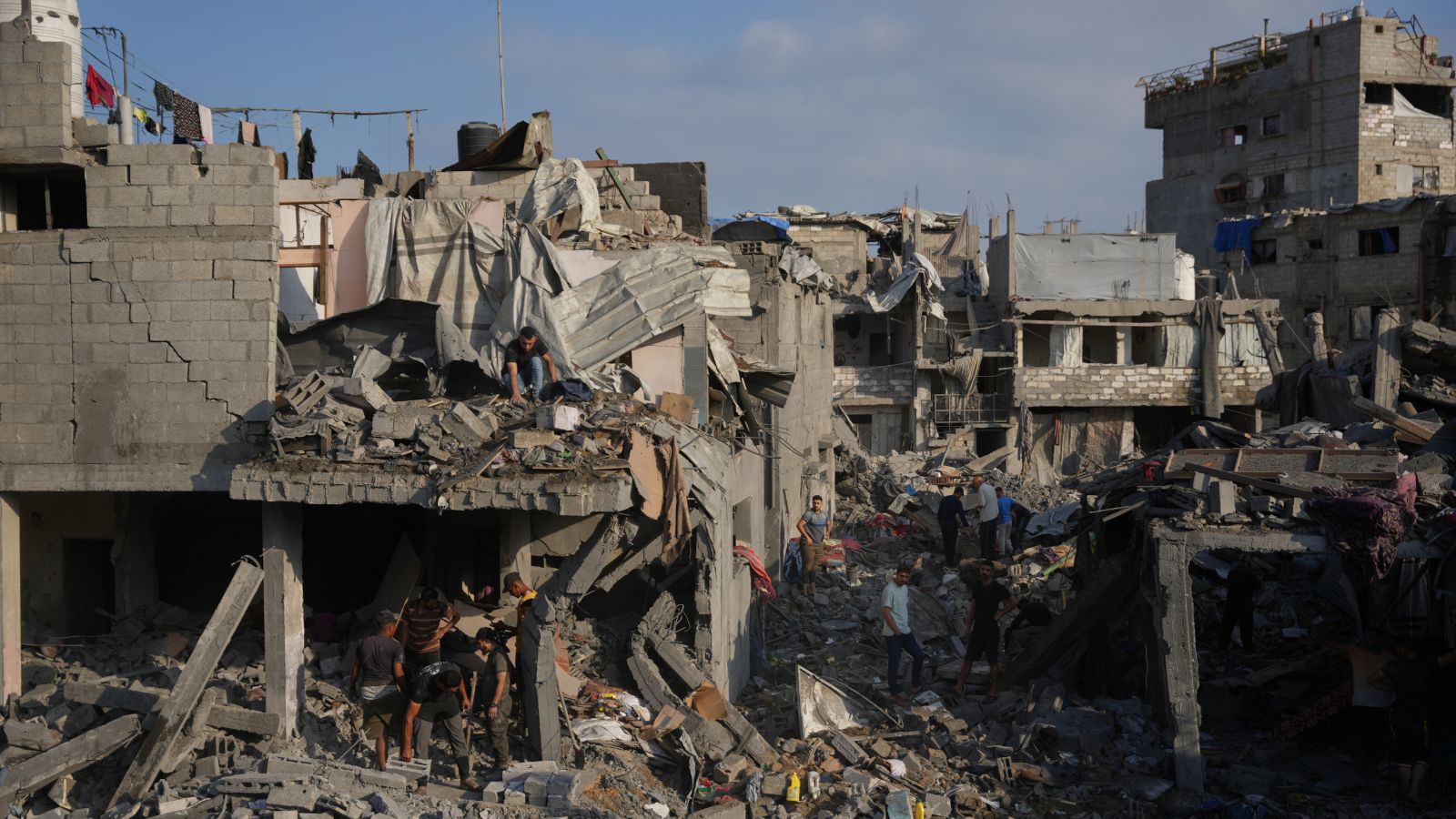
The grand vision to reconstruct Gaza into a glittering Mediterranean hub—touted by developers and figures close to Donald Trump—has collapsed under geopolitical reality. What began as a multi-billion dollar blueprint for luxury waterfronts, high-tech industrial zones, and privatized security has shrunk to a single, highly controversial pilot camp. This stark downsizing reveals the immense gap between speculative real estate ambition and the brutal friction of an active war zone. The transition from master-planned paradise to a heavily fortified outpost is a case study in the failure of transactional diplomacy.
For months, backroom discussions in Washington, Tel Aviv, and Gulf capitals painted a picture of a post-war Gaza transformed. Investors whispered about clean slates, beachside high-rises, and modern infrastructure. But the reality on the ground has rejected these commercial blueprints. Today, the entire enterprise has been reduced to one experimental enclave, struggling to establish even a basic foothold.
The fantasy of the Mediterranean Riviera
To understand how this initiative deteriorated, one must look at the assumptions that birthed it. During his first term, and throughout his subsequent campaigns, Donald Trump and his inner circle viewed the Middle East through a commercial prism. Jared Kushner famously commented on the "very valuable" potential of Gaza's waterfront property, suggesting that Israel should move civilians out to develop the coast.
This was not merely off-the-cuff rhetoric. It reflected a deeply ingrained philosophy that economic incentives could bypass historical, political, and territorial disputes. The underlying theory was simple. If you offer enough capital, build enough infrastructure, and create enough jobs, the political aspirations of a stateless population will simply dissolve.
Architects and urban planners close to the conservative establishment drafted elaborate renders of "Gaza 2035." These designs featured high-speed rail links connecting the strip to regional economic hubs, state-of-the-art desalination plants, and industrial parks funded by Gulf oil wealth. The plans treated Gaza as a blank canvas, a coastal strip ripe for gentrification.
They ignored the basic rules of sovereignty. You cannot build a Singapore on the Mediterranean when the population is traumatized, the borders are controlled by a hostile neighbor, and the political leadership is non-existent or armed to the teeth. The planners treated a highly complex asymmetrical conflict as a mere zoning dispute.
The shift to humanitarian bubbles
As the violence persisted and the sheer scale of the destruction became apparent, the luxury beachfront narrative became untenable. The plan had to pivot. Instead of building condos, the focus shifted to establishing security.
This gave rise to the concept of humanitarian bubbles. Under this strategy, the Israeli military would clear specific neighborhoods of combatants, and private security entities would then step in to secure the perimeter. Once a bubble was established, aid would flow in, biometric scanning would control the population, and a local, non-aligned leadership would be cultivated to run daily affairs.
The strategy relied heavily on private military contractors. Prominent figures in the security industry proposed using seasoned veterans from Western nations to guard the aid convoys and distribution centers. The goal was to bypass both Hamas and the United Nations Relief and Works Agency, which the Israeli government wanted to dismantle.
It was an attempt to privatize the occupation. By outsourcing the security of aid distribution to private firms, governments could distance themselves from the inevitable casualties and logistical failures. The plan assumed that money could buy neutrality.
The pilot camp in the rubble
That grand network of secure zones has now boiled down to a single pilot camp. Located in a heavily destroyed sector of northern Gaza, this lone outpost serves as a grim monument to compromised ambitions.
The camp is not a model community. It is a fortified compound. High concrete walls, razor wire, and advanced surveillance cameras define its perimeter. Entry is strictly regulated through biometric checkpoints, where residents must submit to retinal scans and facial recognition before receiving basic rations.
Inside, the environment is sterile and tightly controlled. The promised schools, modern clinics, and job training centers are absent. Instead, there are rows of prefabricated shelters, basic sanitation facilities, and a heavily guarded distribution depot.
The operation is plagued by constant security threats. Mortar fire, sniper attacks, and sabotage are daily hazards. The private security personnel do not patrol the surrounding streets; they cower behind armored glass and concrete barriers, relying on Israeli military air support to keep hostile forces at bay.
The camp is isolated. It has failed to spark the chain reaction of stability that its planners envisioned. Rather than proving the viability of the bubble concept, it has shown just how resource-intensive and fragile a single outpost can be.
The structural flaws of privatized reconstruction
The failure to expand beyond this single pilot camp lies in three structural flaws that no amount of private equity can fix.
First, there is the issue of legitimacy. A local population will never accept aid delivered at gunpoint by foreign mercenaries working for anonymous corporate entities. To the residents of Gaza, the pilot camp does not represent reconstruction. It represents a high-tech prison.
Second, the financial model is broken. The original plan assumed that wealthy Gulf states, primarily Saudi Arabia and the United Arab Emirates, would write the checks for the reconstruction. But these nations have made their positions clear. They will not spend billions of dollars to rebuild Gaza only to see it destroyed in the next round of conflict. They demand a clear, irreversible path to a Palestinian state as a condition for their investment.
The developers tried to bypass this political requirement. They hoped that by starting with small, practical projects, they could entice Gulf donors to fund them on a piecemeal basis. The donors refused to bite.
Third, the legal liabilities are staggering. Private security firms operating in active combat zones face immense legal risks under international law. If guards open fire on a crowd during a food riot, the parent company faces immediate litigation, reputational ruin, and criminal prosecution. No major international insurance firm is willing to underwrite such operations without explicit sovereign immunity, which no government is willing to grant.
The illusion of apolitical aid
The downsizing of the rebuild plan exposes the fundamental flaw of transactional foreign policy. You cannot treat a deep-seated national conflict as a real estate deal.
The planners believed they could build their way out of a war. They thought that concrete, steel, and fiber-optic cables could replace political rights, sovereignty, and self-determination. This illusion has now shattered against the reality of the northern Gaza pilot camp.
The single camp remains active only because the parties involved cannot afford the humiliation of a total shutdown. It exists as a prop, a talking point for politicians who want to claim they have a plan for the day after.
Meanwhile, the surrounding territory remains a wasteland of concrete dust and unexploded ordnance. The private contractors will continue to collect their fees, the cameras will continue to scan the eyes of hungry children, and the grand plans for a Mediterranean Riviera will remain locked away in glossy brochures. Strip away the corporate jargon, and all that remains is a gated compound in the dirt, surrounded by a war that refuses to end. No amount of venture capital can buy a way out of that reality.