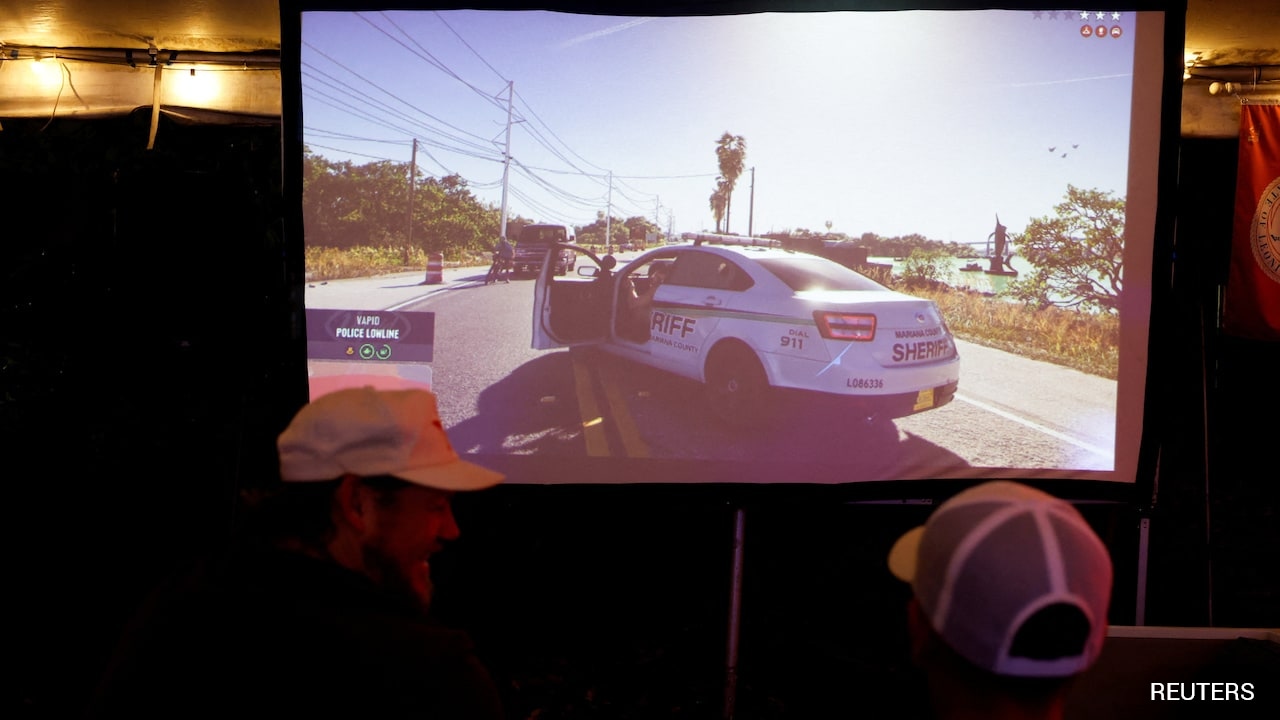
Thirteen years does not buy perfection. It buys bloat, institutional inertia, and a development pipeline that spent half a decade chasing a moving technological target before the first line of current-generation code was even compiled.
The mainstream gaming press wants you to believe that the gap between Grand Theft Auto V in September 2013 and the arrival of Grand Theft Auto VI represents thirteen years of artisanal, uninterrupted craftsmanship. They call it a "masterpiece in the making." They treat the timeline like a vintage wine aging in an oak barrel.
That narrative is pure marketing fiction. In software engineering, time is not a multiplier for quality; it is a multiplier for technical debt. When a project stretches across two console generations, survives the departure of its primary creative architects, and pivots its entire corporate revenue model mid-stream, you are not looking at a decade of meticulous polish. You are looking at an industrial behemoth trying to outrun the weight of its own legacy.
The 13-Year Development Myth
Let us dismantle the timeline first. Nobody at Rockstar Games was sitting at a workstation in October 2013 building Grand Theft Auto VI.
Between 2013 and 2018, the entirety of Rockstar’s global studio apparatus—Rockstar North, San Diego, Toronto, Leeds, New England, and London—was consolidated into a single, brutal sprint to ship Red Dead Redemption 2. That project required historic levels of labor, engine overhauls, and asset creation. Actual, full-scale production on the next Grand Theft Auto did not begin in earnest until after Arthur Morgan’s story hit shelves in late 2018.
Even then, the early years of development were defined by false starts and internal course corrections. Multiple industry reports, including those from Bloomberg’s Jason Schreier, documented how early concepts—rumored to be codenamed Project Americas—were drastically scaled back to avoid the toxic crunch culture that defined the previous decade.
When you strip away the Red Dead years, the pandemic disruptions, and the pre-production resets, you do not have a 13-year masterpiece. You have a six-to-seven-year modern AAA development cycle inflated by corporate mythology.
Calling it a 13-year masterpiece is a lazy consensus that ignores basic production reality. Time spent not releasing a product is not the same thing as time spent perfecting it. Often, it is just time spent rewriting design documents because the hardware architecture changed underneath your feet.
Why Bigger Worlds Mean Smaller Gameplay
The core pitch of every mainline Grand Theft Auto title since 2001 has been scale. Bigger map. More interiors. Higher pedestrian density. Deeper simulation systems.
We have reached the point of diminishing returns on open-world simulation.
I have watched mid-sized and AAA studios burn through hundreds of millions of dollars chasing hyper-realistic world density, only to realize that 90 percent of players sprint past the handcrafted environmental storytelling at 120 miles per hour in a stolen sports car. You can program individual strands of hair to react to coastal humidity in Vice City, and you can build an algorithmic ecosystem where every NPC has a daily commute, a favorite coffee shop, and a dynamic reaction to traffic accidents. None of that fixes the fundamental mechanical rigidity at the heart of Rockstar’s mission design.
Look at the actual gameplay loop of Red Dead Redemption 2 and Grand Theft Auto V. Despite their breathtaking open worlds, the moment you trigger a story mission, the sandbox vanishes. You are placed on an invisible, razor-thin rail.
Walk ten feet off the designated path to flank an enemy? Mission Failed.
Park your getaway vehicle on the wrong side of the street? Mission Failed.
Try to solve a scripted shootout using the emergent physics systems the open world spent $300 million simulating? The game slams a black screen in your face and forces you back to a checkpoint.
This is the central contradiction of modern prestige gaming. The industry celebrates simulation fidelity while enforcing theatrical linearity. You are given a Ferrari engine bolted to a horse-drawn carriage. Expanding Leonida into the largest, most densely populated digital state in history does not solve this design friction; it amplifies it. The wider the gap between what the open world promises you can do and what the mission scripting allows you to do, the more brittle the illusion becomes.
The Creative Brain Drain Nobody Mentions
A studio is not a logo. It is a collection of specific human brains making thousands of micro-decisions every single day.
The Rockstar Games releasing Grand Theft Auto VI is structurally and culturally a different organization from the one that shipped Grand Theft Auto V. Between 2016 and 2020, the studio lost the primary creative pillars responsible for the franchise’s identity:
- Leslie Benzies: The longtime president of Rockstar North and the producer who famously whipped Grand Theft Auto III, Vice City, San Andreas, IV, and V into coherent, playable shapes when projects stalled.
- Dan Houser: The co-founder, head writer, and chief satirical voice who penned the sharp, cynical Americana that separated GTA from generic crime shooters.
- Lazlow Jones: The audio director and cultural curator whose talk-radio stations and street-level dialogue gave the series its unmistakable comedic texture.
Can a massive corporate machine continue running after its founders walk out the door? Obviously. Look at Apple after Steve Jobs or Pixar after John Lasseter. The infrastructure remains intact, the budgets stay astronomical, and the technical execution often reaches new heights.
What vanishes is the singular, uncompromising authorial edge. When a creative monarchy transitions into a corporate committee—especially one operating under the intense scrutiny of modern public-company risk management—satire gets sanded down. Sharp edges become safe, focus-tested humor. You get technical brilliance paired with narrative caution.
The GTA Online Anchor
If you want to understand why it took over a decade to get a sequel, stop looking at RAGE engine physics and start looking at Take-Two Interactive’s quarterly earnings reports.
Grand Theft Auto Online broke the traditional console business model. Why spend $500 million and five years building a brand-new single-player game when a single flying motorcycle update in an existing multiplayer economy prints hundreds of millions of dollars in recurring, high-margin microtransactions?
For years, GTA Online was not a side project; it was the primary business. Single-player DLC for Grand Theft Auto V was famously cannibalized and repurposed into multiplayer updates because the return on investment wasn't even close.
This creates an uncomfortable reality for Grand Theft Auto VI. The single-player campaign—no matter how cinematic, emotional, or sprawling—is functionally a loss-leader acquisition funnel. Its primary corporate purpose is to onboard tens of millions of console owners onto the new ecosystem so they can be migrated into the next iteration of GTA Online.
When the economic engine of a game is designed around indefinite live-service retention, design priorities shift subtly but permanently:
- Pacing slows down: Progression systems are tuned to stretch engagement across months rather than tight, 20-hour narrative arcs.
- Economy inflation dictates mechanics: Every vehicle, property, and weapon must be priced and balanced around a future multiplayer storefront.
- Modding becomes a threat rather than a feature: User-generated creativity is tightly policed or absorbed (as seen with Take-Two’s acquisition of the FiveM roleplay team) to ensure no third-party platform siphons revenue from the official live service.
Addressing the Questions You Are Actually Asking
When players search for updates on Grand Theft Auto VI, they usually fall into the same predictable traps. Let us dismantle the most common questions surrounding the release.
Will Grand Theft Auto VI be worth the wait?
You are asking the wrong question. "Worth the wait" implies that waiting was a choice you made in exchange for proportional value. A 13-year gap cannot be justified by any piece of entertainment software, because human expectations scale faster than polygon counts. If you judge Grand Theft Auto VI against 13 years of nostalgia and imagination, it will disappoint you. Judge it strictly as a 2026 AAA video game competing against modern titles, and its technical achievements will stand on their own merits.
Will it run at 60 frames per second on current consoles?
No. Do not let marketing trailers fool you. The sheer CPU overhead required to simulate dense traffic, complex NPC routines, ray-traced global illumination, and dynamic weather on current-generation console processors makes a locked 60 FPS performance mode nearly impossible at launch. Expect a rock-solid 30 FPS fidelity mode designed to push visual screenshots, with a true 60 FPS experience held back for the inevitable PC release and next-generation console remasters.
Is the rumored $80 or $100 base price tag justified?
From a pure inflation-adjusted standpoint, video games have remained artificially cheap for two decades; a $60 game in 2005 would cost roughly $95 today. However, Take-Two does not need a $100 box price to turn a profit. A $70 base price paired with $100+ deluxe editions featuring early access and virtual currency packs captures maximum consumer surplus without triggering a mainstream PR backlash.
The Honest Counter-Argument
To be clear, betting against Rockstar Games on commercial execution is a fool’s errand. Even if every single creative and structural critique outlined above holds true, Grand Theft Auto VI will still obliterate every entertainment launch record in human history.
There is an undeniable magic to what Rockstar’s engineering teams accomplish with hardware. When you stand on a rain-slicked street in Vice City at night, watching neon reflections ripple across puddles while distant sirens echo off concrete high-rises, the sheer craft of the environmental artists is staggering. Nobody else in the industry has the budget, the proprietary tooling, or the institutional knowledge to build a digital world with that level of tactile weight.
If you approach Grand Theft Auto VI as a playable tourist destination—a high-budget digital theme park where you can soak in atmosphere, cause chaotic physics interactions, and experience a slick crime drama—it will deliver everything you want.
How to Actually Approach the Release
Stop treating a commercial product like a religious event. If you want to enjoy Grand Theft Auto VI without falling victim to the hype-cycle hangover that ruined launches like Cyberpunk 2077 or Starfield, adjust how you engage with it:
- Ignore the pre-release hype machine: Trailers are curated slices of vertical-slice perfection designed to trigger dopamine spikes. Watch raw, unedited gameplay after embargo lifts rather than frame-by-frame breakdown videos.
- Lower your expectations for mission freedom: Accept that Rockstar makes interactive cinema, not immersive sims. Enjoy the story missions for their writing, acting, and set pieces, and save your experimental, emergent chaos for free-roam exploration.
- Wait on the PC version if hardware performance matters to you: Console versions of Rockstar games have historically served as paid public betas for the definitive PC editions released 12 to 18 months later.
- Resist the Day-One live-service treadmill: Do not treat the online mode like a second job. Play the campaign at your own pace, turn off the HUD, and walk through the city instead of sprinting from icon to icon.
Grand Theft Auto VI will be a monumental technical achievement, a cultural juggernaut, and the most profitable entertainment product of the decade. Just stop calling a corporate live-service pivot a 13-year artistic masterpiece.