The siren did not sound with a bang. It came as three sharp, metallic whistles, cutting through the heavy, stale air of the local pub.
Then, the silence.
It is a specific kind of quiet, unique to sports fans who have just watched a dream disintegrate on a glowing screen. It is the sound of eighty people holding their breath, hoping for a VAR intervention that will never come, followed by the soft, collective rustle of coats being zipped up.
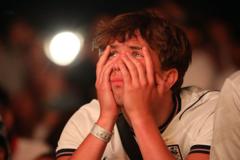
Mark sat at the corner table, his hand still wrapped around a pint of bitter that had gone warm an hour ago. He is forty-three, a geography teacher, a father, a husband. But in this exact moment, he felt like a hollowed-out shell. His chest was tight. His throat burned with a dry, metallic ache. For four weeks, his mood had been tethered to the flight of a leather ball on the other side of the world. Now, the tether was severed, and he was falling.
We have all been Mark. We have all stood in that cold, sudden draft of reality when the whistle blows and the collective delusion of "our year" evaporates. To those who do not care for the game, it looks like madness. Why weep over eleven multi-millionaires who do not know your name?
But the pain is real. Neuroscientists have verified it. When your team loses, your brain does not register it as a trivial entertainment setback. It processes the event as a personal, physical loss.
To survive the morning after, we have to understand what just happened to our bodies, and how to rebuild.
The Chemistry of the Collapse
The human brain is a terrible sports fan.
During a major tournament, your endocrine system runs a marathon without you ever leaving the sofa. When England scores, your brain floods with dopamine, the chemical reward for survival and triumph. Your testosterone levels surge. You feel taller, stronger, more capable. You are part of the tribe, and the tribe is winning.
But when the final whistle blows on a defeat, the chemical trapdoor opens.
Testosterone plunges. Cortisol, the primary stress hormone, floods the system. Your body enters a state of mild physiological shock, mimicking the chemical profile of physical threat or bereavement. This is not a metaphor. Studies tracking fan heart rates during penalty shootouts show spikes that rival those of cardiovascular patients on treadmills.
Mark felt this spike as a dull weight in his stomach. He wanted to go home and sleep for a week, yet his mind was racing, replaying a missed clearance in the sixty-fourth minute.
The first step to recovery is acknowledging this physiological hangover. You are not being dramatic; you are chemically depleted. Treat your body as if you are recovering from a minor physical illness. Drink water. Eat something clean. Stop asking your nervous system to fight a battle that ended on the pitch two hours ago.
The Digital Poison
The immediate impulse after a heartbreaking loss is to seek answers.
We reach for the phone. We open social media, searching for someone to blame. Was it the manager’s tactics? The referee’s bias? The left-back’s positioning?
Consider what happens next: you enter an echo chamber of collective, unregulated grief. On Twitter and Instagram, anger is the currency of engagement. Millions of strangers, all suffering from the same cortisol spike, are lashing out to externalize their pain. Engaging with this digital post-mortem is like rubbing salt into an open wound to see if it still hurts.
Mark unlocked his phone, his thumb hovering over his sports news app. He knew what lay there. Columnists writing obituaries for a generation of players. Angry fans demanding sackings.
He locked the phone and slid it across the wooden table, out of reach.
A digital detox in the forty-eight hours following a major sporting defeat is not a luxury; it is a necessity. The analysis will not change the scoreline. The finger-pointing will not resurrect the dream. By shutting out the noise, you allow your nervous system to return to its baseline. Let the pundits argue in the dark. You have a life to live.
The Art of Disowning
In the 1970s, social psychologists coined two terms that explain the fragile tightrope of sports fandom: BIRGing and CORFing.
BIRGing stands for Basking in Reflected Glory. It is the reason we wear the shirts, use the pronoun "we" when the team wins, and feel a personal sense of pride in achievements we had zero hand in creating. It is a beautiful, unifying human experience.
But the dark side is the struggle to CORF: Cutting Off Reflected Failure.
When the team loses, we struggle to distance our personal identity from the collective collapse. We feel like failures because the men in white shirts failed.
This is where we must consciously draw a line. You did not miss the penalty. You did not misread the tactical shift. Your worth as an individual, a parent, a friend, or a professional is entirely independent of a ball hitting a post.
Try a simple mental pivot. Shift your vocabulary from "we lost" to "they lost." It feels cold, almost disloyal, but it is a vital psychological boundary. You are a supporter, not a participant. The players will fly first-class back to their clubs, console themselves with their loved ones, and move on. You must grant yourself the same permission to let go.
Walking Through the Grey
Adrenaline has no off-switch. It has to be burned.
When Mark finally walked through his front door, the house was quiet. His wife was reading in the living room; his daughter was asleep. The temptation was to pour a heavy whiskey and sit in the dark.
Instead, he put on his trainers and walked back out into the cool, damp night.
He didn’t run. He just walked. He listened to the sound of his own breathing, the wind in the birch trees at the end of the street, the distant hum of the motorway.
Physical movement is the fastest way to metabolize excess cortisol. When we sit still in our disappointment, the stress hormones stagnate in our muscles, leading to that familiar, heavy fatigue. A twenty-minute walk in the fresh air breaks the cycle of rumination. It forces your brain to focus on the immediate physical world—the temperature, the pavement, the rhythm of your stride—rather than the agonizing "what-ifs" of the match.
By the time Mark returned, his chest felt lighter. The air had cleared the cobwebs of the pub.
The Circle of Shared Silence
The morning after, the world keeps turning. This is perhaps the hardest part to reconcile. The buses still run, the rain still falls, and coworkers who do not know the difference between an offside trap and a corner kick will ask you if you "saw the game."
Do not isolate yourself, but do choose your company wisely.
There is a unique comfort in talking to those who share the ache, provided the conversation is steered away from bitterness. Talk about the journey. Remember the moments of genuine joy the tournament provided before the end. The late winners, the communal screams of delight in the living room, the brief, beautiful moments of national unity when everyone seemed to smile at strangers on the street.
The pain of losing is the tax we pay for the privilege of caring about something so deeply.
Mark stood in the kitchen the next morning, making tea. His teenage daughter came down the stairs, wearing her oversized England shirt, her face still carrying the trace of last night’s tears.
He didn't offer a grand speech. He didn't try to analyze the tactical errors of the second half.
He just handed her a mug, sat down at the table, and smiled.
"They played well for a bit, didn't they?" she asked softly.
"They did," Mark said. "They really did."
And just like that, the weight lifted, leaving behind only the quiet, stubborn hope that is the true engine of every football fan. There is always another tournament. There is always next year.
The kettle quieted down to a gentle simmer, and the world went on.